Cereal sleeve boxes
Cereal sleeve boxes pair a printed, open-ended paperboard sleeve with something inside it: a tray, a pouch, a plain carton or a group of small packs. The sleeve carries the branding and slides off to reveal the product. It is the simplest way to dress a stock pack, band a multipack or run a seasonal design without changing the packaging underneath.
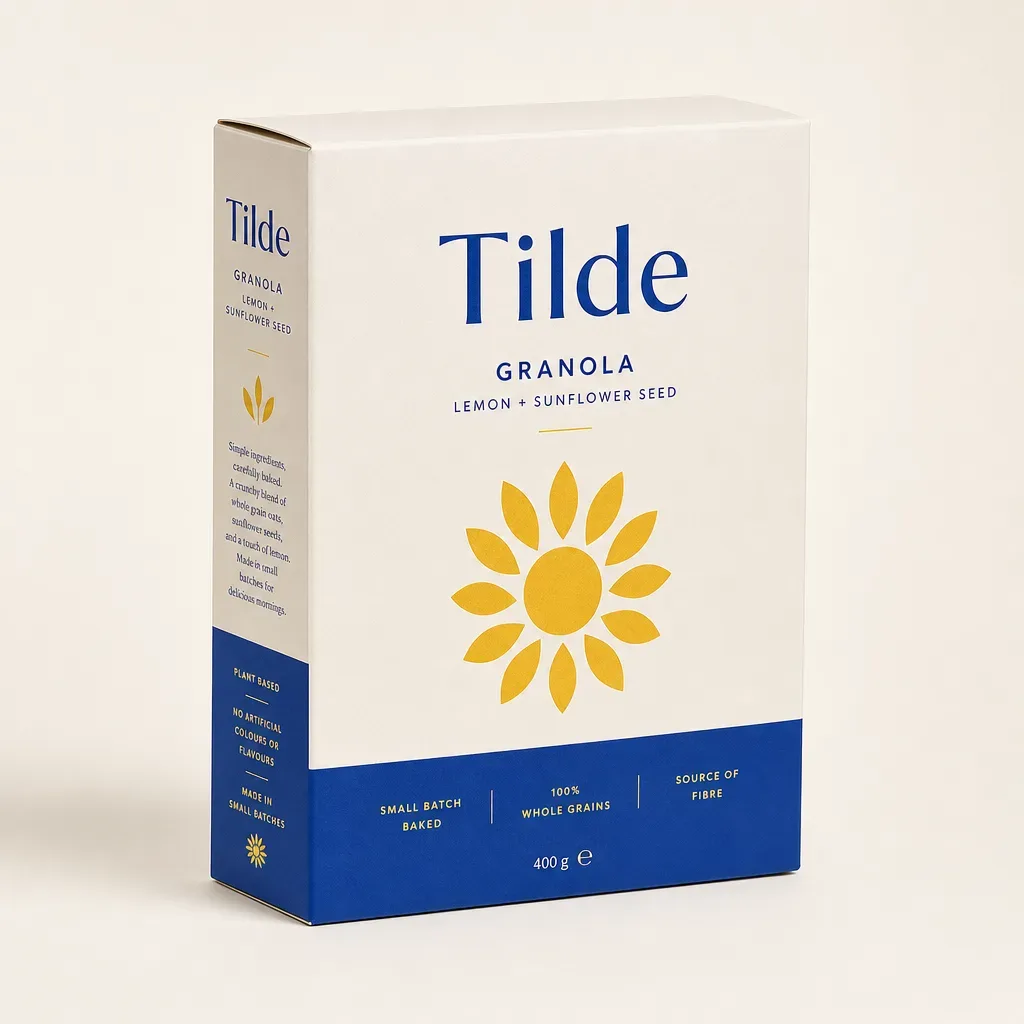
Sleeve and tray cereal packaging: brand outside, product inside.
A sleeve separates the part of a pack that sells from the part that protects. The inner pack does the practical work: a sealed pouch, a plain tray, an unprinted carton. The sleeve does the branding, and it can change as often as you like. One plain inner can carry a dozen different sleeves across flavours, seasons and retailers.
It is also an economical format. A sleeve has no end flaps, so it uses less board than a full carton, and plain inners can be bought in volume. The limit is protection: a sleeve is open at both ends, so it never replaces the primary pack. Where one closed box is needed, start from a straight tuck cereal carton instead.
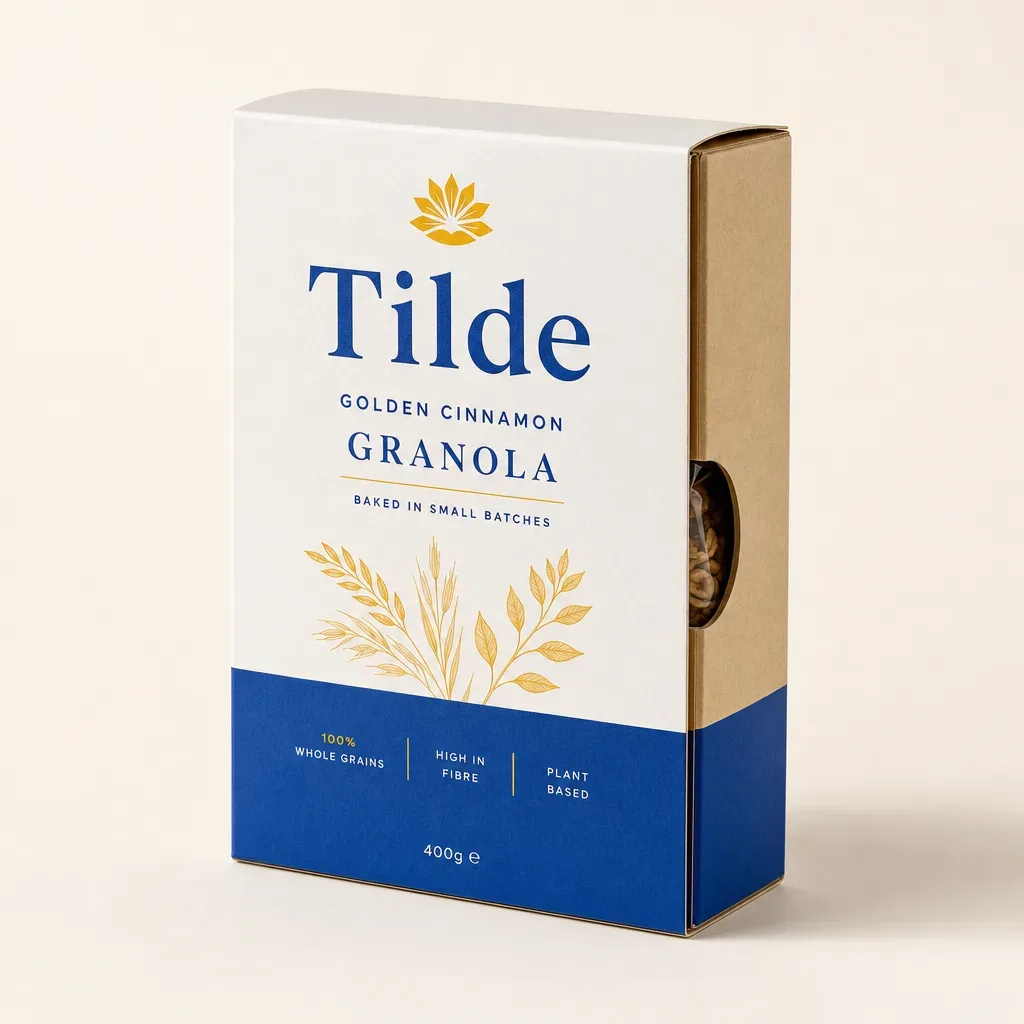 sleeve edge and tray — macro detail

Six parts of a printed cereal sleeve.
Select a marker, or step through in order.
The main printed panel. With no closures to work around, the whole face is available for brand, variant and claims.
A tube with no ends, and whatever sits inside it.
The sleeve blank is four panels and a glue flap, nothing more. The tray, if there is one, is a separate piece with folded or glued corners. Both ship flat. For trays with a fitted lid in place of a sleeve, see two-piece cereal boxes.
Board, print and finish for cereal box sleeves
Choose an option to update the specification. Sleeves can run on lighter board than a full carton; see paperboard grades for cereal packaging.
Sleeve specification
Where a sleeve does the job of a box


How a sleeve order runs
About cereal sleeve boxes
What a cereal sleeve box is
A cereal sleeve box is a two-part pack. The sleeve is a paperboard tube, printed on the outside, glued along one seam and open at both ends. It slides over an inner pack. That inner may be a tray it was made to fit, a pouch, a stock carton, a pot, or several packs bundled together.
The trade uses several names for close relatives: sleeve and tray, drawer box, slipcase, belly band and wrap. What they share is that the printed part is separate from the protective part. They form a small family within our custom cereal packaging range.
Best uses
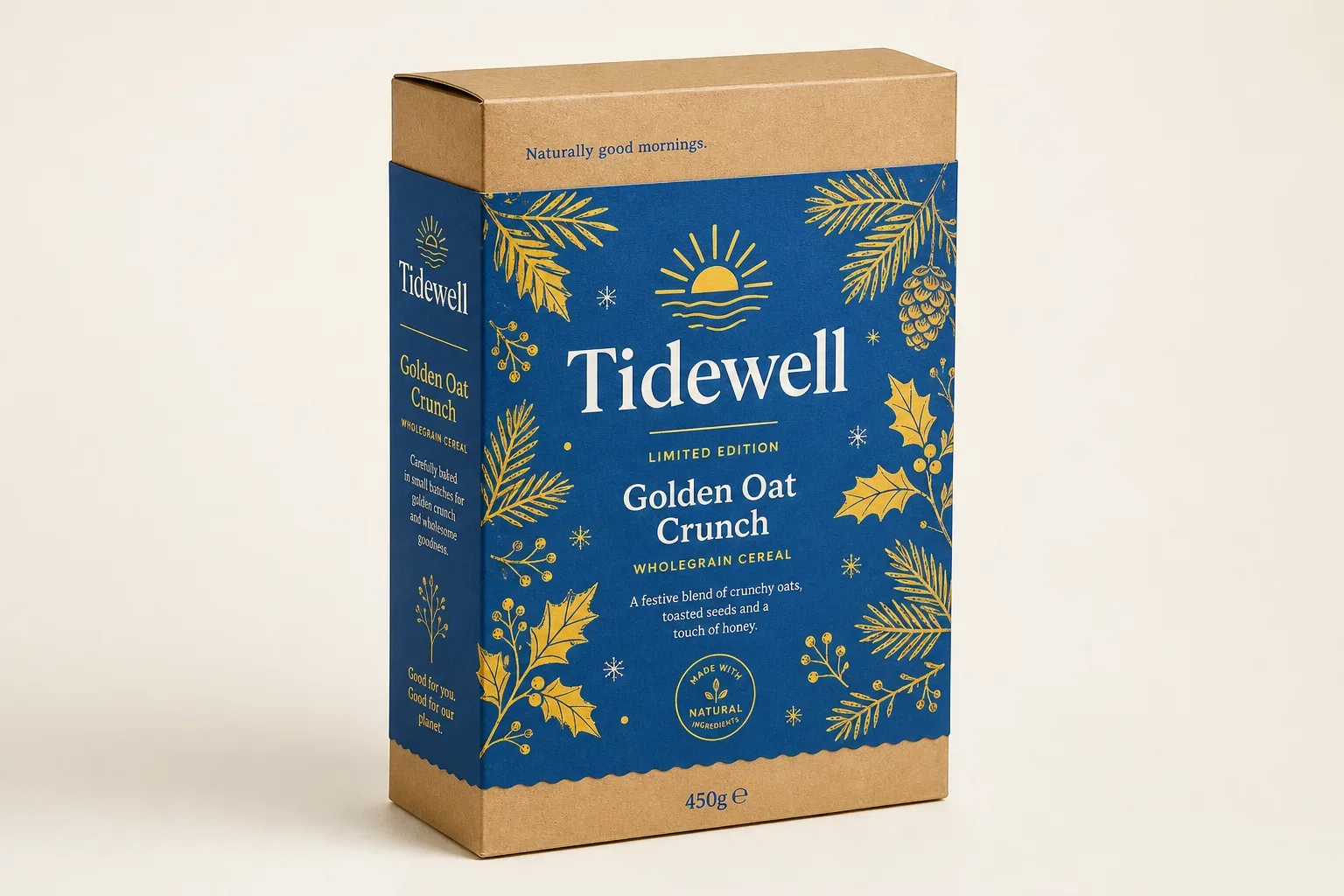
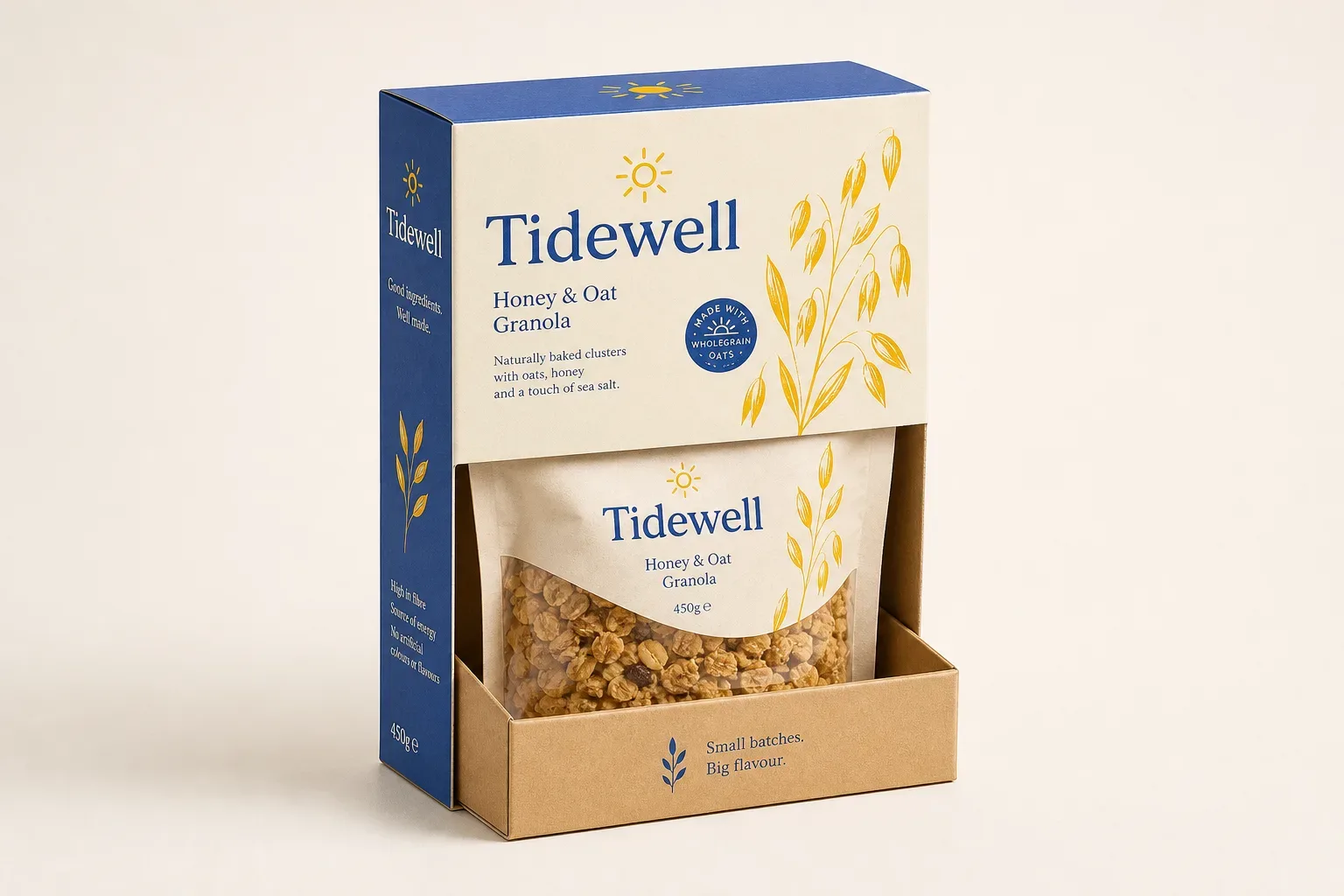
Sleeves are strongest where flexibility matters more than enclosure. Typical jobs: a seasonal or retailer-exclusive design over a standard pack, a band that turns three cartons into a cereal multipack, a wrap for instant oatmeal and porridge pots, and a drawer-style pack for a premium pouch.
They are a good tool for promotional cereal packaging, since the sleeve can be removed and the base pack sold as normal afterwards. They are not suitable on their own for loose or bagged cereal that needs a closed carton around it.
Structure and closures
Fit is everything. The sleeve's inside dimensions are the inner pack's outside dimensions plus a small clearance, and the right clearance depends on board caliper, lamination and how rigid the inner is. We prefer to set it against a physical sample of your pack, because a soft pouch and a rigid tray of the same nominal size behave very differently.
A sleeve has no closure of its own. Where it must stay put, a small retention nick, a friction fit or a seal label holds it. A thumb notch makes removal easier. On multipacks the sleeve is sized tight, and tuck-in end tabs can be added to stop packs sliding out.
Material options
Because the inner pack provides the strength, sleeves run on lighter board than cartons: 14 to 18pt is typical. SBS gives the best print and a clean white edge at the open ends. Kraft suits natural ranges and pairs well with a kraft tray. Coated recycled board is a sensible choice for short-lived promotional sleeves.
The tray, where there is one, can be the same board or something heavier and plainer, and can carry a paperboard insert to hold a pouch or jars in place. Mixing a white printed sleeve with an unprinted kraft tray is a common and economical combination. For the natural-board option, see kraft cereal boxes.
Printing and finishing
A sleeve is all print area: four panels with no flaps. Designs can wrap continuously around the pack, which is harder on a carton with closures. Offset printing suits volume; digital printing suits the many short versions that sleeves are often used for.
Finish affects how the sleeve slides. Gloss and soft-touch laminates grip differently, and a laminated sleeve over a laminated inner can be tight. We allow for that in the fit. The inside can also be printed, a nice touch on drawer-style packs; see inside printed cereal boxes.
Size considerations
A sleeve is sized from the inner pack, not from the product. Measure the pack filled, not empty: a pouch bulges, a carton bows slightly, and a bundle of three is wider than three times one. Length is a design choice. A full-length sleeve covers the pack; a shorter band leaves the ends visible and uses less board.
For multipacks, check the retailer's shelf depth and whether the bundle will stand or lie. For pots, the sleeve follows the pot's taper, which calls for a curved blank. Send samples and we will measure them.
Retail considerations
A sleeve changes the selling unit without changing the product. That is useful for price-marked packs, multibuy bundles and retailer exclusives, but it means the barcode has to be right: a multipack sleeve needs its own barcode and must cover the barcodes on the packs inside.
Open ends show what is underneath, so the inner should be presentable from the side. Sleeves can be lifted off in store, so add a retention feature where tampering is a concern. For shelf trays that hold sleeved packs, see shelf-ready cereal packaging.
Artwork tips
Work on our dieline and note where the glue seam falls; keep it on the back or base and avoid running fine detail across it. Keep 3mm bleed at the open ends and 4mm safety from scores. If the design wraps around, allow for a small step at the seam.
Place a new barcode on multipack sleeves and make sure inner barcodes are hidden. Leave space around thumb notches. Our cereal packaging artwork guide covers file set-up. When you have the inner pack dimensions, request a cereal sleeve quote.
Send us your inner pack. We will size the sleeve to it.
Post or describe the pack the sleeve will cover and we will measure it filled, set the clearance and send back a dieline, with a plain sample sleeve to try for fit.
Cereal sleeves: questions and answers
A printed, open-ended paperboard sleeve that slides over an inner pack such as a tray, pouch, plain carton or group of small packs. The sleeve carries the branding; the inner pack protects the product.
Already have the pack? Let's dress it.
Tell us what the sleeve covers and how many you need. We will size it, price it and send a sample to try.
