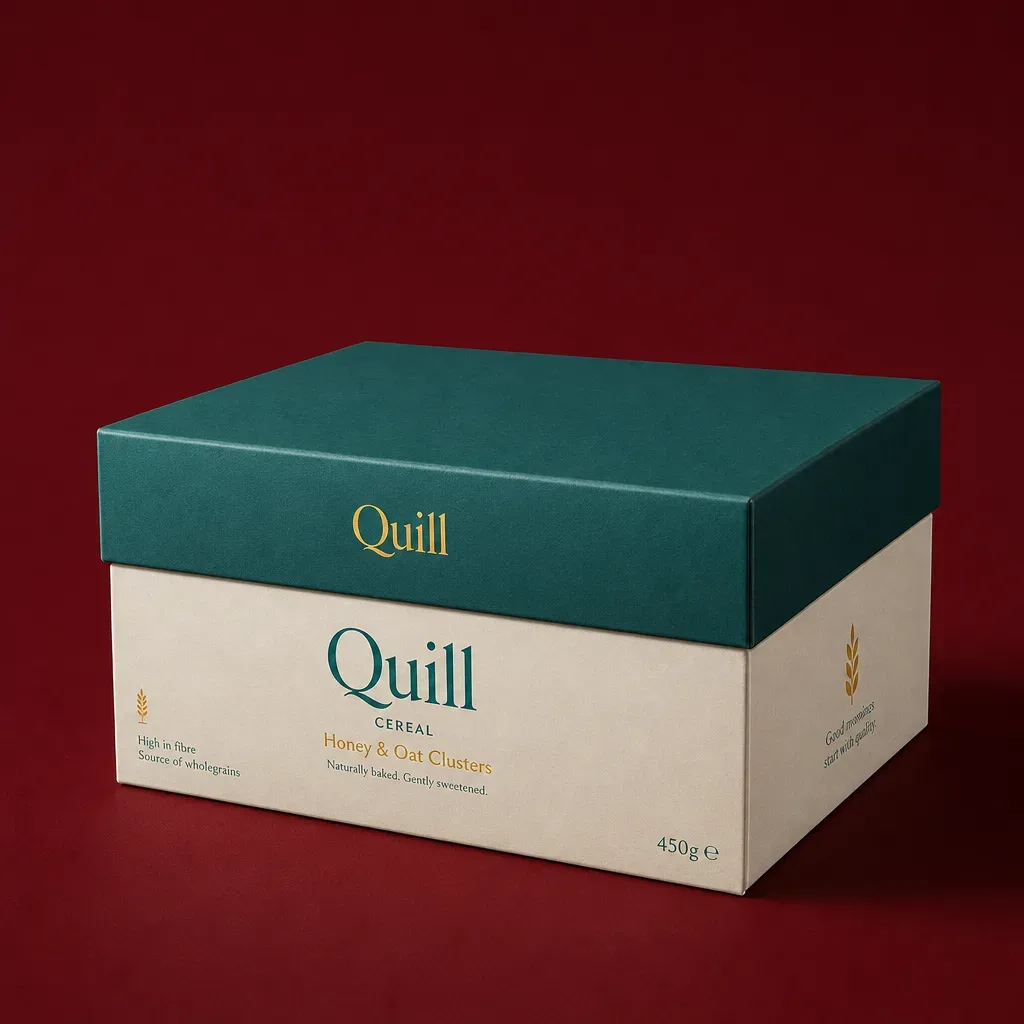
Two piece cereal boxes
Two piece cereal boxes are made of a base and a separate lid that lifts straight off. Opened, everything inside is on view at once, which is why the format is used for gift sets, assortments and presentation packs and not for a single bag of flakes. We make them as flat-packed folding cartons or as rigid set-up boxes, depending on how the pack will be used. Most are fitted with cereal box inserts to hold the contents in place.
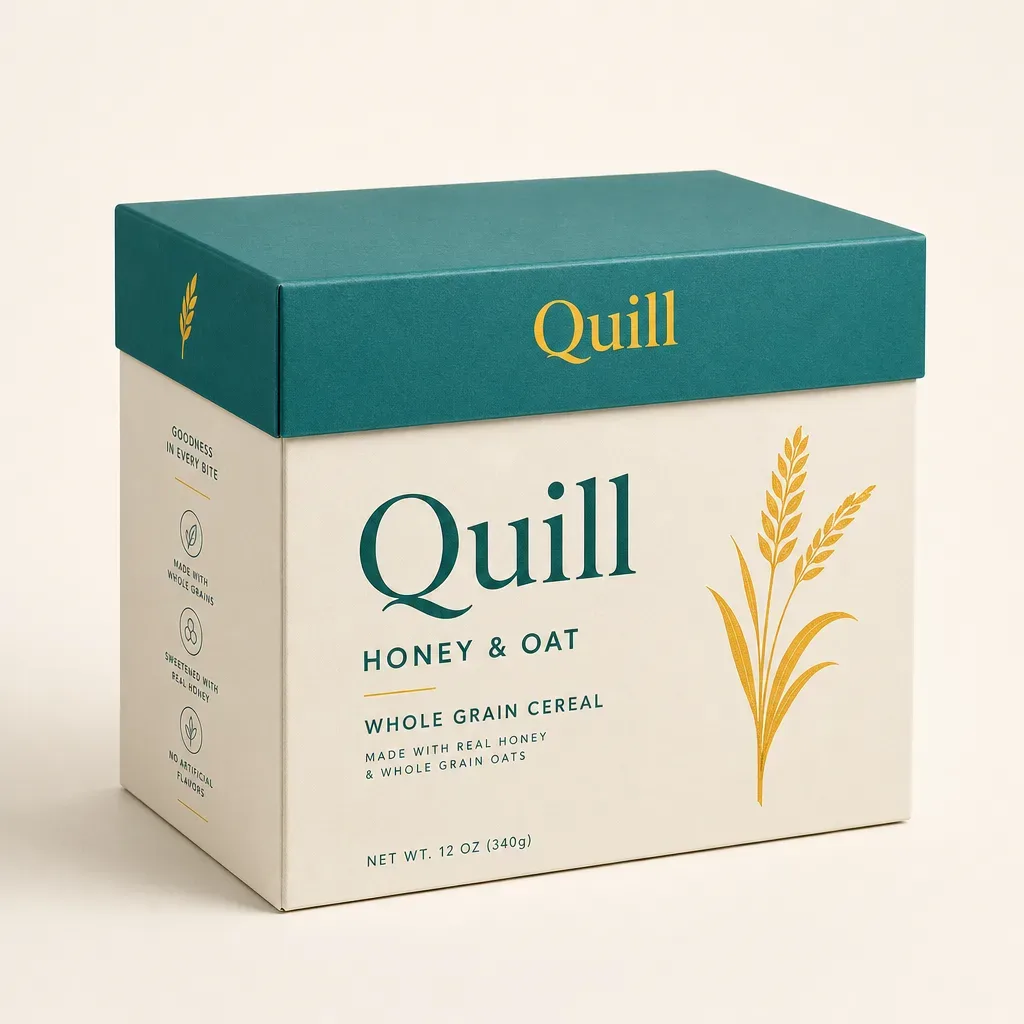
A lid and base cereal box that opens like a gift.
A tuck carton is opened from one end and emptied. A two-piece box is opened from above and looked into. The lid comes away, and the contents sit in the base, arranged and visible together. For a set of granolas, a breakfast hamper or a subscription's first delivery, that moment is the point of the packaging.
It costs more than a one-piece carton: two components, more board, usually hand packing. So it belongs where the pack is part of what is being bought. For a similar reveal at lower cost, cereal sleeve boxes slide a printed sleeve over a simple tray.
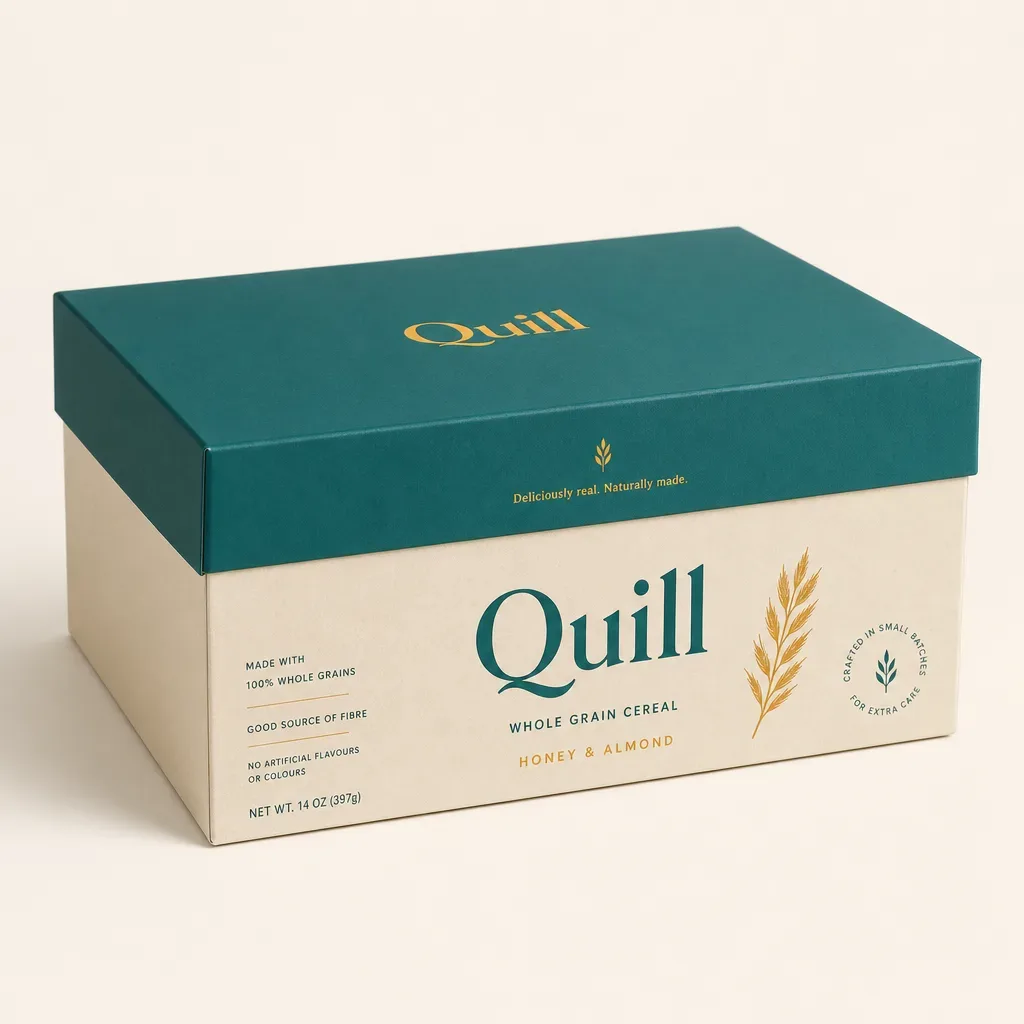 lid over base — corner macro
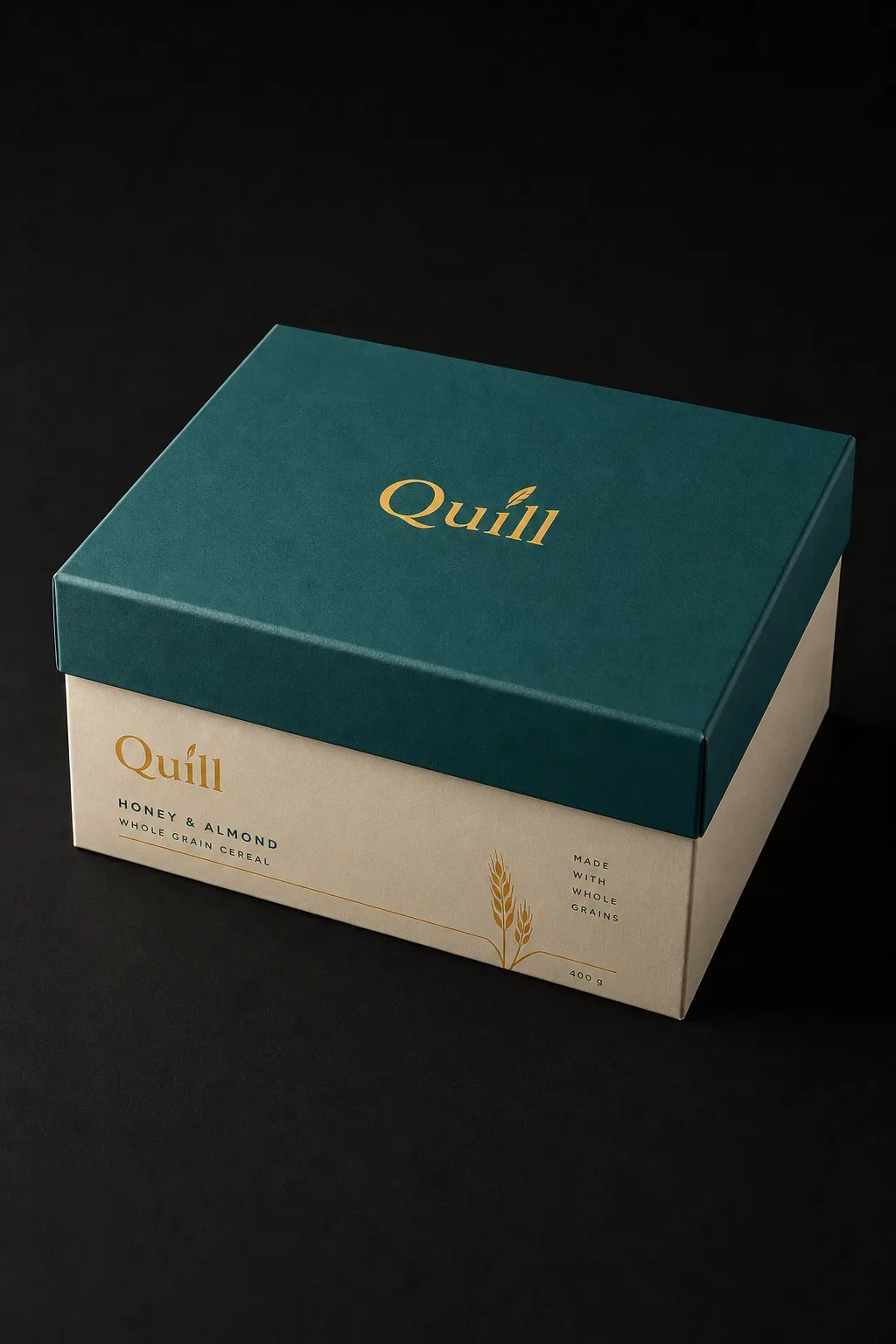
Six parts of tray and lid packaging.
Choose a point on the box, or follow the list.
The top face and the main printed surface. It is seen from above, so designs are composed flat, more like a book cover than a carton front.
Two blanks, folded up at the corners.
Base and lid are each a panel with four walls. On a folding-carton version the walls fold up and lock or glue at the corners, and both parts ship flat. On a rigid version, thick greyboard is wrapped in printed paper and arrives assembled. The flat-packed route follows the same rules as any carton; see how a cereal box dieline works.
Board, print and finish for a two-piece cereal box
Select an option to update the specification. Folding and rigid versions use different materials; both are outlined on the materials and printing page.
Two-piece box specification
Where a lift-off lid is worth it
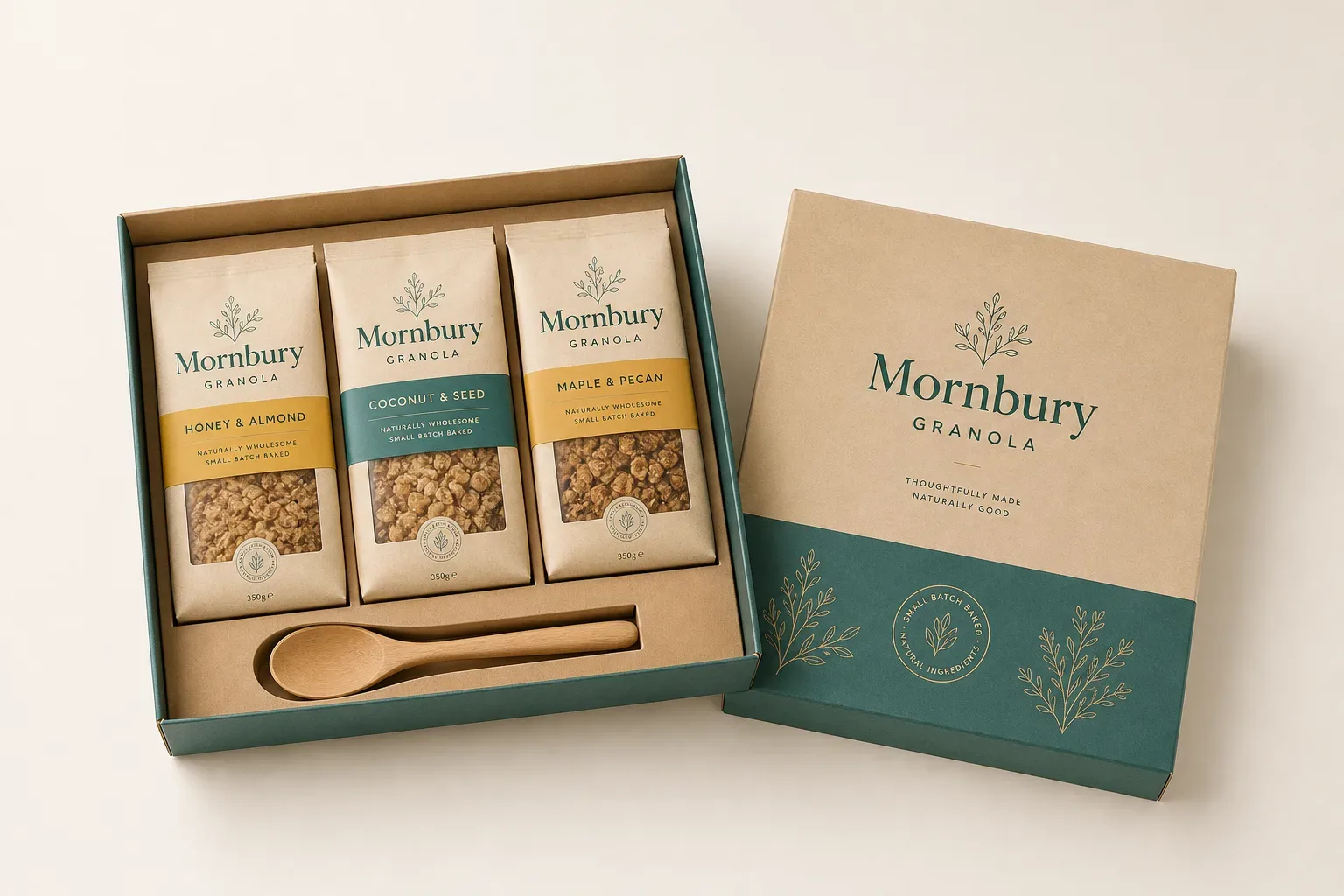
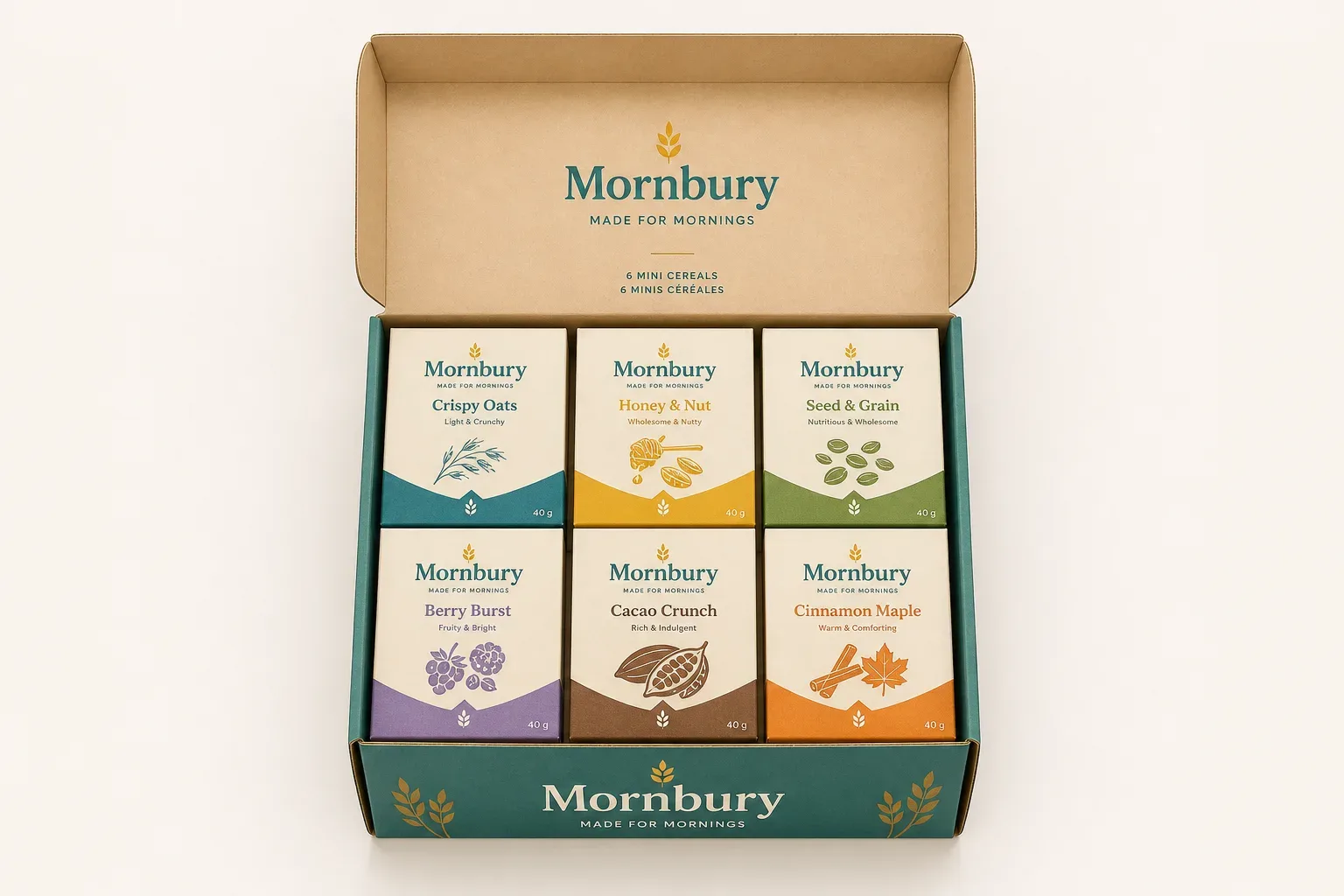
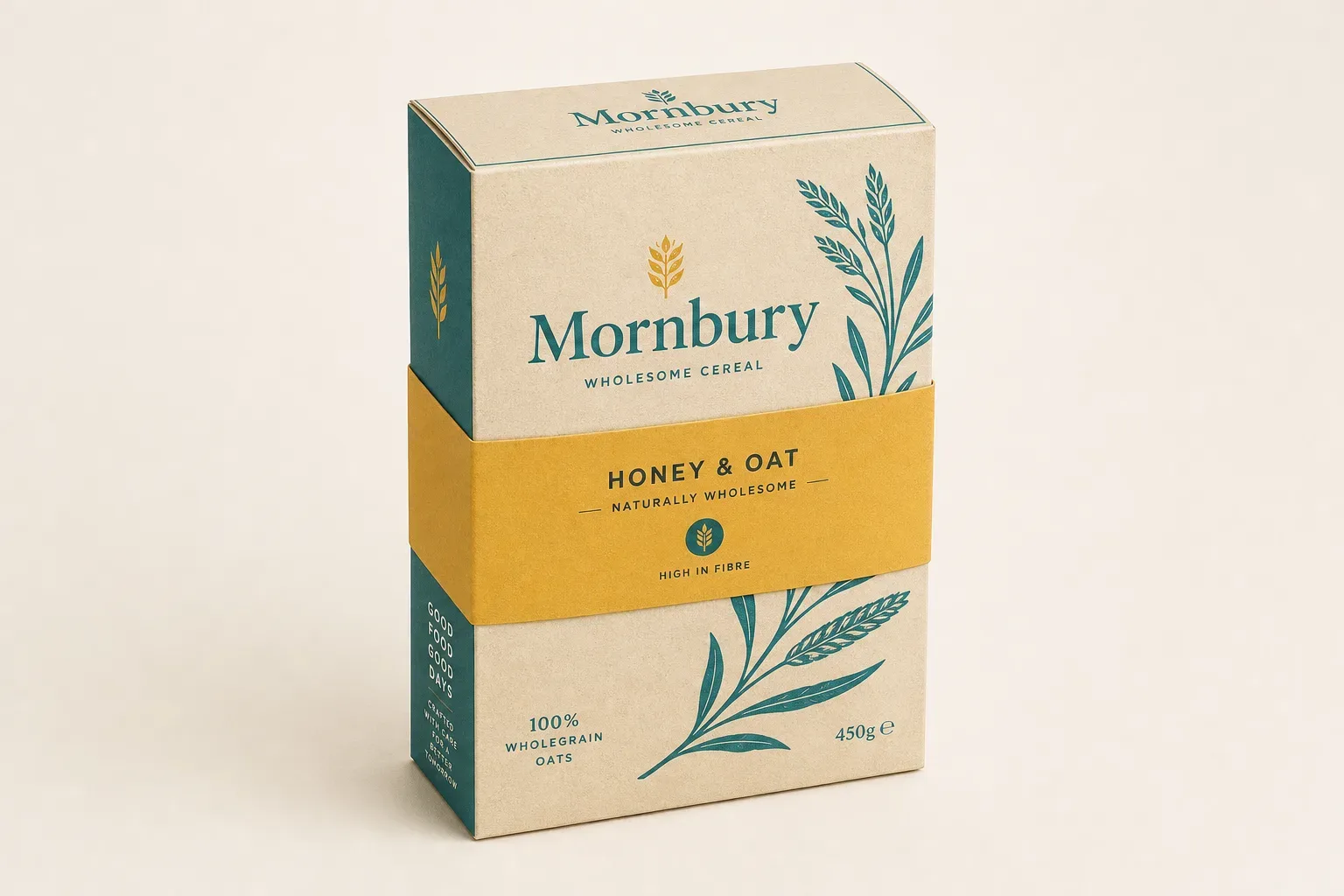
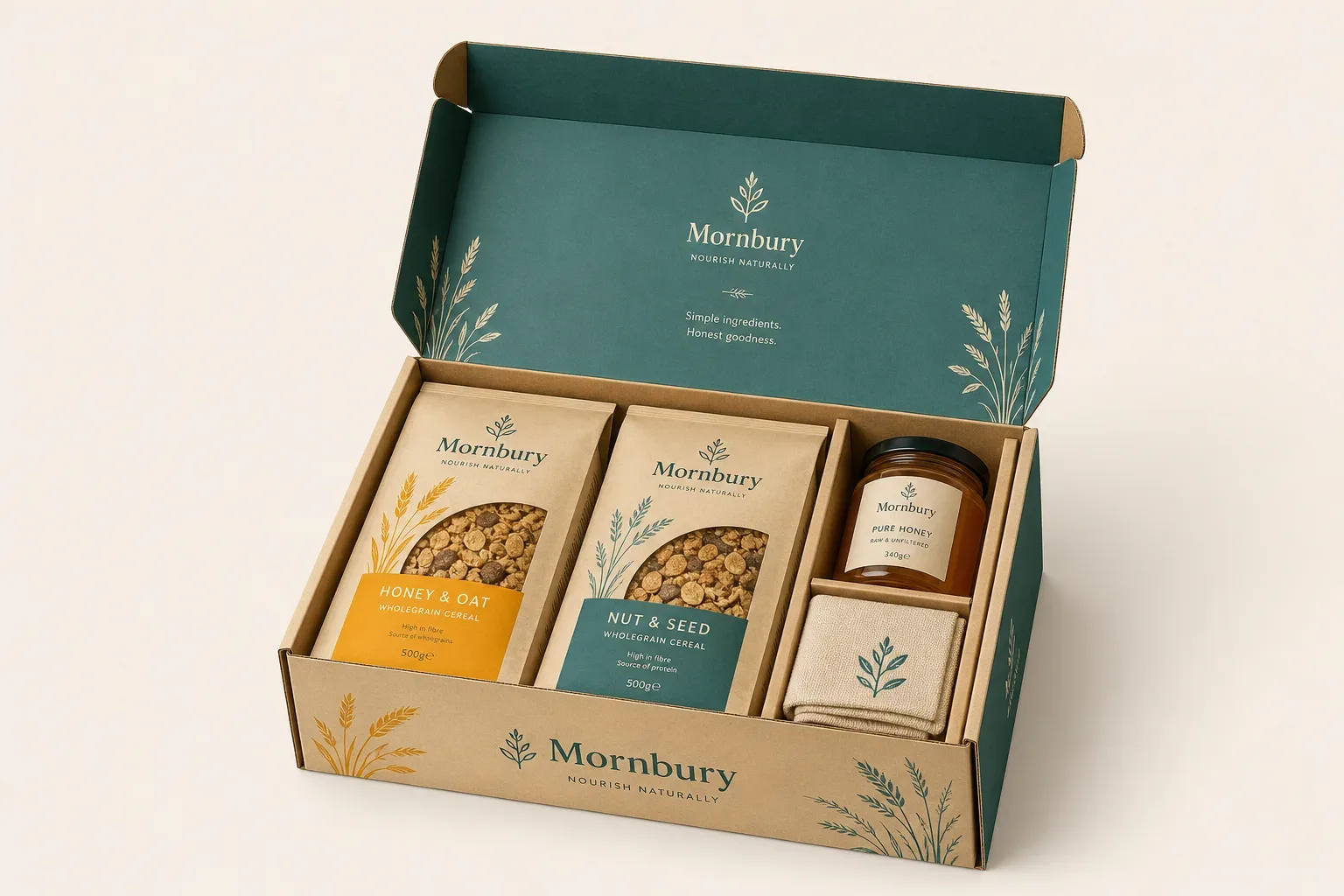
From contents list to packed set
About two piece cereal boxes
What a two-piece cereal box is
A two-piece cereal box consists of a base, sometimes called a tray, and a separate lid. Each is a flat panel with four walls. The lid is made slightly larger than the base so it lowers over it. There are no hinges, tucks or flaps; the lid is simply lifted away.
The same format is called lid and base, tray and lid, or a telescope box, because one part slides over the other. A full telescope lid covers the base walls completely; a partial lid covers only the top portion. It is the presentation format among our bespoke cereal boxes.
Best uses
Use it when a pack holds several items or is bought as a present: a set of granolas, a tasting range, a breakfast hamper, a seasonal edition. It is the standard format for cereal gift boxes and a strong option for the first box in a cereal subscription.
It is not the format for one bag of everyday cereal. A lift-off lid gives no pouring edge, the pack lies flat when a shelf wants it upright, and filling is by hand. For single products, a standard carton does the job at a fraction of the cost.
Structure and closures
There are two ways to build it. A folding-carton version is die-cut from paperboard, ships flat and is erected by folding up the walls and locking or gluing the corners. A rigid version, covered under rigid cereal boxes, uses thick greyboard wrapped in printed paper and arrives ready-made. Rigid feels more substantial; folding costs less and stores flat.
The lid stays on by fit alone. In transit it needs help: a paper band, a seal label, shrink film or a snug outer shipper. Inside, the contents should always be in sealed primary packs, since a lift-off lid is no barrier.
Material options
For folding versions, heavier paperboard is used than on a standard carton, typically 24pt, because the walls are short and the box is judged by how solid it feels in the hand. Double-wall trays, where each wall folds over on itself, add thickness without changing the board. Kraft works well for artisan sets.
Rigid boxes use greyboard two to three times thicker, wrapped in a printed or textured paper. For heavier contents such as jars, E-flute corrugated with a printed liner gives strength and can double as the shipping pack. See corrugated cereal boxes.
Printing and finishing
The lid is a flat, uninterrupted surface viewed from above, so it rewards restraint: a wordmark, a foil detail, a texture. Soft-touch lamination, foil stamping and embossing are common here and far more noticeable than on an upright carton. These are covered under premium finishes for cereal packaging.
The base is often left plain or printed in a single colour, inside and out, which keeps cost down and makes the contents the focus. Printing the inside of the lid with a message or product guide is a simple addition that people notice.
Size considerations
Size is worked out from the contents, arranged the way they will be presented. We lay out the items, add the insert walls and clearances, and that gives the inside of the base. The lid follows. Depth is set by the tallest item plus a little headroom so the lid does not press on the contents.
Shallow and wide is the natural proportion. If the pack will be posted, check it against carrier size bands before fixing dimensions; a few millimetres can change the shipping price. This is discussed in cereal packaging for eCommerce.
Retail considerations
In a shop, two-piece boxes are displayed flat or on an easel, often with one open as a sample, so they need table or shelf space that a standing carton does not. They sell best in gift areas, delis and online, where they can be shown open in a photograph.
Because the lid lifts off, secure it for retail with a band or label that also carries the barcode and legal information. That keeps the lid design clean and means regulatory copy can change without reprinting the box.
Artwork tips
You will receive separate dielines for lid, base and insert. Keep 3mm bleed and wrap artwork around the lid's walls so no unprinted edge shows at the corners. On rigid boxes, allow for the paper turning in over the rim. Keep text 4mm clear of every fold.
Decide early where the mandatory information lives: usually the underside of the base or a removable band. Think about what the customer sees as the lid comes off, and print the insert or the lid's inside accordingly. For file set-up, see the artwork guide for cereal boxes; then request a two-piece box quote.
Tell us what goes in the box. We will plan the layout.
Send a list of the items with sizes, and we will return a simple layout drawing: how the contents sit, the insert that holds them and the box dimensions that result.
Two-piece cereal boxes: your questions
Boxes made of a separate base and lid. The lid lifts off to show the contents. They are used for cereal gift sets, assortments and presentation packs.
Building a set? Start with what goes inside.
A contents list and a quantity are enough. We will plan the layout, recommend folding or rigid, and price both parts with the insert.