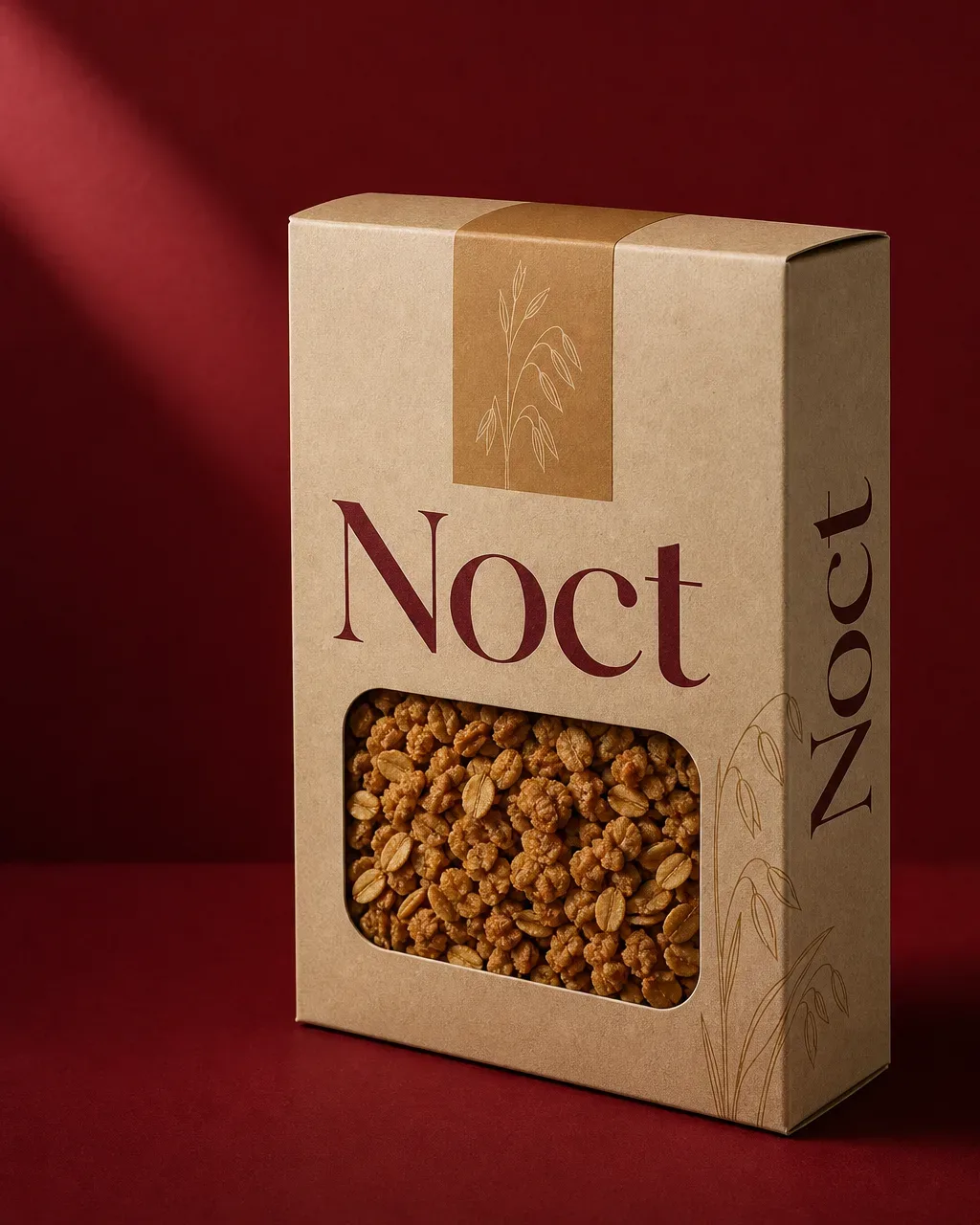
Granola boxes.
Granola is heavier, denser and more premium than a flake cereal, and the clusters are the whole selling point. That changes the board, the closure and, most of all, whether you show the product through a window. Granola boxes also have to protect toasted oats, nuts and oils from going stale over a long shelf life, and look good enough to justify a higher price.
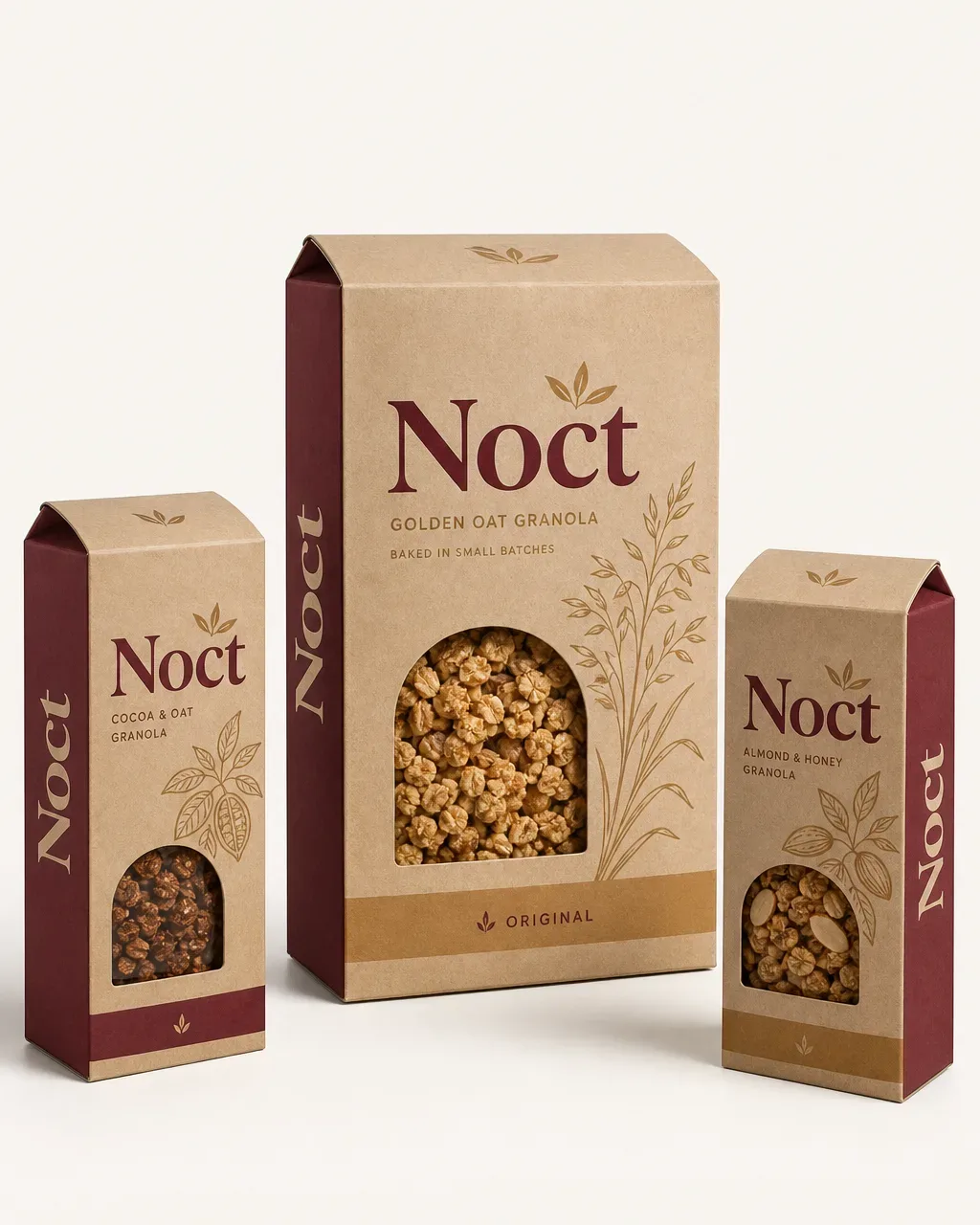
Denser product, different rules.
Boxes we'd normally specify for granola.

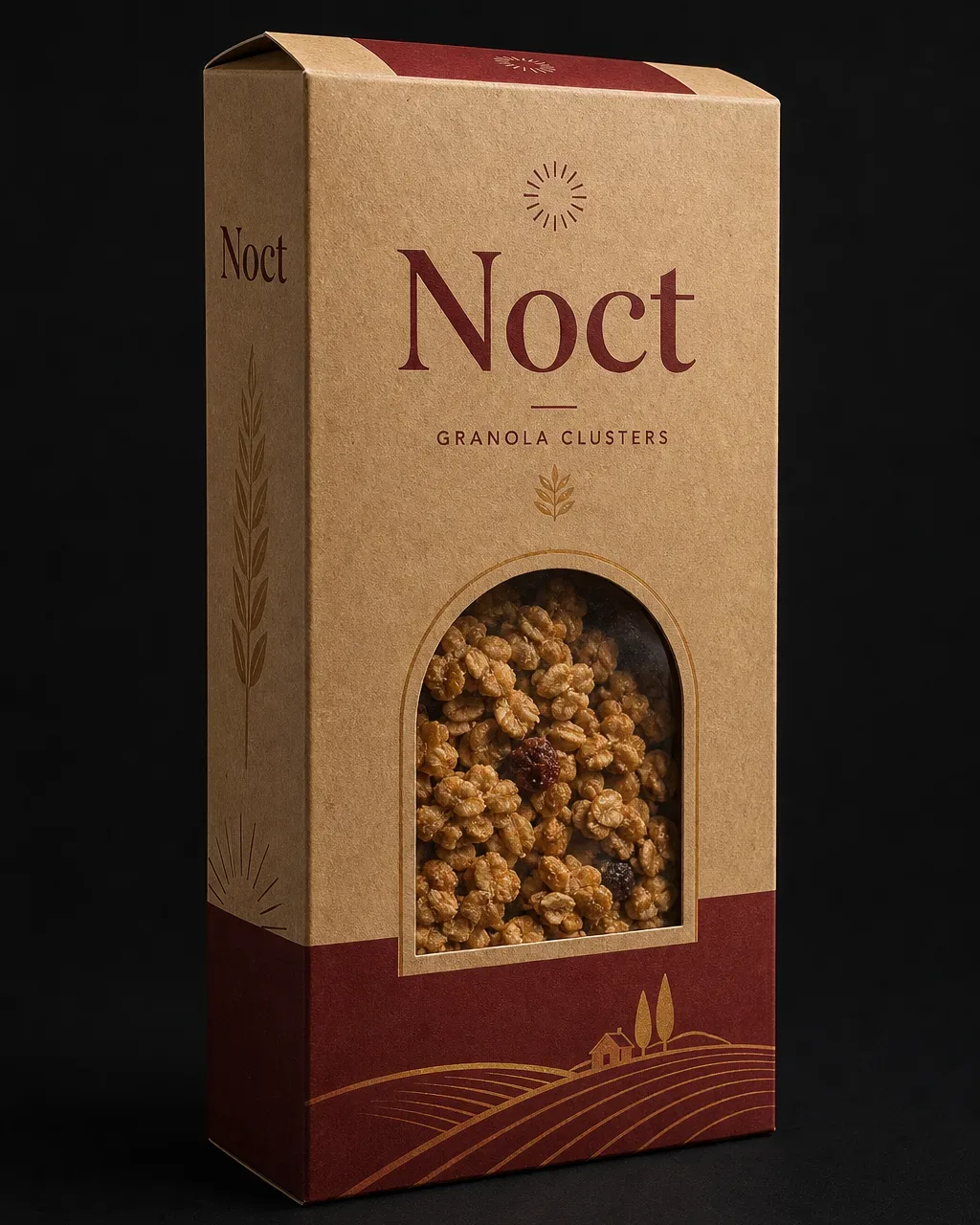
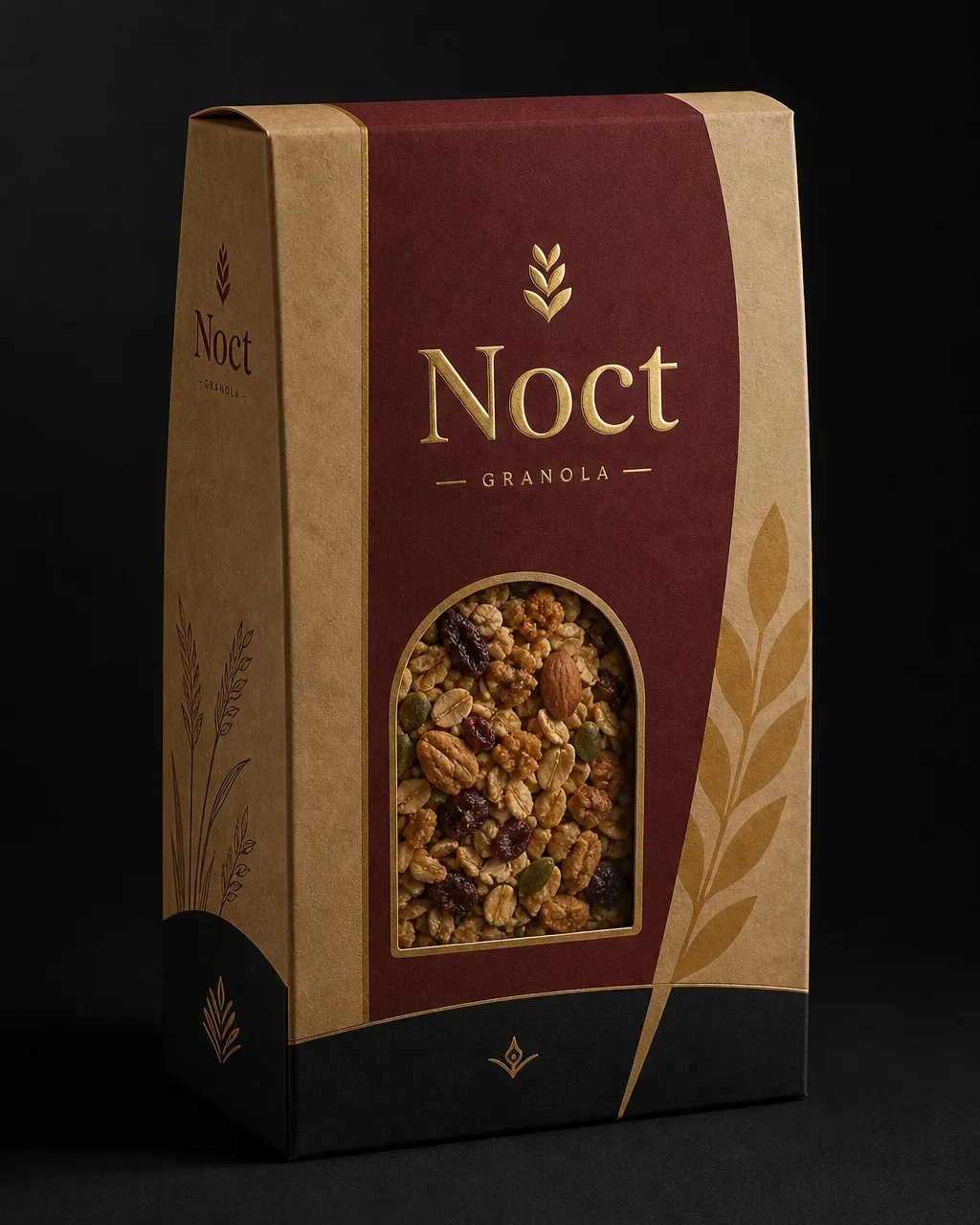

Kraft or coated? It's a brand decision.
Uncoated kraft reads as natural, small-batch and honest — right for a brand whose story is the ingredients. Coated SBS reads as considered and premium, and holds richer colour if your identity leans on strong graphics. Granola sells credibly either way; the board is a positioning choice more than a technical one. Finishes for the premium tier are covered under matte and soft-touch cereal boxes.
 coated SBS granola
What makes granola different
Granola is rolled oats and often nuts, seeds and dried fruit, bound with oil and a sweetener and baked into clusters. Baking makes it denser and heavier than a puffed or flaked cereal, and the clusters are what buyers pay for, so the pack has to protect them from crushing and show them off.
Untoasted mixes behave differently: their pieces are loose and separate in transit, as described under muesli boxes and pouches. Granola's clusters hold together, which makes settling less of a problem and breakage more of one.
Weight, density and the bottom closure
Because granola is dense, a carton of a given size holds more weight than a flake cereal carton. The load sits on the bottom panel and the side seam. A crash-lock bottom carries it without bowing and sets up quickly by hand; see auto lock bottom cereal boxes.
Density also makes the carton smaller for the same net weight, which affects front-panel area. Sizing is drawn from the bulk density of the actual recipe; the method is in the cereal box dimensions guide.
Showing the clusters
A window is the strongest selling tool a granola carton has. It sits over the fill zone, clear of scores and above the settled line, so the clusters stay visible until the pack is well into use. It needs a window bag or a film patch behind it; see cereal cartons with windows.
Where a window is not wanted, large, accurate photography of the clusters does a similar job. On kraft, photography prints darker and warmer, so it is proofed on the real board.
Oils, freshness and the bag
Granola contains oil, nuts and seeds, which oxidise over time and go stale. A sealed inner bag with a suitable barrier carries most of the protection; the carton keeps out light and protects the bag from crushing. Higher-fat recipes may need a higher-barrier bag.
Paper and compostable liners suit some recipes and shelf lives better than others and are trialled on the real product. Bag options are compared in the guide to cereal inner bags.
Board, finish and the premium tier
Granola usually sells at a higher price than mainstream cereal, so the surface carries the positioning. Kraft with one or two colours suits natural, small-batch brands. Coated SBS with a matte or soft-touch laminate, spot gloss and a foil detail suits premium ranges; see foil stamped cereal boxes.
Variant colour bands keep a flavour range clear on shelf and on the packing line. Allergen information for nuts and seeds must be clear in the format your market requires.
Shelf, channel and range
Granola sells through supermarkets, natural-food stores, cafés and online, often all at once. A carton that works across them has a front readable at shelf distance, a window or photograph that holds up on a phone screen, and dimensions that fit both a retail shelf and a two- or three-carton mailer.
Ranges grow quickly once a granola brand is established. A fixed layout with one changing colour band and one changing photograph makes each new flavour a new piece of artwork on an existing dieline, which keeps launches quick and the shelf consistent. Shipped orders are covered under eCommerce cereal packaging.
Sizes and launch runs
Granola is sold in mid-size cartons, larger value packs, small portion boxes and gift sets of several flavours; see cereal gift boxes. Short runs print digitally, which suits a launch or a seasonal variant without committing to offset volumes.
For the full set of structures see our cereal carton range, and request a granola packaging quote with your fill weight, positioning and whether you want a window.
Granola boxes, answered
Usually yes. Clusters are the reason someone pays a premium, and a window shows them directly. We place it over the fill zone, clear of scores and above the settled line.
Packaging a granola? Let's start with the clusters.
Tell us the fill weight, your positioning and whether you want a window — we'll recommend the board, closure and dieline.
Start your quote → Talk to a packaging specialist →