Straight tuck end cereal boxes
Straight tuck end cereal boxes close at the top and bottom with tuck flaps hinged from the same panel, so the front face shows a folded edge at both ends and no raw board. They need no glue at the point of fill, which makes them the practical choice for hand-packed, short-run and windowed cereal cartons.

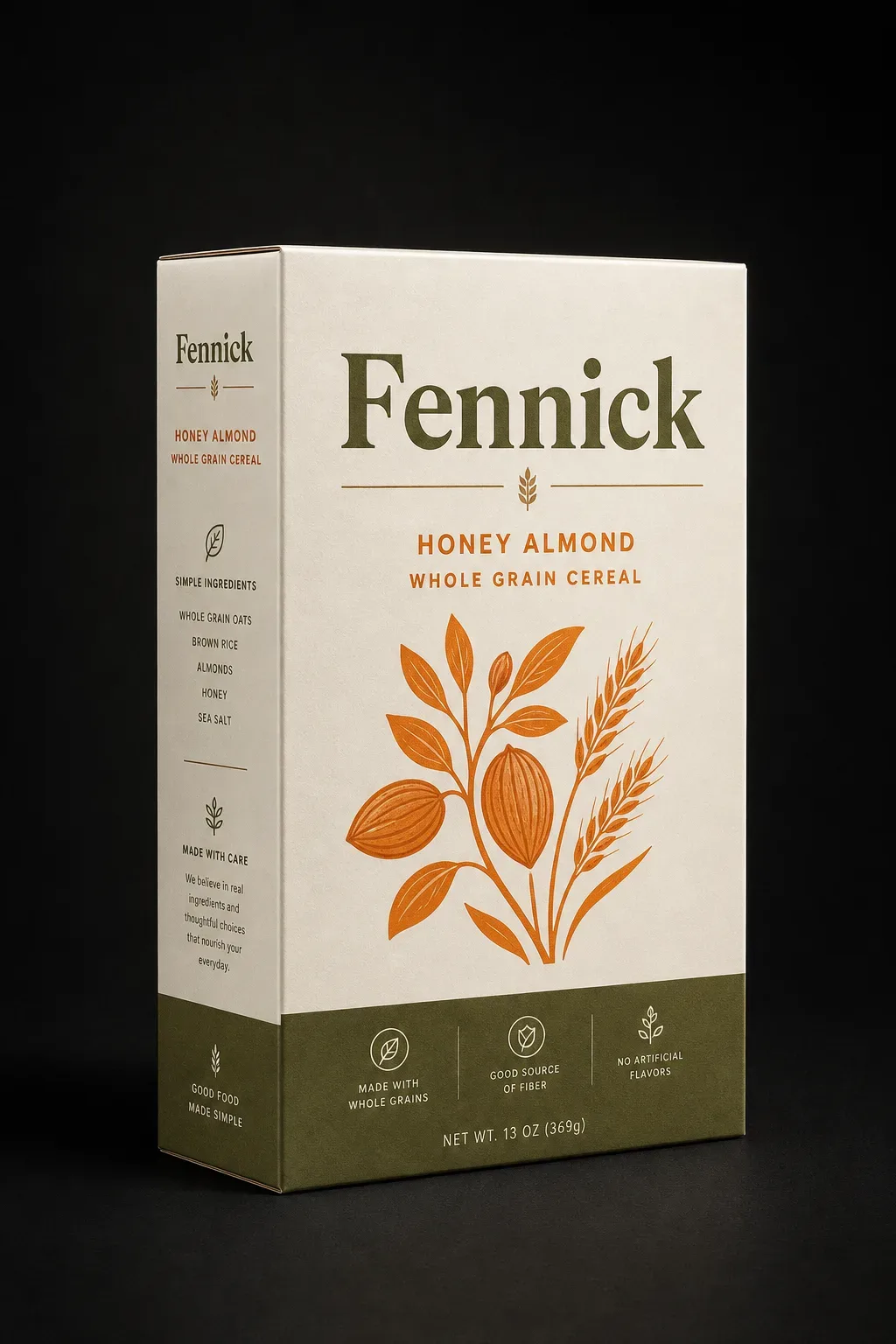
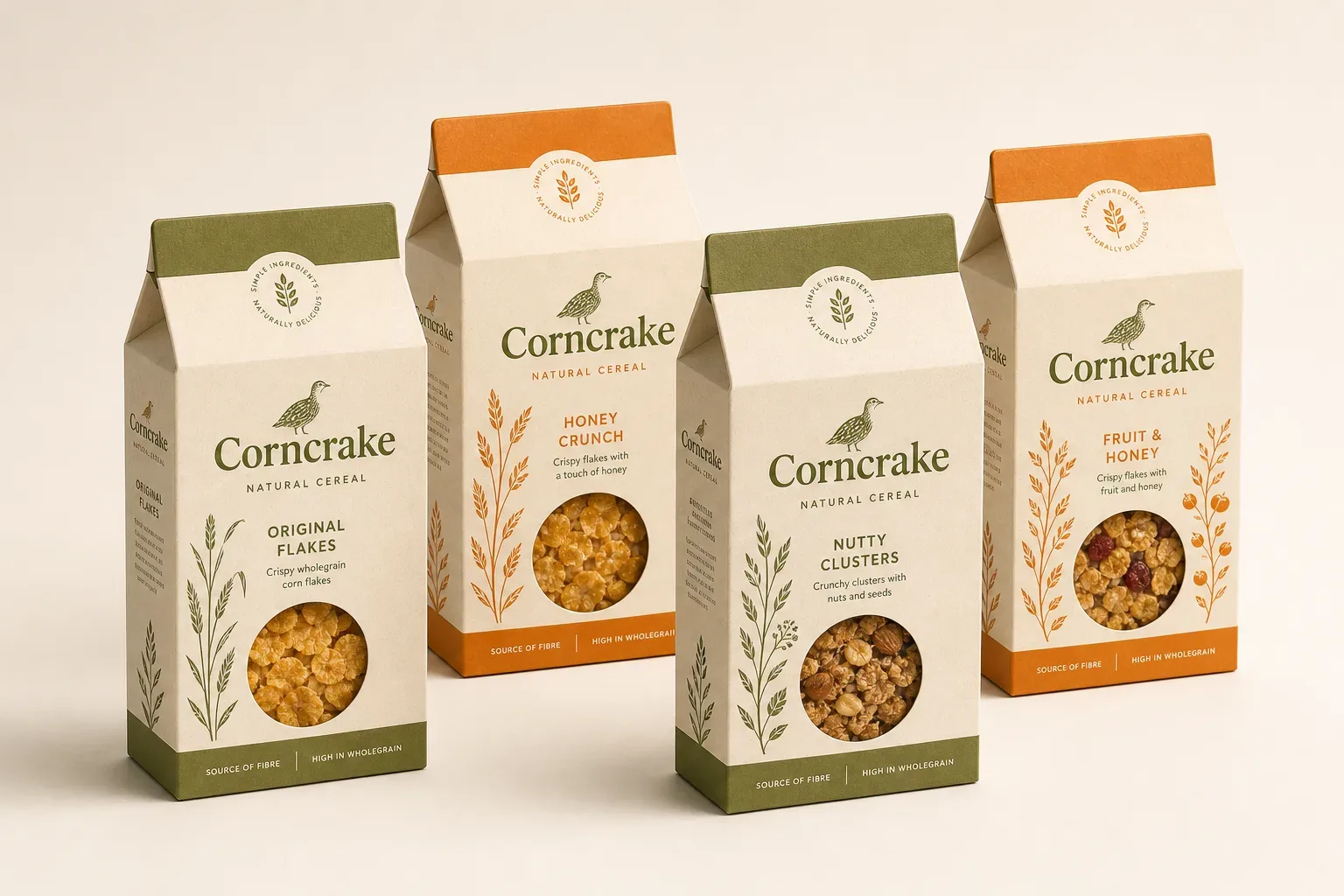
A tuck top cereal box with nothing to hide on the front.
On a straight tuck carton both closures are hinged from the front panel and tuck in behind the back. The shopper sees a scored fold at the top and bottom of the face, never a cut edge. On coated white board that edge would show as a thin line of raw fibre, which is why premium and organic cereal boxes so often use this layout.
It is also a closure anyone can operate. A carton is erected, the bag goes in and two tucks close it, with no adhesive and no equipment. The cost is a little more board per carton than a reverse tuck end carton, because straight tuck blanks nest less tightly on the press sheet.
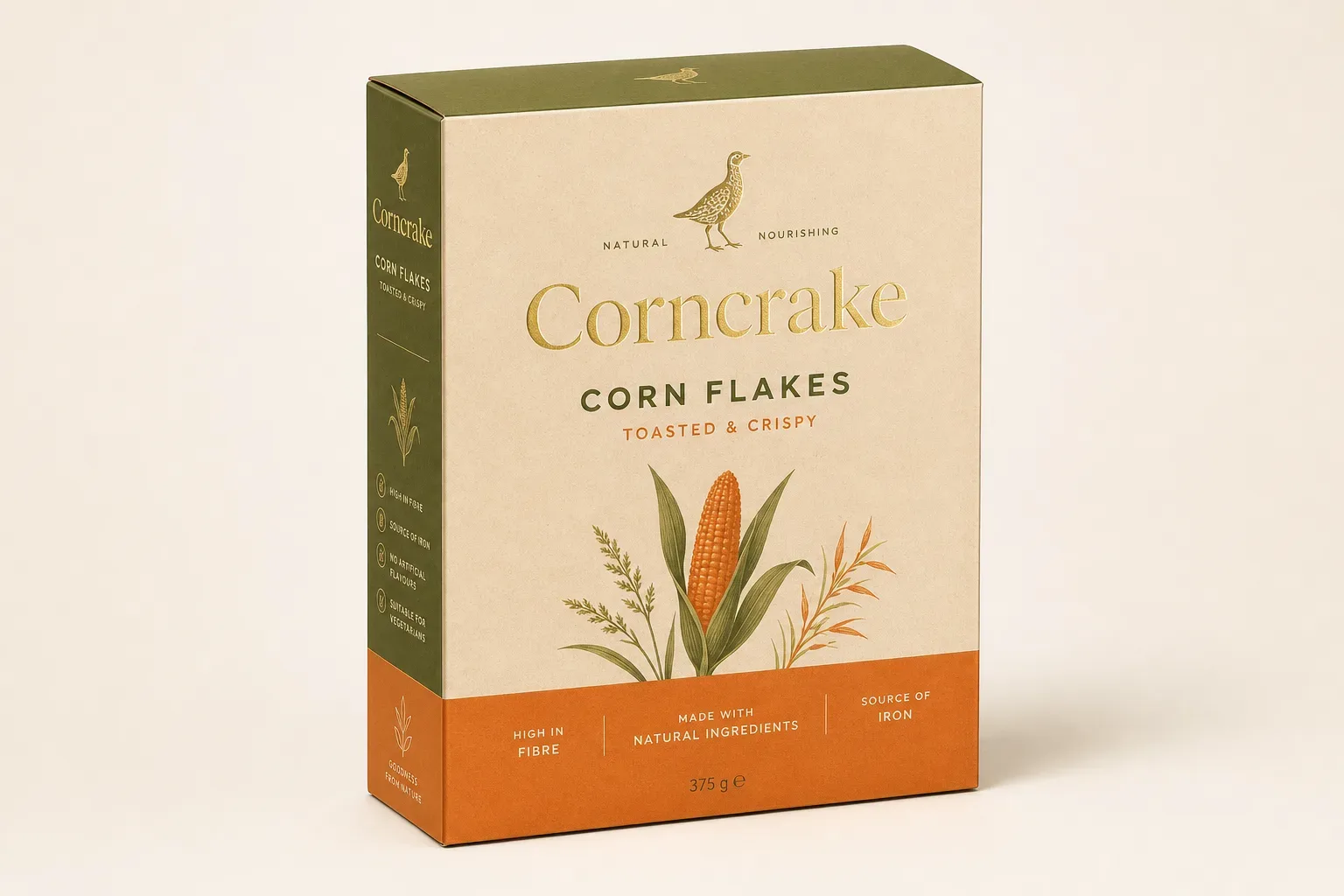
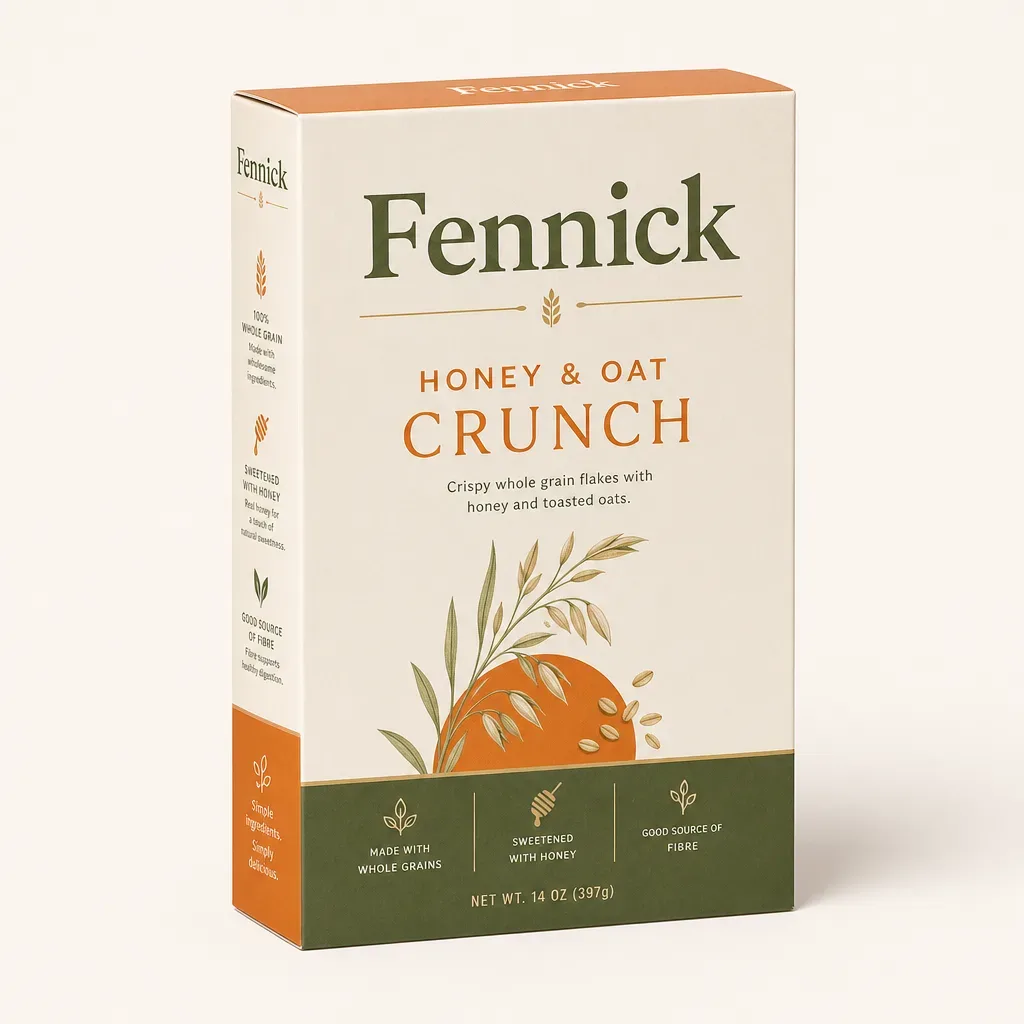 tuck flap and front score — macro
The six working parts of STE cereal boxes.
Pick a number on the carton or work down the list.
Hinged from the front panel and folded back over the dust flaps. Its width matches the carton depth, and it carries the tuck flap at its free edge.
One blank, two tucks, same side.
The blank shows why the front stays clean: both closure panels hang off the front panel. We ship the cartons side-seam glued and flat, ready to pop open. If you are drawing artwork yourself, start from one of our cereal box dieline templates.
Choosing board, print and finish for a tuck-end carton
Pick an option to update the specification. For how each surface prints, see paperboard and print options for cereal boxes.
Straight tuck carton specification
Where straight tuck cartons do their best work
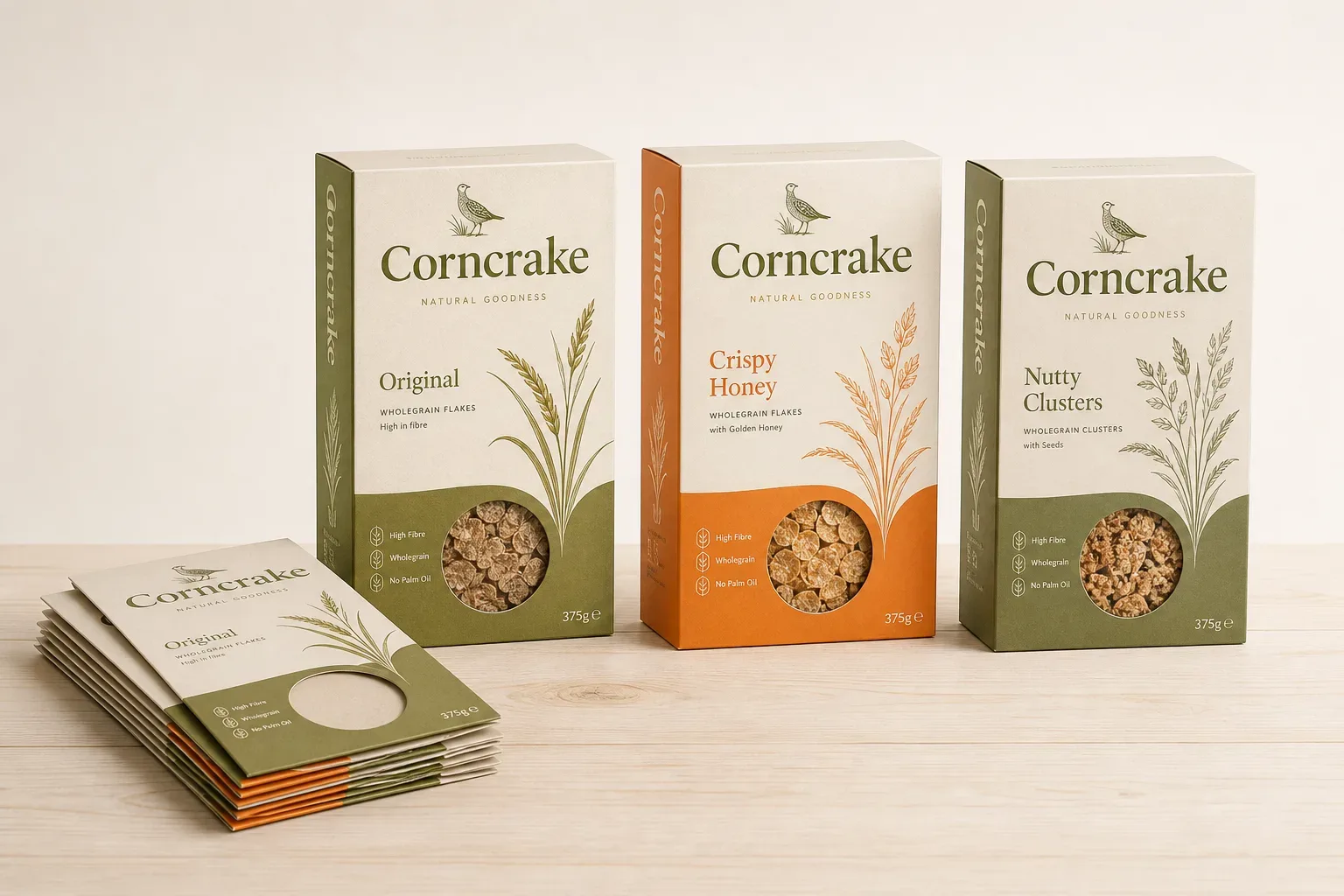
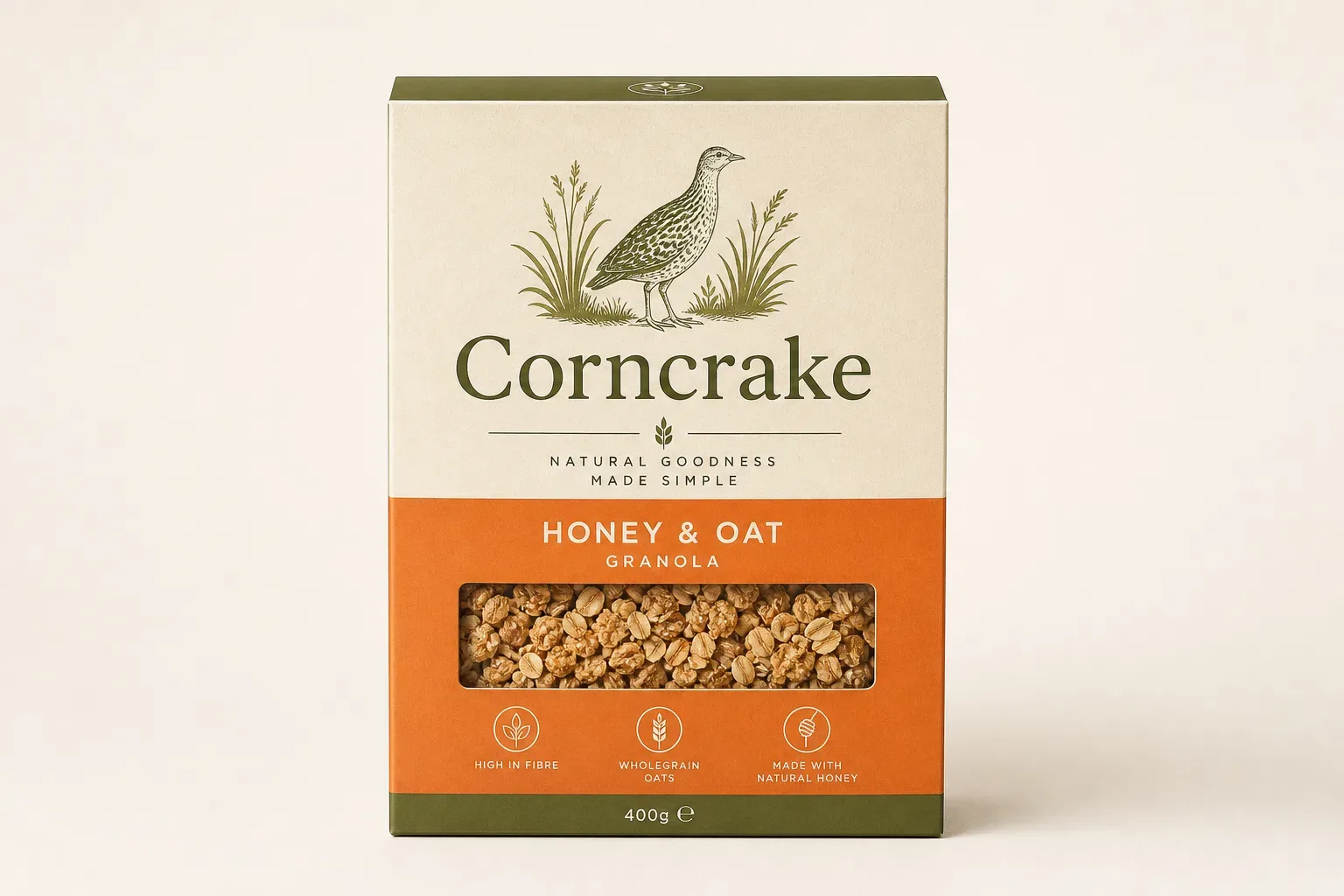
How a tuck-end order runs
About straight tuck end cereal cartons
What a straight tuck end cereal box is
A straight tuck end (STE) cereal box is a folding carton with a tuck closure at each end, both hinged from the same main panel. Each closure is a panel the depth of the carton with a tuck flap along its free edge. Dust flaps on the two side panels fold in first, the closure panel folds over them, and the tuck slides down behind the opposite panel. Friction, or a pair of slit locks, holds it shut.
"Straight" describes the direction: top and bottom close the same way. That one decision sets how the carton looks from the front, how the blanks sit on a press sheet and how the pack behaves on a bench. It sits alongside the glued and locking structures in our made-to-order cereal boxes.
Best uses
Choose a straight tuck for light to mid-weight cereals packed by hand or on a tuck-closing cartoner: flakes, puffs, small-format granola, toppings and inclusions. It suits launch runs, seasonal editions and sample cereal boxes, where quantities are modest and nobody wants to buy gluing equipment.
It is also the natural base for a mini cereal box, since the tucks open and reclose cleanly for single portions. It is less suited to heavy fills. Once the bag weight starts to bow the bottom tuck, a snap-lock bottom or an auto-lock bottom cereal carton holds the base far better while keeping the same tuck top.
Structure and closures
There are two ways to hold a tuck. A friction-fit tuck relies on the flap pressing against the inside of the panel and is the easiest to open. A slit-lock tuck adds two short cuts at the shoulders that hook over the dust flaps; it takes a firmer push to close and resists bulging in transit. For cereal with an inner bag we normally specify slit locks on the bottom and let you choose on the top.
A thumb notch in the top edge of the back panel helps opening. For tamper evidence, a clear seal label across the top tuck is the usual answer, or the top can be glued in the way seal end cereal cartons are. Shaped tops and cut-outs built on this base are covered under die cut cereal boxes. The guide to cereal box closures sets out the options.
Material options
Tuck-end cartons depend on scores that fold sharply and tucks that flex without cracking, so board quality shows quickly. 16 to 18pt SBS is the usual range: stiff enough for the panel, supple enough at the score. Heavier calipers suit taller cartons but make short tucks hard to close, so on small formats we go lighter.
Kraft board works well and its brown folded edge looks intentional. Recycled board is a sound choice with a matte or uncoated look, though its shorter fibres need a slightly wider score to avoid surface cracking on dark solids. Options are compared on the cereal carton board page.
Printing and finishing
Short runs and multi-flavour ranges print digitally, with no plates and artwork that can change by SKU. Larger quantities move to offset, in CMYK or with Pantone spots for brand colours. Either way the print wraps the front fold, so a solid colour should continue onto the closure panel rather than stop at the score.
Matte lamination with spot UV is the common premium pairing. Lamination also protects the fold: heavy ink coverage across a score can crack on unlaminated board. Soft-touch, foil and embossing all work on tuck cartons, provided foil and deep emboss are kept off the scores and the tuck flap itself.
Size considerations
Dimensions come from the fill: weight, bulk density and bag size, plus headspace for settling. Two limits are specific to tucks. Tuck length is tied to carton depth, so a very shallow carton gives a short tuck with little grip, and a very deep one makes the closure panel prone to dishing. And the bottom tuck carries the load, so tall, heavy formats call for a locking base.
For small and standard cartons none of this is a constraint. Send the fill weight and cereal type and we will return a recommended size, or read the guide to cereal box sizes for typical formats.
Retail considerations
The folded front edge is the retail argument for this structure: facings look finished at both ends, and on a low shelf the top of the pack is often what a shopper sees first. A tuck is also easy to open in store, so for supermarket distribution most retailers expect a seal label or shrink band.
Tuck cartons are popular in independents, farm shops and online, where packs are handled gently. For peg display, a hang tab can be added to the top closure. Whatever the channel, keep variant cues in the same position across the range so the set reads as one family.
Artwork tips
Design on our dieline with 3mm bleed and 4mm safety from every score. Carry front-panel colour over the top and bottom scores onto the closure panels, because the fold is visible. Leave the tuck flaps and dust flaps unprinted or in a flat tint; they are hidden when closed and heavy ink there only adds cost and scuff risk.
If you add a thumb notch, keep logos clear of it. Keep the barcode on the back or a side panel, away from the glue seam. Our cereal box artwork guide covers file set-up, and you can get a straight tuck carton quote with artwork attached at any stage.
Have your tuck-end artwork pre-flighted before it prints.
Send your file and we will check it against the dieline: bleed over the front folds, safety from the scores, barcode placement and anything on the tuck flaps that should not be there. You get a marked-up PDF back.
Straight tuck cereal boxes: common questions
They are folding cartons with a tuck closure at the top and the bottom, both hinged from the same panel. Both are hinged from the front panel and tuck in at the back, so the front shows folded edges and no raw board.
Packing by hand? Start with a carton that closes itself.
Send the fill weight or dimensions and your quantity. We will come back with a price, a dieline and a folded sample to try.
