Organic cereal boxes.
Organic cereal boxes carry a product sold on how it was grown, so the pack is judged on whether it looks and behaves consistently with that promise. Buyers expect natural materials, honest claims and as little plastic as is practical. The certification logo on the front is governed by rules, and the packaging itself is not 'organic'. This page covers what can be claimed and how the pack supports it.
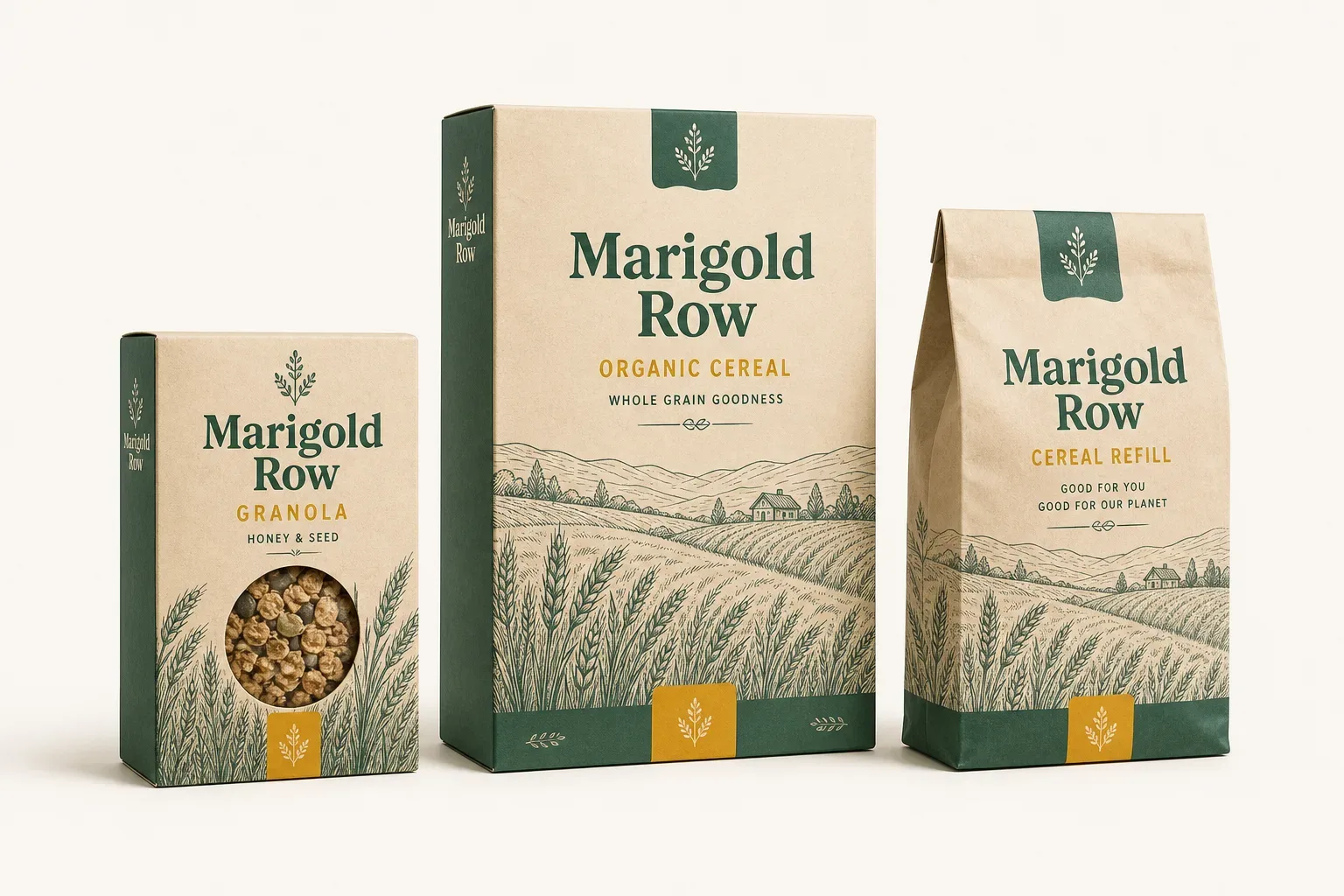
A pack that keeps the same promise.
Boxes we'd normally specify for organic cereal.

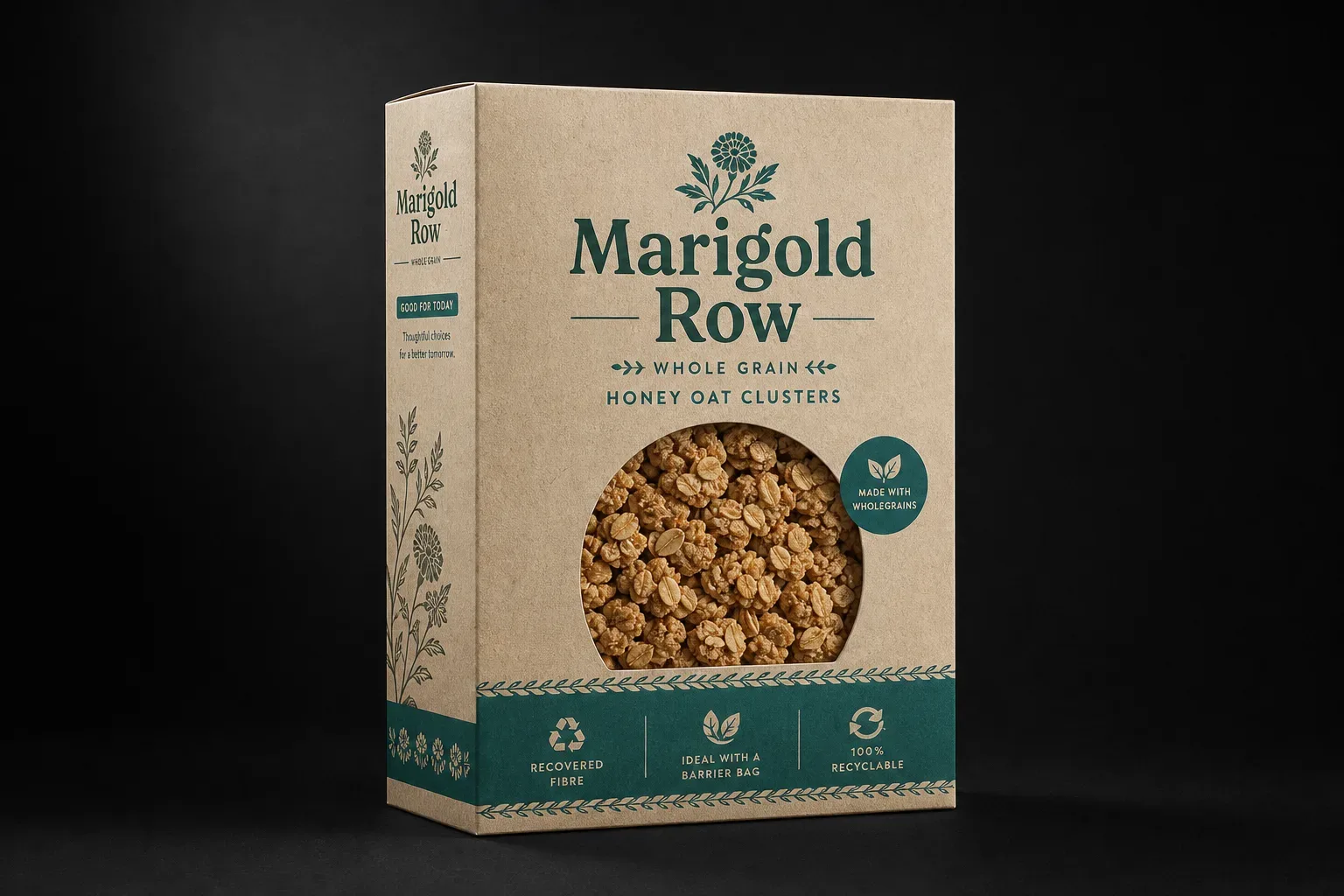


Rustic or refined? Both can be credible.
Organic cereal used to mean brown kraft and hand-drawn type. It still works, but premium organic brands increasingly use coated white board, restrained colour and good photography, and let the certification and ingredients carry the message. What matters is consistency: a natural story printed on heavy plastic film undermines itself. Lower-impact specifications are covered under lower-impact cereal carton options.
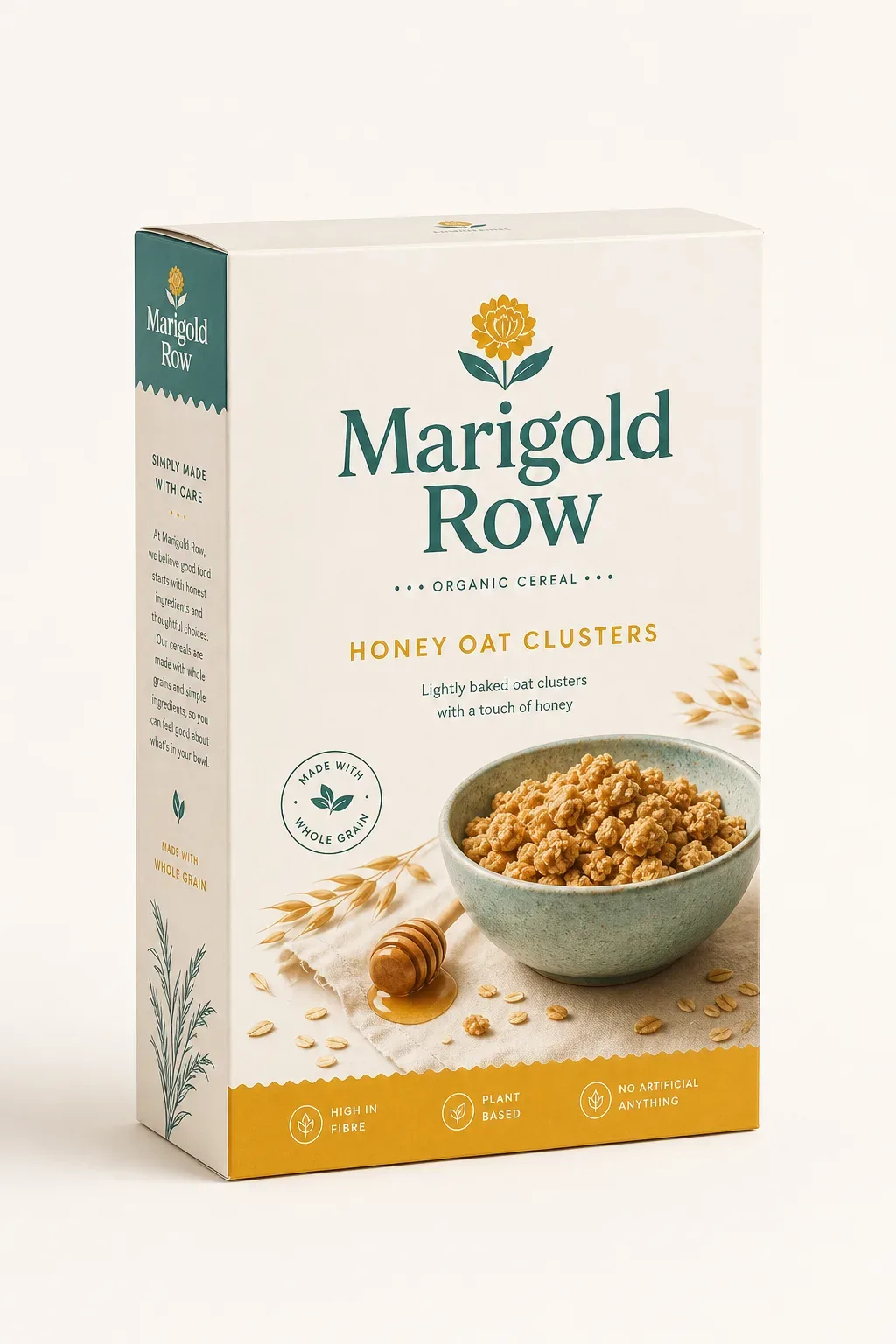 refined white carton
Organic cereal packaging in detail
What the organic logo means on a box
Organic certification applies to the food and to the businesses that produce, process and sell it. The logo on the box, such as a national or regional organic mark, may only be used by a certified product, and schemes set rules for size, colour, placement and the certifier code that must appear with it.
The packaging itself is not certified organic, and the box should not suggest otherwise. Print the mark exactly as your certifier supplies it. We print the artwork you provide and can lay out the panel so the mark and code sit where the scheme requires.
Boards that fit the story
Unbleached kraft is the obvious match for an organic brand, and it hides marks well; see cartons in unbleached kraft. Recycled board offers recovered fibre and is widely used with a sealed bag inside. Certified-forest board is available where the brand wants that claim, with chain-of-custody paperwork supplied per project.
Coated white board is not off-limits: it gives better photography and colour, and is still paper-based. The choice is about look and story, not about whether the cereal inside is organic.
Reducing plastic where it is practical
Organic buyers notice plastic. Common steps are dropping the film window or replacing it with an open die-cut over a printed bag, using an aqueous coating instead of a film laminate, and choosing a paper-based or mono-material bag where the product's shelf life allows; see plastic-free cereal packaging.
Barrier comes first: a bag that lets the cereal go stale wastes more than it saves. Paper liners are trialled on the real product before the switch. Bag options are compared in the guide to inner bags.
Packaging claims that hold up
Recyclable, compostable and recycled-content claims are regulated in many markets and must be true for the place where the pack is sold. A carton may be widely recyclable; a laminated carton or a compostable bag may not be accepted everywhere. Use specific wording and avoid broad terms like 'eco' on their own.
We supply material information and supplier statements for the board and inks used, but we do not issue certifications. The wider picture is set out in the sustainable cereal packaging guide.
Inks and finishes
Vegetable-based inks fit the sourcing story and print like conventional inks; see soy ink printed cereal boxes. One- and two-colour designs on kraft use less ink and look intentional. Matte finishes and uncoated board suit the category.
Allergens, ingredients and the certifier code must still be clear. On kraft, choose ink colours with enough contrast for small type.
Selling into natural and mainstream stores
Organic cereals sell through natural-food stores, mainstream supermarkets and online. Natural stores often favour simple, natural-looking packs; supermarkets need the pack to stand out among conventional brands, so the organic mark and a clear product name should be readable from a distance.
Retailers may ask for supporting information on packaging materials as well as the food. Keep supplier statements for board, inks and bags on file, and check any retailer packaging policy before artwork is final. The general rules are summarised in retail packaging requirements for cereal.
Vegan cereals and vegan marks
Vegan cereals contain no animal ingredients, such as milk powder, honey or gelatine, and many organic brands are vegan too. Like organic logos, vegan trademarks are licensed by their schemes and may only be used on products registered with them, in the form the scheme sets.
A plain 'suitable for vegans' statement also has to be accurate for the whole product. The carton itself is rarely the question, but brands sometimes ask about adhesives and inks; we can supply supplier information for the materials used on request.
Sizes and formats
Organic ranges cover the same formats as any cereal: standard cartons, family packs, portion boxes and refill bags. Refills sold alongside a reusable carton or canister fit the category well.
For all structures see our cereal carton range, and request an organic cereal packaging quote with your fill weight, certifier and any packaging claims you want to make.
Organic cereal boxes, answered
No. Organic certification applies to the food and the businesses handling it. The box carries the mark for the product inside.
Packaging an organic cereal? Start with the claims.
Send your fill weight, certifier and the packaging claims you'd like to make. We'll recommend board, inks, bag and wording to check.
Start your quote → Talk to a packaging specialist →