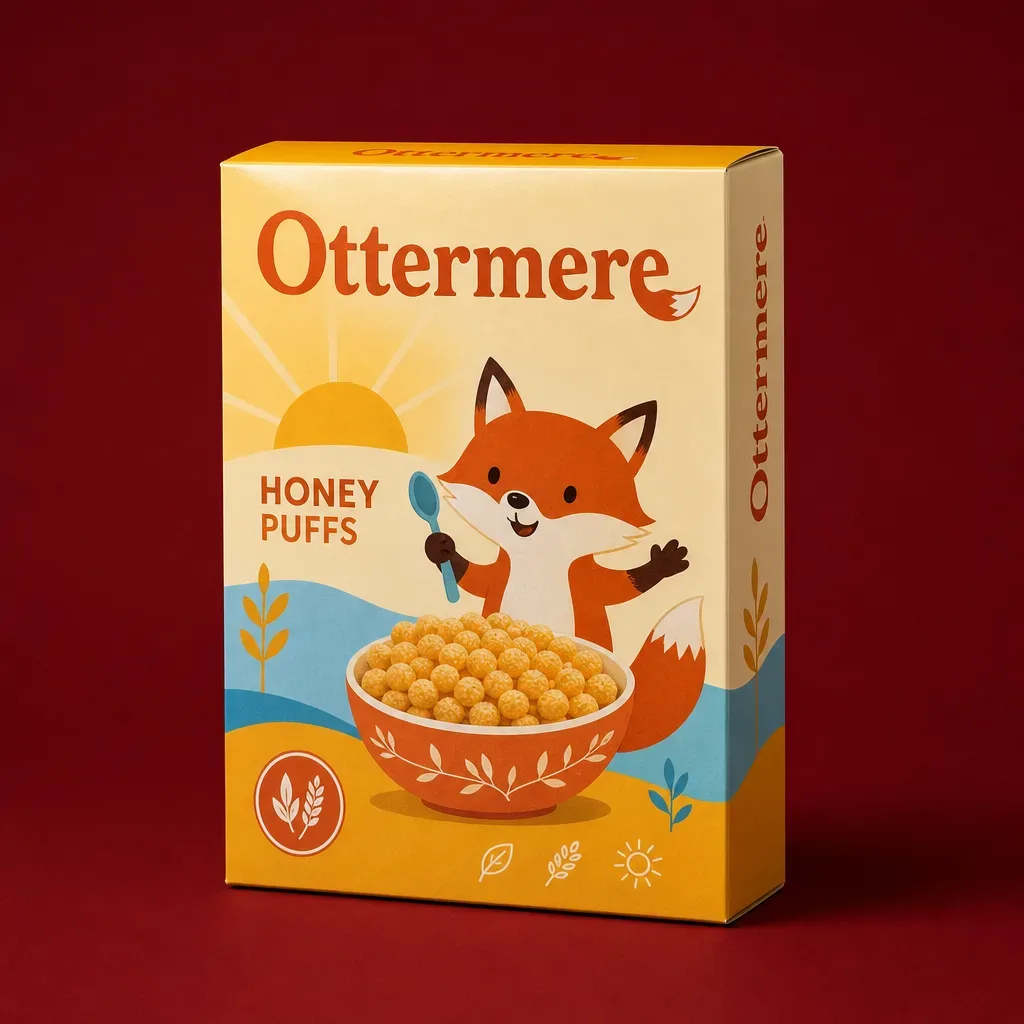
Kids cereal boxes.
Kids cereal boxes have two audiences at once: the child who wants the box and the parent who buys it. The pack needs bright colour, an original character or world, and something to do on the back, while giving the parent clear nutrition and ingredient information. It also sits inside rules on marketing food to children that vary by market. This page covers design, structure and the practical limits.

Fun for the child, facts for the parent.
Boxes we'd normally specify for children's cereal.
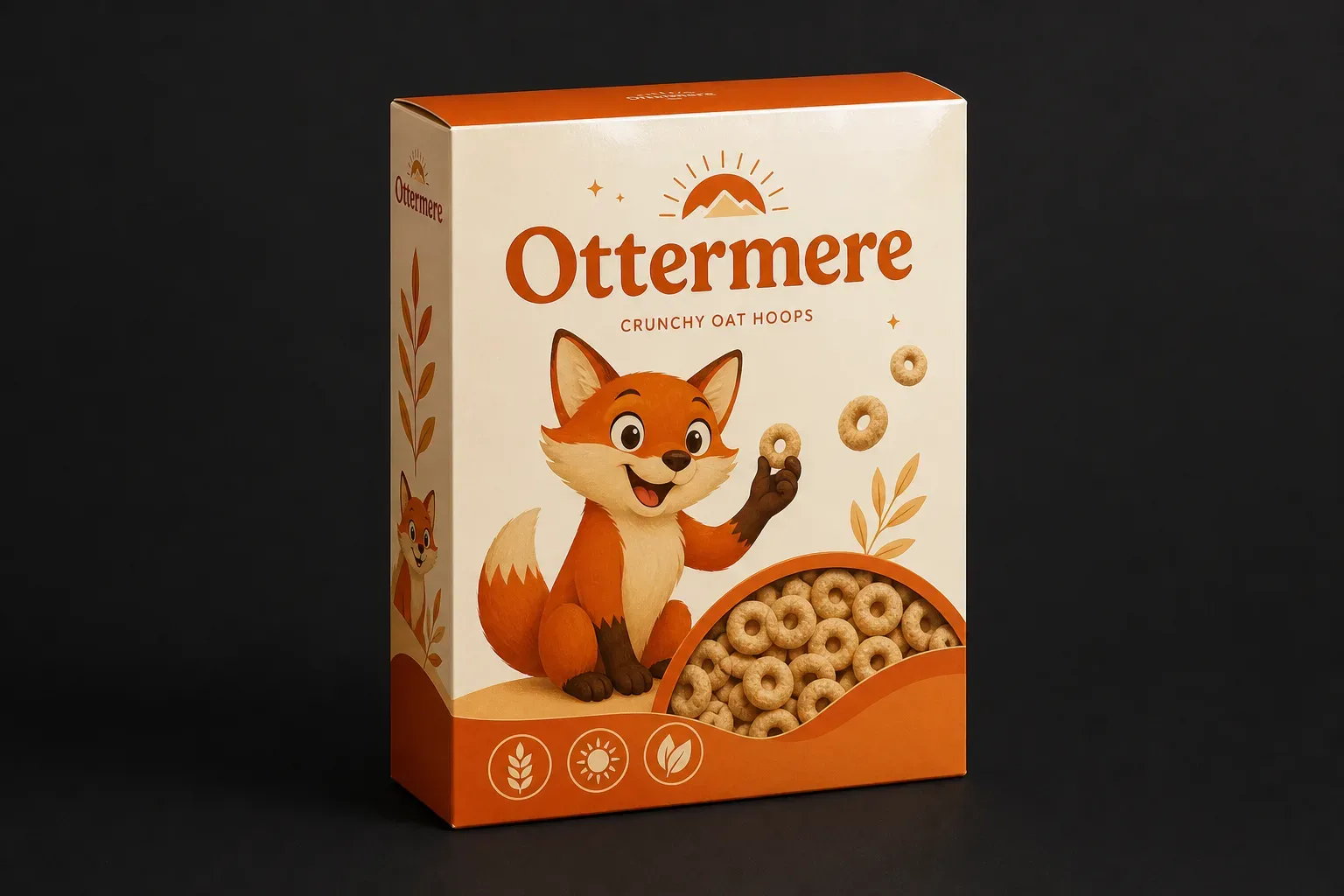
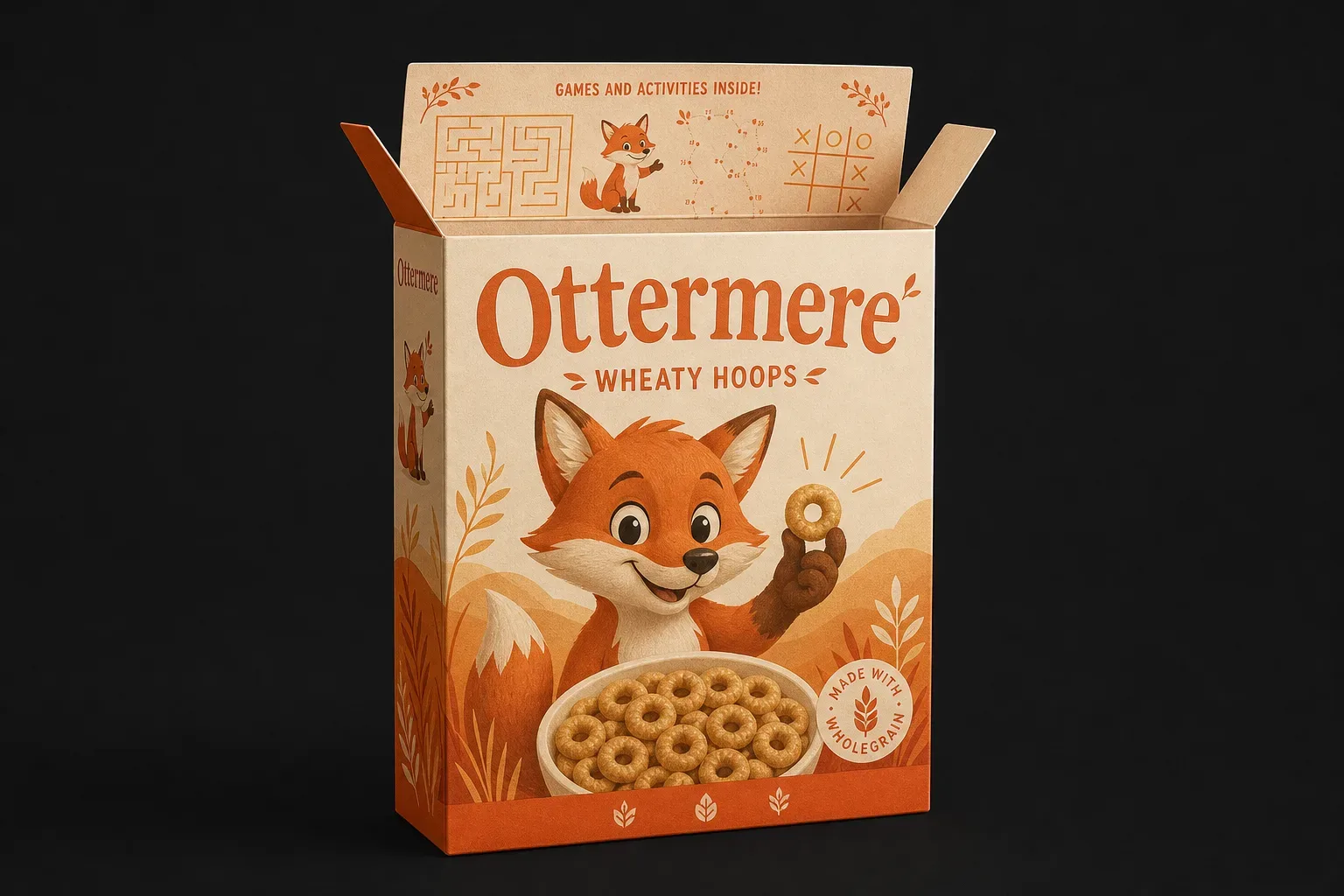
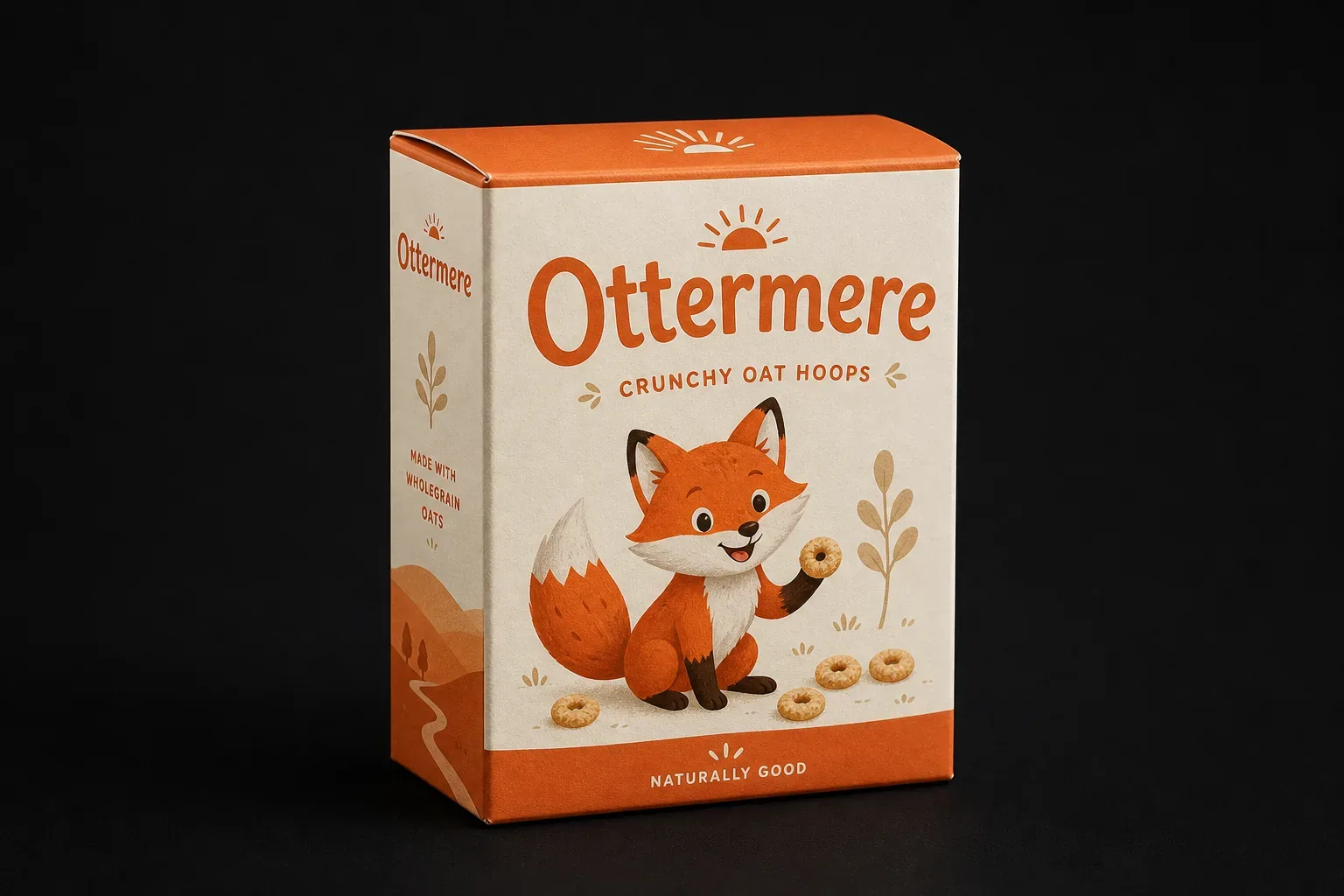
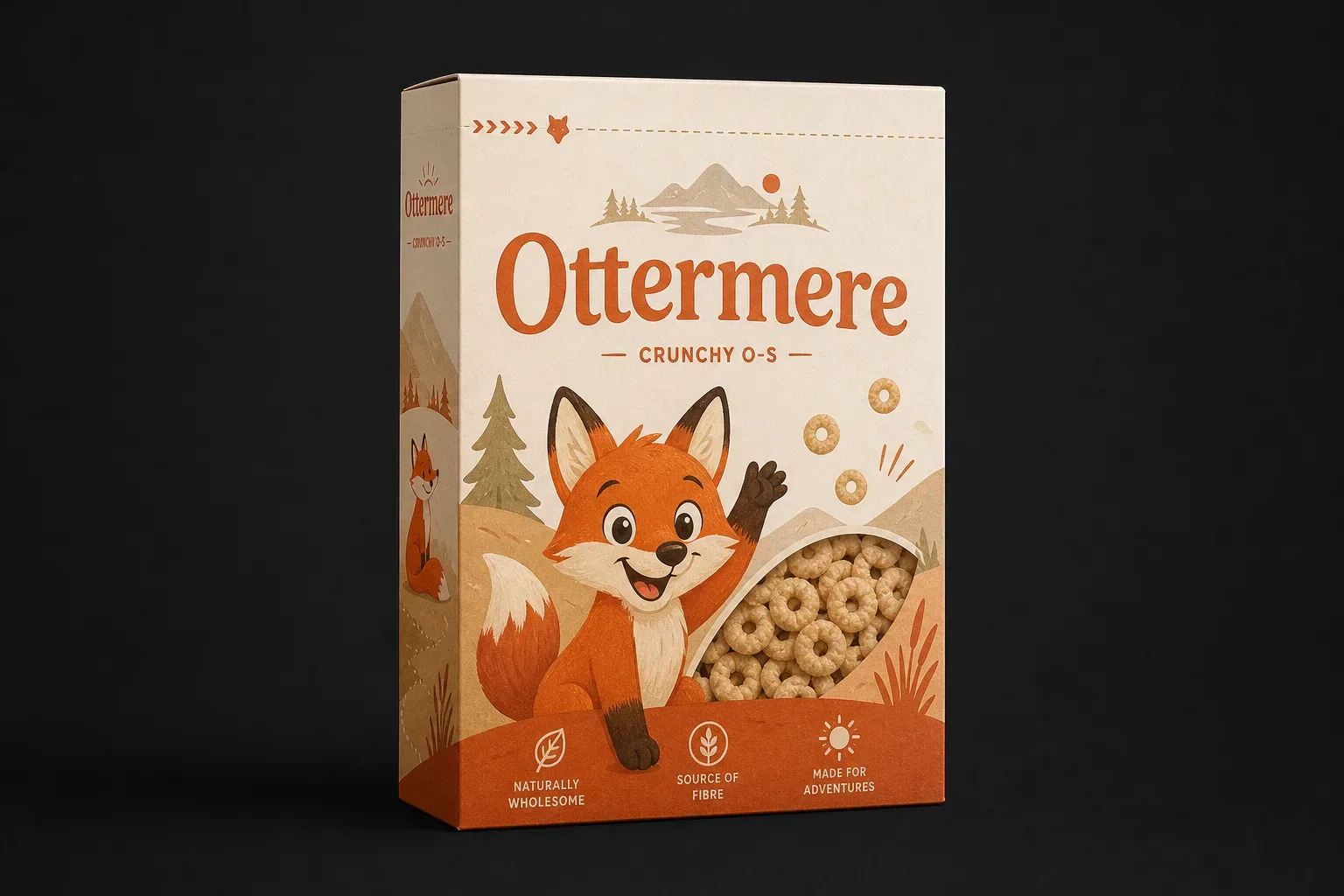
Pure fun or better-for-you?
Children's cereals used to be sold on fun alone: bright colour, characters, toys. Many brands now sell to parents on lower sugar, whole grains and simpler ingredients, while keeping enough fun to win the child. The balance shows on the pack: a calmer palette and a clear nutrition message on the front, with the play moved to the back and inside. Lower-sugar ranges are covered under protein and lower-sugar cereals.
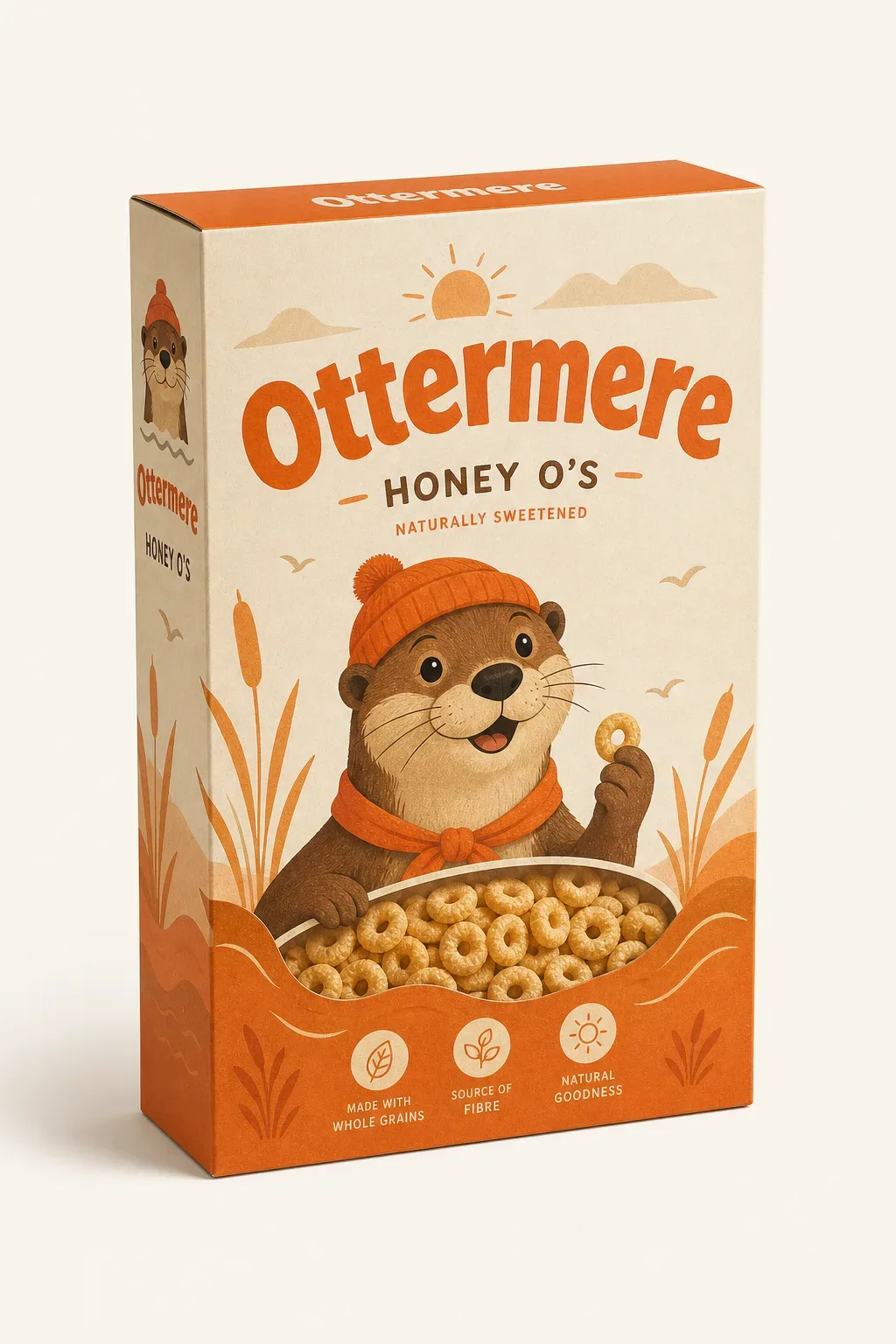 pure fun
 better-for-you
Characters, colour and the shelf
Children's cereals sit lower on the shelf, at a child's eye level, and compete on colour and character. An original mascot or world gives the brand something a child recognises and asks for. It must be the brand's own creation; we do not reproduce other companies' characters or licensed properties without the licence holder's approval.
Bright, saturated colour with a gloss finish is the category norm; see gloss cereal boxes. Keep the product name large and simple so a child can say it and a parent can find it.
Games, puzzles and inside print
The back panel is where play lives: mazes, spot-the-difference, puzzles, colouring and stories. Printing the inside of the carton adds more space and a surprise on opening; see inside printed cereal boxes. Cut-outs on the back can turn the empty carton into a mask, a game or a model.
Keep activities age-appropriate and safe: no instructions that involve sharp tools, and nothing that encourages a child to climb or reach for the box.
Marketing to children
Many markets restrict how foods, especially those high in sugar, salt or fat, may be marketed to children. Rules can cover characters, promotions, toys and on-pack claims, and differ by country and by retailer. Brand owners are responsible for compliance; we print the approved artwork.
If the pack contains a promotional item or toy, separate product-safety rules apply to it, including age warnings and small-part tests. Toys inside food packs are usually wrapped separately; the brand and toy supplier are responsible for their compliance.
Information parents need
Parents look for sugar, whole grain, allergens and portion guidance. Make the nutrition panel easy to find and read, with good contrast and a legible type size. Front-of-pack nutrition schemes, where they apply, have fixed formats.
Claims about whole grain, vitamins or reduced sugar are regulated and must use approved wording; see whole grain cereal packaging for how those messages are typically handled.
Structures for small hands
Children open and pour their own cereal, so the opening must be easy and the pack must not tip. A tear strip gives a clean first opening; a tuck top recloses simply. A slightly deeper carton stands more firmly than a very slim one.
Gloss-coated board resists sticky fingers and spills. Board stiffness keeps panels flat even after a few drops; see tear strip cereal boxes for opening options.
Mini boxes and variety packs
Small boxes for lunchboxes, holidays and variety packs are a big part of the children's category; see small lunchbox-size cartons. Variety packs give children a choice and parents a way to try a range; see variety pack cereal boxes.
Standard and family-size cartons cover home use. Portion boxes serve schools and holiday clubs, where hygiene and allergen information are especially important.
Planning a children's range
A children's range often has several flavours, a shared character world and seasonal editions. A fixed layout with a changing colour and character pose keeps the range recognisable while giving each flavour its own identity.
Children's ranges are often refreshed for seasons, films or school terms. A shared dieline with changing artwork keeps costs down, and short digital runs suit limited editions. Keep the parent information panel identical across editions so it is always where parents expect to find it, and check every new edition against the current marketing rules.
For all structures see our cereal carton range, and request a kids cereal packaging quote with your fill weights, number of flavours and any promotional plans.
Kids cereal boxes, answered
Yes, if it is your own original character or you hold the licence. We do not reproduce other companies' characters.
Making a children's cereal? Start with the character.
Send the fill weight, number of flavours and your character or brand world. We'll recommend the carton, finish, opening and activity layout.
Start your quote → Talk to a packaging specialist →