Snap lock bottom cereal boxes
Snap lock bottom cereal boxes have a base made of four interlocking flaps that fold shut by hand in three moves, which is why the style is also called a 1-2-3 bottom. No glue is used on the base, yet it carries far more than a tuck. It is the sensible middle ground for small and growing brands, and often the right call for muesli boxes.
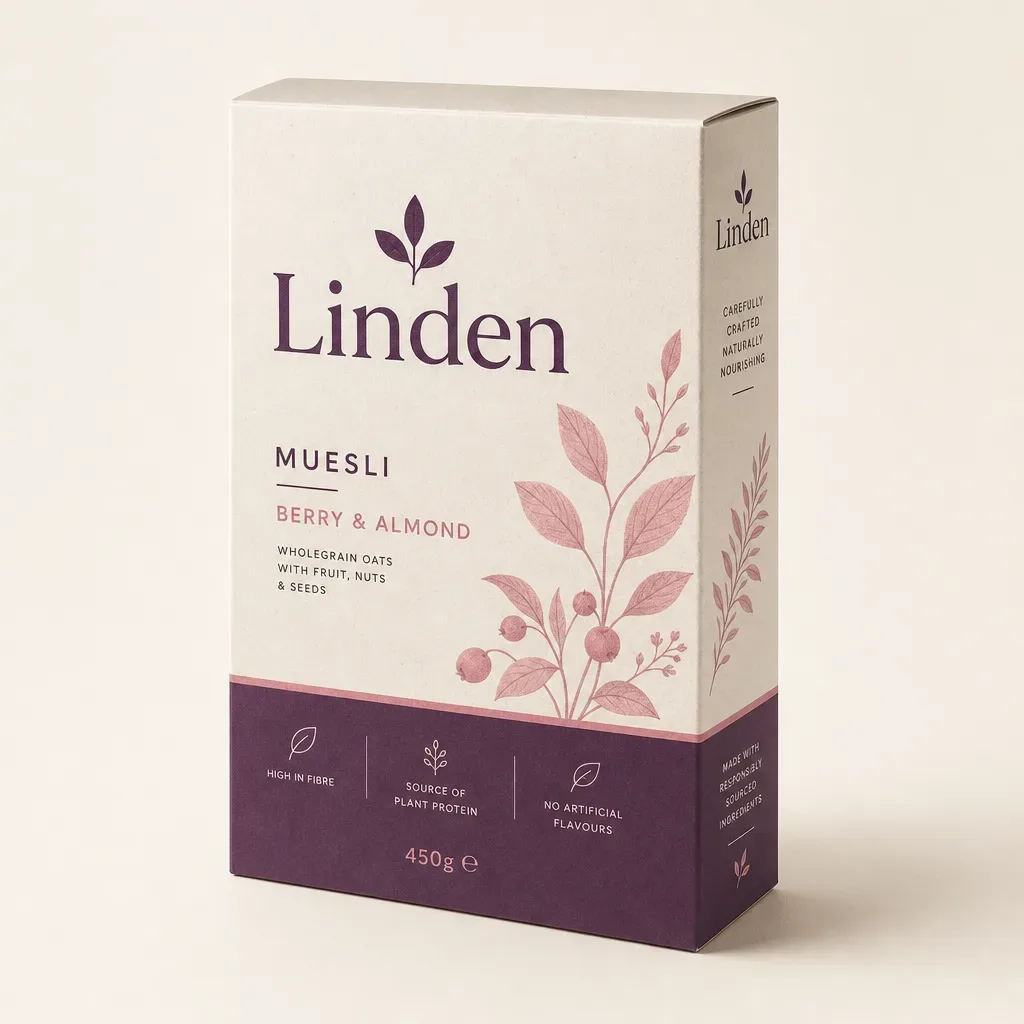
A lock bottom carton you close in three moves.
Fold the large back flap in, fold the two side flaps over it, then push the front flap's tongue into the slot. The flaps hook into each other and the base is shut. Under load they pull tighter, so a bag of cereal sits on a floor that spreads its weight across all four walls instead of hanging from one tuck.
Because the base is not glued, the carton costs less to make than an auto-lock bottom cereal box and packs flatter for storage. What you give up is speed: each base takes a few seconds by hand. For runs in the hundreds or low thousands that is rarely a problem. At higher volumes it becomes the reason to change structure.
The six pieces of a 1-2-3 bottom cereal box.
Select a marker, or read the list from top to base.
Opens and recloses for the customer. Friction fit as standard, with slit locks where the pack will be shipped or stacked.
Back, sides, tongue: the 1-2-3 sequence.
In the flat, the four bottom flaps are all different shapes, and each is cut to interlock with the next. The carton ships as a flat tube with only the side seam glued. Want to see the blank before you design on it? Our dieline templates for cereal boxes include this base.
Board, print and finish for snap-lock cereal cartons
Pick an option to update the specification. For a fuller comparison of grades, see board options for cereal cartons.
Snap-lock carton specification
Where a snap-lock base fits best
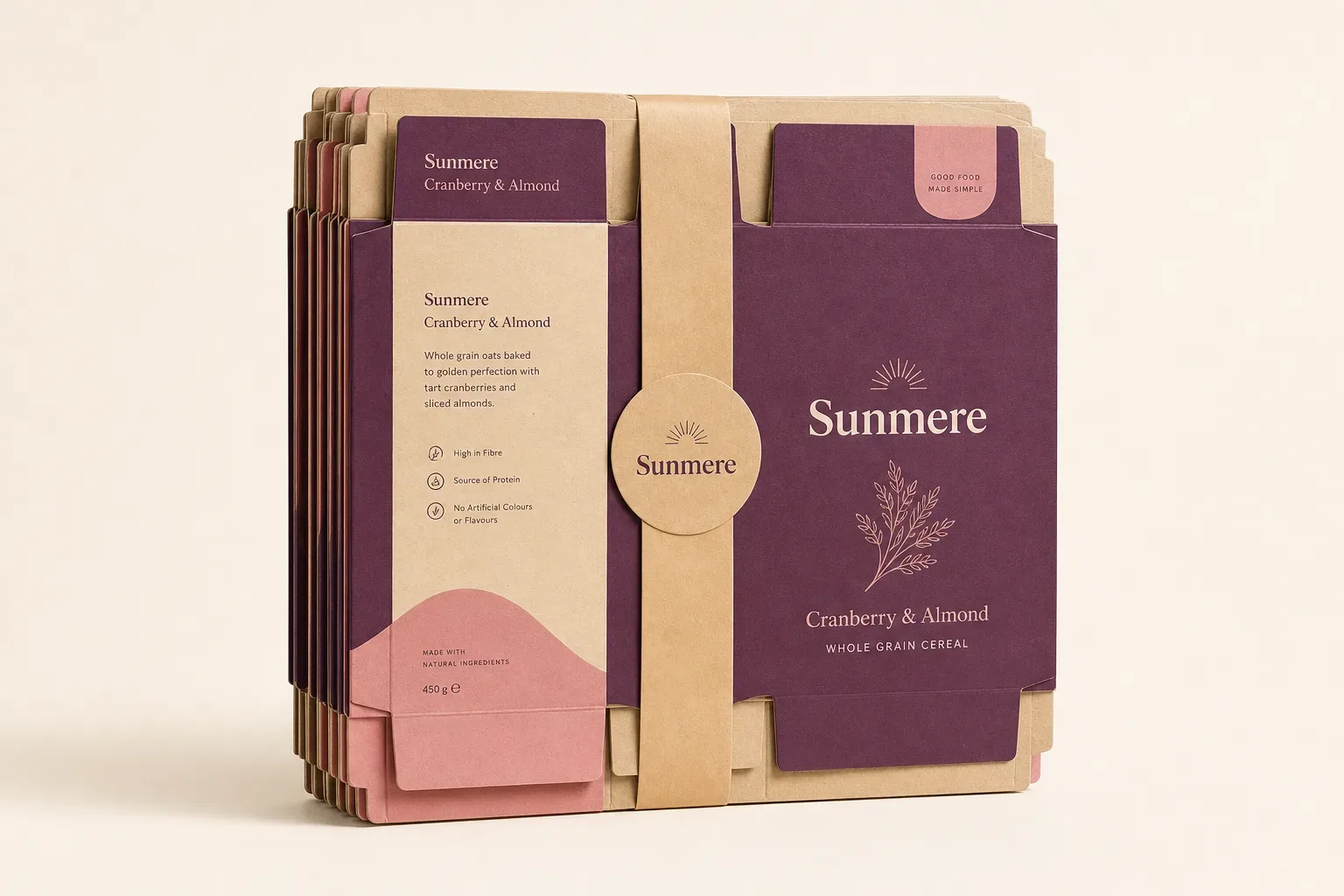
Order steps for a snap-lock carton
About snap lock bottom cereal boxes
What a snap-lock bottom cereal box is
A snap-lock bottom cereal box is a folding carton with a tuck top and a base formed from four die-cut flaps that lock into one another. One flap carries a slot, two carry angled shoulders, and the last carries a tongue. Folded in order, the tongue passes through the slot and behind the shoulders, and the base holds itself shut without adhesive.
The style is also known as a 1-2-3 bottom, after the three folding steps, and as a lock bottom or Houghland bottom in the trade. It sits between tuck-end and pre-glued bases in our cereal box range, both in strength and in cost.
Best uses
It suits mid-weight cereals packed by hand in modest quantities: muesli, oat blends, small-batch granola, and speciality lines such as keto cereal boxes, where the product is dense and the runs are short. It is a common first structure for new brands, a subject covered further under cereal packaging for startups.
It is also useful where storage is limited, because the cartons pack very flat. It is less suitable for high-speed lines, where a glued base or a sealed end is faster, and for very light sample packs, where a simple tuck does the job with less board. Carry packs such as gable cereal boxes often sit on this base.
Structure and closures
The geometry is specific to each size. Flap angles, slot width and tongue length are calculated from the carton's width and depth so that the flaps meet without gaps and the tongue seats with a definite click. A base drawn for one size will not lock properly on another, which is why we draw a new blank for each job and do not scale an old one.
Assembly direction matters: the carton is closed upside down, then turned over for filling. The base is not sift-proof, so loose cereal goes in an inner bag. If the bottom tuck on a reverse tuck end carton has been failing, this is the usual fix. The cereal carton closure guide compares all the bases.
Material options
A snap-lock needs board with some spring. The tongue and shoulders flex during assembly and must recover, so very soft or very brittle stocks cause trouble. 18pt SBS and 20pt recycled board both perform well. Kraft is strong at the folds and forgiving if a flap is bent the wrong way first.
For bigger cartons we step up to 24pt, since a wider base puts more leverage on the lock. Where the cut edges of the base will be seen, note that recycled board shows a grey core and SBS a white one. Grades are detailed on the paperboard for cereal boxes page.
Printing and finishing
Print options match any folding carton: offset CMYK for volume, Pantone spots for brand colours, digital for short and versioned runs. There are no glue areas on the base, so coatings can cover the whole sheet apart from the side seam, which simplifies artwork.
One caution concerns thick films. Soft-touch and heavy gloss lamination stiffen the flaps slightly, which can make a small base harder to lock. On compact cartons we often recommend aqueous coating or a matte laminate. Where a premium feel matters, we test the lock on a laminated sample first.
Size considerations
Carton size is set by fill weight, bulk density and bag dimensions. The snap-lock base then imposes a proportion: depth must be large enough for the flaps to overlap and lock. Very slim cartons leave too little room for the tongue, and we will suggest a tuck or glued base for those.
Within that limit the structure covers a wide span, from a single-serve cereal box to large formats. For family-size cereal cartons and bulk cereal boxes it works in heavier board, though hand-locking a large base takes more effort, so many producers switch to auto-lock at that scale.
Retail considerations
A locked base gives a flat footing, so packs stand square on shelf and in a shipper. It also holds if a shopper lifts the pack by its top, something a tucked base does not always survive with a heavy bag inside.
The underside shows the folded flaps, not a clean panel. That is normal and unseen on shelf, but it means the base is no place for a barcode or date code. For supply to cafes, canteens and other foodservice cereal buyers, the fact that staff can assemble cartons without tape or training is often what decides it.
Artwork tips
Work on the dieline we issue. Keep 3mm bleed and 4mm safety from scores, and let front-panel colour run just past the bottom score so no bare board shows at the base edge. Leave the four bottom flaps plain or in a flat tint; registration across interlocking flaps is not worth chasing.
Put the barcode and date code on the back or a side panel. If you want assembly instructions for customers or staff, the inside of the top closure is a good place. For budgeting, see cereal box costs explained, then ask for a snap-lock carton quote.
Get a snap-lock dieline with the assembly sequence marked.
We will draw a 1-2-3 bottom dieline to your dimensions and number the bottom flaps in folding order, so your designer knows what is hidden and your packers know what to do.
Snap-lock cereal boxes: what people ask
Cartons with a tuck top and a base of four interlocking flaps. The flaps fold in a set order and the last one locks into a slot, so the base closes by hand without glue.
Need a stronger base without a gluing line? Lock it in three.
Send the fill weight or dimensions and the quantity. We will price it and return a dieline with the folding order marked.
