Hang tab cereal boxes
Hang tab cereal boxes are small cartons with a header panel and a punched slot, so they can hang from a peg hook or clip strip instead of standing on a shelf. They put single portions and snack packs at eye level in places that have no cereal aisle: convenience stores, checkouts, kiosks, travel retail. We draw the header to the weight of the pack and the hooks it will hang on.
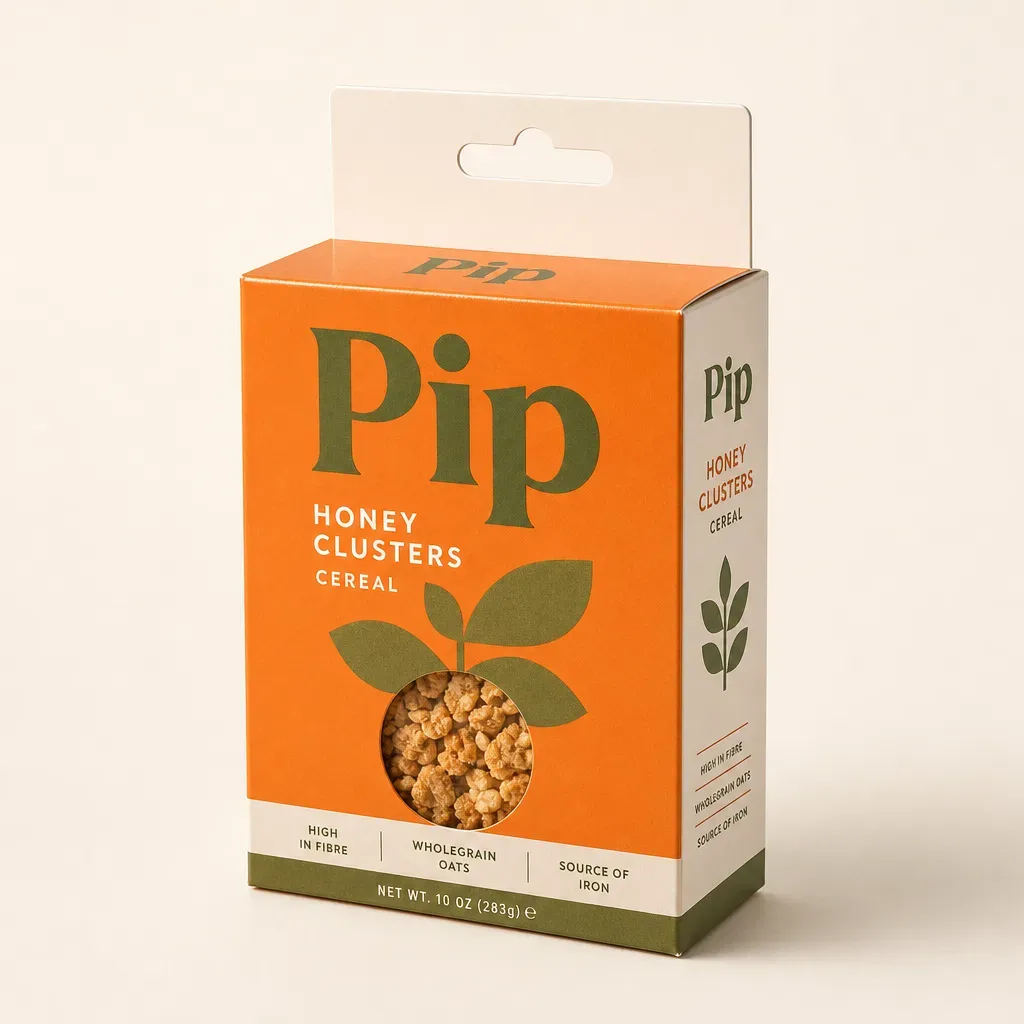
A peg hook cereal box sells where shelves cannot.
Shelf space for cereal is finite and already taken. Peg hooks, clip strips and counter racks are everywhere else: beside the coffee machine, at the till, in the airport kiosk, on the end of an aisle. A carton that can hang reaches those spots. It is seen at eye level, face-on, one pack deep, which is the best position a small product can have.
The format only suits light packs. A header carries the whole weight on a narrow bridge of board above the slot, so this is a structure for portions and snack sizes, not for standard cartons. For the pack itself, see single-serve cereal boxes.
 header and slot — macro detail
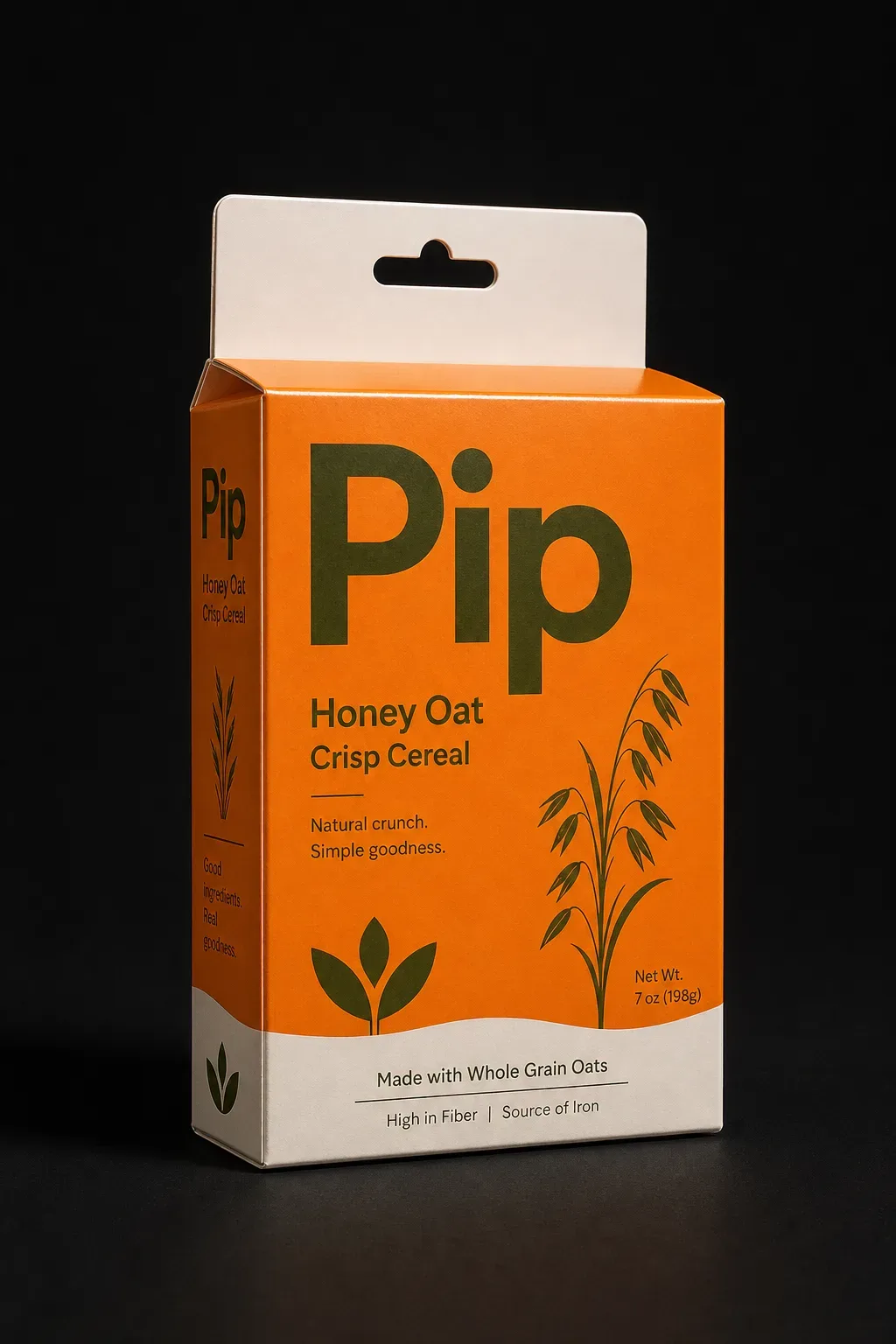
Six parts of a euro slot carton.
Select a marker on the carton, or read through the list.
An extension of the back panel that rises above the carton. Usually folded over and glued to itself, so the slot is punched through two layers.
A standard small carton, plus a header.
The body is an ordinary tuck or seal-end carton. The header is an extra panel on the back, folded double and punched. The base carton is described under straight tuck end cereal boxes; the header is what turns it into a hanging pack.
Board, print and finish for hanging cereal boxes
Choose an option to update the specification. The header is the weak point, so board choice starts there; see cereal box board options.
Hang-tab carton specification
Where a hanging pack finds its buyers
From hook to hanging pack
About hang tab cereal boxes
What a hang-tab cereal box is
A hang-tab cereal box is a small folding carton with a flat panel above its top, punched with a hole or slot so the pack can hang from a display hook. The panel is called a header, a hang tab or a hanger. In most designs it is an extension of the back panel, folded over on itself and glued, a construction sometimes called a five-panel hanger.
The carton behind the header is a normal one, with its own closure. The header adds display, not function. It is one of the display-oriented options in our custom cereal carton range.
Best uses
Hanging packs suit small, light products sold on impulse: single portions, snack-size cereal, dry cereal mixes, toppings. They are a natural extension of a mini cereal box range into channels where there is no shelf for it. They also suit sample cereal boxes sold at a trial price.
They are the wrong choice for standard and family sizes. The weight is too much for a paperboard header, and peg hooks are not spaced for packs that large. Those formats belong on a shelf or in a floor display.
Structure and closures
Strength comes from three decisions. Doubling the header puts two layers of board around the slot. Keeping a generous bridge above the slot gives the fibres something to hold. And running the board grain vertically, up through the header, loads the fibres along their length. With those in place, a paperboard header carries a portion pack comfortably.
The slot shape is a retail decision. A euro slot is the widely used standard and works on single and double hooks. A round hole is adequate for single prongs. For heavier packs or existing cartons, an adhesive plastic hang tab can be applied instead. The closure behind the header is usually a tuck; see the cereal box closures guide.
Material options
Small cartons do not need heavy board; 16pt is usual, 18pt for the larger snack sizes. What matters is tear resistance at the slot. SBS is consistent and prints well. Kraft has longer fibres and is harder to tear, which is an advantage on a header. Recycled board is fine when the header is doubled.
Film lamination is worth having on hanging packs. It adds real tear strength around the slot and resists the scuffing that comes from packs being lifted on and off hooks. Details are in choosing cereal box thickness.
Printing and finishing
On a hook, the front panel and header are all anyone sees. Treat them as one surface: the header is prime space for the brand, directly at eye level. The back is seen only when a shopper lifts the pack off, so it carries the legal and nutritional content.
Gloss lamination is a common choice for impulse products, as it catches light on a peg wall. Matte with spot UV suits premium portions. Whichever is used, the printed header must align front and back if it folds over, so artwork is set up with the fold in mind. Options are shown under print finishes for cereal packaging.
Size considerations
Size the body to the portion: fill weight, bulk density and bag. Then add the header, which typically adds a few centimetres of height. Check the result against the display. Peg hooks sit at fixed vertical and horizontal spacings, and a pack that is slightly too tall or wide overlaps its neighbours or will not fit the bay.
Depth matters as well. Hooks hold several packs front to back, and a deep carton reduces how many fit. Slim portion packs maximise the number per hook. Common portion formats are listed in the cereal box dimensions guide.
Retail considerations
Ask the retailer for their hook type and bay dimensions before finalising the header; chains often publish these. Confirm whether packs will also be stood in a tray or counter unit, because a carton that hangs well should still stand flat. Many are sold both ways from a counter display box.
Packs on hooks are handled a lot: lifted off, turned over, put back. Headers that are single thickness crease quickly and make the whole hook look tired. That is the practical reason for doubling them. Cased packs should lie flat so headers are not bent in transit.
Artwork tips
Use our dieline, which shows the header fold, the slot and the bridge. Keep logos and text at least 4mm clear of the slot, and remember a hook will cover a small area around it. Keep 3mm bleed. If the header folds over, the reverse face is printed upside down relative to the front on the flat sheet; the dieline marks this.
Put the barcode on the back panel, low enough to scan while the pack hangs. Keep the front simple: on a peg wall, a pack is read in a second. See the front-panel design guide for hierarchy, then request a hang-tab carton quote.
Hang-test a sample before you commit to a header.
We will make plain cartons in your size with the header and slot we recommend, so you can fill them, hang them on your retailer's hooks and check fit, balance and strength.
Hang-tab cereal boxes: questions answered
Small cereal cartons with a header panel and a punched slot, made to hang on peg hooks or clip strips instead of standing on a shelf.
No shelf space? Hang it where people are already looking.
Send the pack size, filled weight and quantity. We will draw the header to the hooks and send samples to hang.