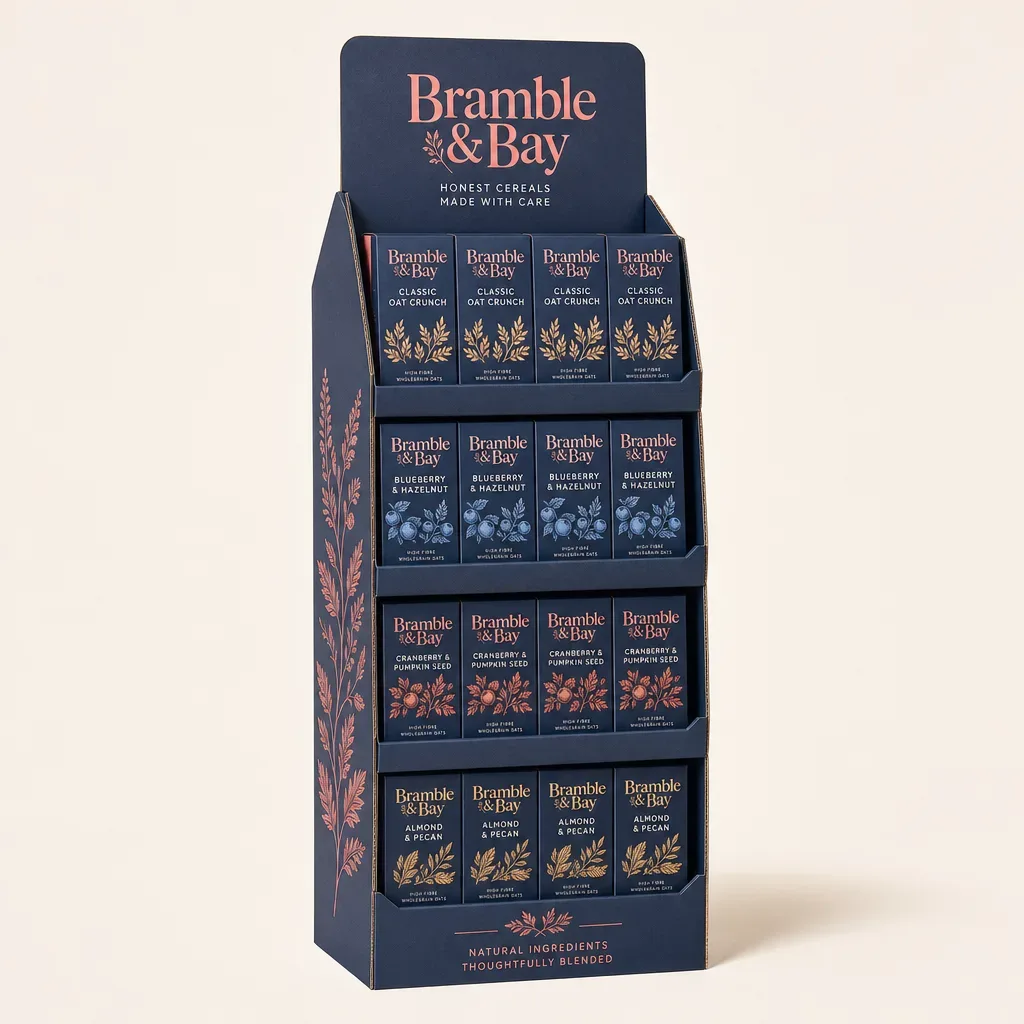
Cereal floor display units
A cereal floor display is a free-standing printed cardboard unit that holds cartons away from the main aisle: at the store entrance, at the end of a run, or next to the milk. It puts a launch, a promotion or a seasonal flavour where shoppers are not expecting cereal. Counter displays do the same on a smaller scale. This page covers the main display types, how they are engineered to carry weight on cardboard, and how they are shipped, assembled and filled.
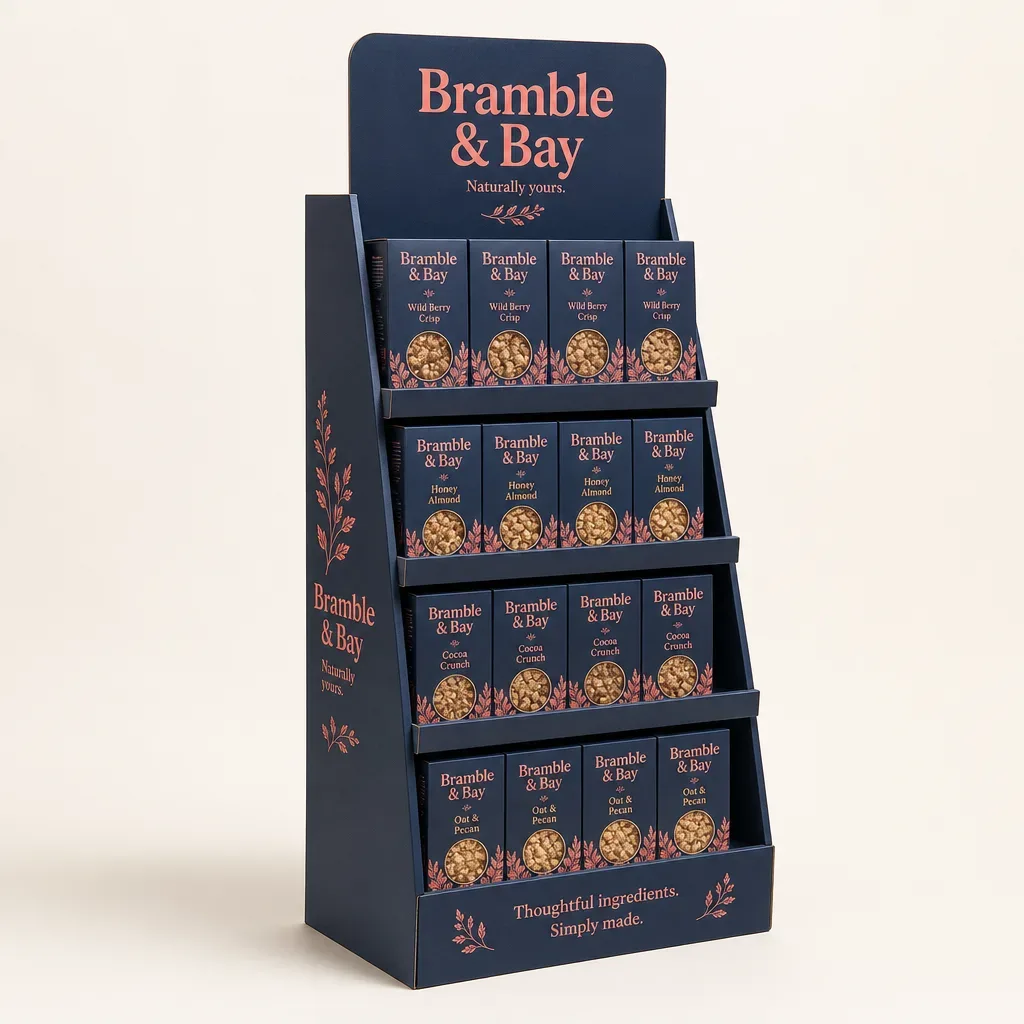
Cereal display boxes put the pack where the aisle is not.
The cereal aisle is crowded and shoppers walk it with a list. A display placed elsewhere in the store reaches people before they arrive, or after they think they are done. It is the most common way to give a launch or promotion space that the planogram does not have.
Because it is made from printed corrugated board, a display is light, flat-packed, quick to put up and recyclable when the promotion ends. The cartons on it are specified as usual; see family size cereal boxes for the large packs often featured.
 header card — macro

Six parts of a cardboard cereal display stand.
Select a point on the unit, or read the list.
The tallest, most visible part. Carries the brand or offer above shoppers' eye line.
Header, shelves and base, cut from flat sheets.
A floor display is a kit of corrugated parts that slot, fold and lock together without tools. The header, the shelf trays and the base are printed and cut separately. Smaller cartons such as mini cereal boxes suit counter units built the same way.
Board, print and finish options for displays
Select an option to update the specification. Boards are described on the materials and printing page.
Display unit specification
Where displays earn their space


How a display is developed
About cereal floor display units
What a cereal floor display is
A floor display is a free-standing point-of-sale unit, usually made from printed corrugated board, that holds product on shelves or in trays away from the regular shelf. It arrives flat, is assembled in store without tools, is filled with cartons and is removed when the promotion ends.
Related types include counter displays, which sit on a counter or shelf; pallet displays, built on a quarter or half pallet and wheeled straight onto the floor; and sidekicks, which hang from the end of a gondola. Cereal displays are designed around the cartons from our custom cereal box range.
Best uses
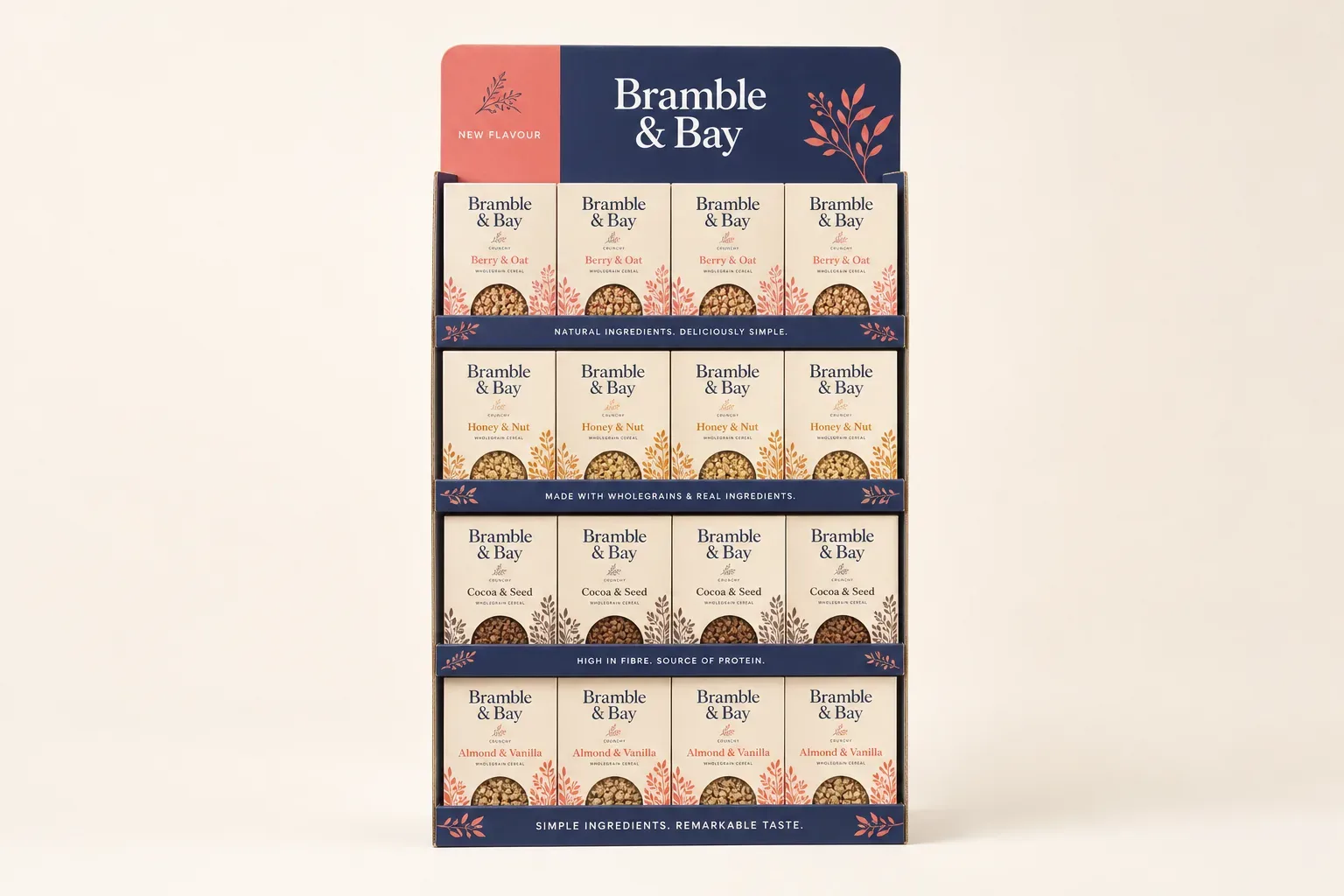
Displays suit launches, promotions, seasonal flavours, price events and cross-merchandising, where cereal is placed beside milk, yoghurt or fruit. They are also used for trial sizes and minis at the checkout.
They are temporary by design. A typical cardboard display is meant to last a promotional period, not a year. For permanent presence, the answer is shelf space and shelf-ready trays; see shelf-ready trays for the regular shelf.
How cardboard carries the load
A cereal display holds a surprising weight once filled. Shelves sag if their span is too wide or their support too thin, and side panels buckle if the load is not carried straight to the floor. The structure uses folded shelf lips, internal supports under each shelf and vertical side panels with the flute running upright for strength.
Assembly must be quick for store staff, so parts slot and lock without glue or tape, with as few steps as possible and an instruction sheet. Units can also be supplied pre-assembled and pre-filled, which costs more to ship but avoids errors in store. Board strength is discussed under corrugated cereal boxes.
Material options
Single-wall B-flute with a white top liner is the usual board. E-flute is used for counter units and headers, where a finer print surface matters more than strength. Double-wall board is used for pallet displays and very heavy loads.
Corrugated displays are made almost entirely of paper fibre and are recycled with cardboard after use. Plastic parts, such as clip-on shelf strips, are avoided where possible to keep that simple.
Printing and finishing
The header carries the message and is usually litho-laminated: printed by offset on paper, laminated for protection, then mounted onto flute. The body can be litho-laminated too, or printed directly by flexo for lower cost on larger runs. Digital printing suits short runs for store trials.
Lamination helps the unit survive handling in a busy store and resist scuffs from trolleys. The base takes the most damage, so dark colours and fine detail are kept off it. Print methods are compared in the cereal box printing guide.
Size and capacity
A display is sized around the carton and the store. Carton size and count per shelf set the shelf dimensions. The store sets the footprint and the height limit, and some retailers specify both. Capacity is a balance: more cartons mean fewer refills, but more weight and a heavier, costlier unit.
Large family packs make for tall, heavy displays. Minis make for compact counter units with many facings. The figures are set per project and tested filled; see variety pack cereal boxes for an assortment often displayed this way.
Retail considerations
Retailers control what goes on their floor. Many publish display rules covering footprint, height, stability, materials and how long a unit can stay. Placement is usually agreed with the buyer as part of a promotion, and the display must be designed to that agreement.
Stability is a safety issue. A filled unit must not tip when a carton is pulled from the top shelf or a trolley knocks the base. Weight is kept low, the base is broad, and the unit is tested filled. Price and promotional messages on the header may need to change by store, which favours a replaceable header card.
Artwork tips
Each part has its own dieline. Lay out the header, sides, shelf lips and base separately, and check how they read together once assembled; a 3D render or a white sample helps. Keep key messages on the header above the top shelf, where cartons will not hide them.
Shelf lips are a narrow but valuable strip; use them for the brand or flavour names. Avoid text across slots and folds. Send artwork as print-ready PDFs on our dielines. See the artwork preparation guide, then request a cereal display quote.
Fill an unprinted unit with your cartons first.
For a confirmed project we build an unprinted white sample of the display around your carton size, so you can assemble it, fill it, load it and check stability before artwork is final.
Cereal floor displays: what buyers ask
A free-standing printed cardboard unit that holds cereal cartons on shelves, placed away from the regular aisle for a launch or promotion.
Planning a promotion? Start with the cartons and the floor space.
Send your carton size, how many per unit, the number of stores and any retailer display rules. We will propose a unit, build a white sample and quote.