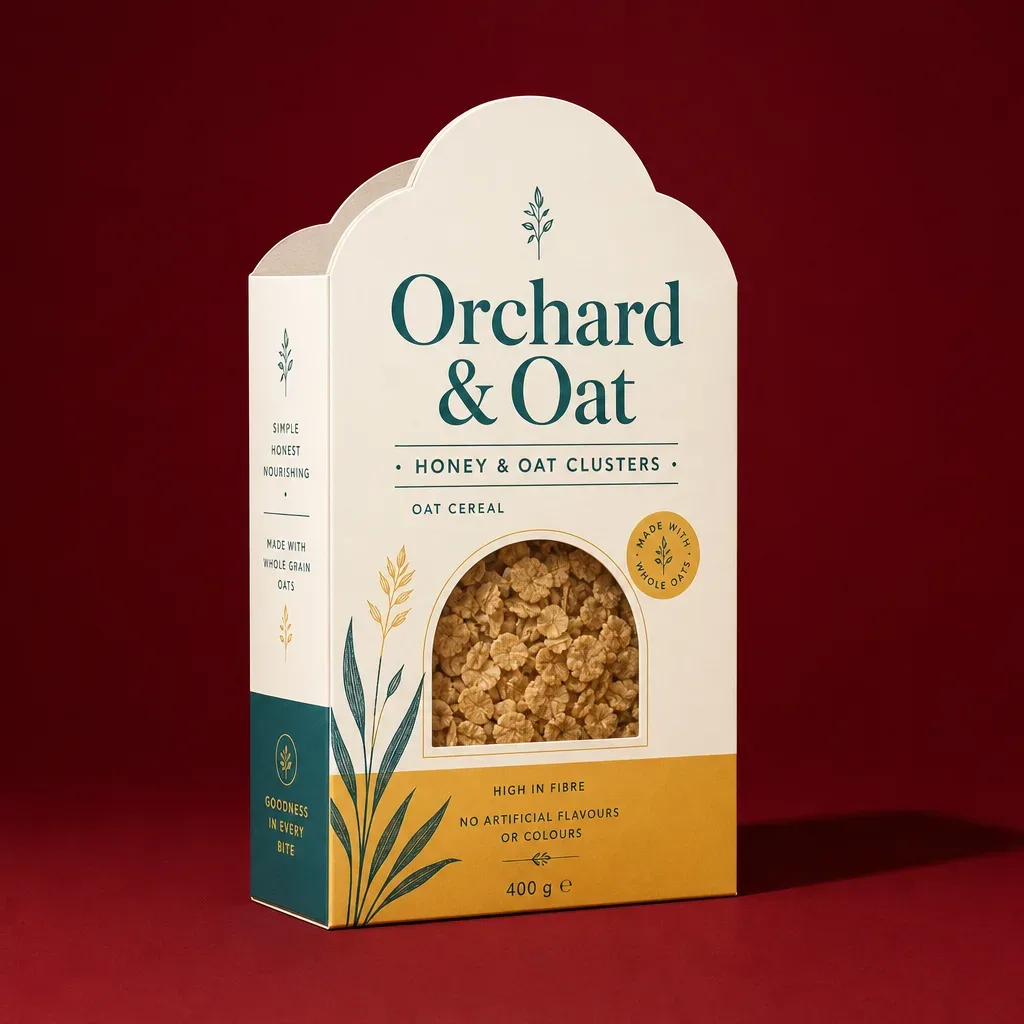
Die cut cereal boxes
Die cut cereal boxes are cartons whose outline, apertures or opening features are cut to a shape of your own instead of a plain rectangle: an arched top, a silhouette header, a shaped window, a cut-out handle. Each shape needs its own cutting die, so we draw it against the scores, the fill line and the way the pack is cased before any tooling is made. A plain rectangular aperture is covered under window cereal boxes.
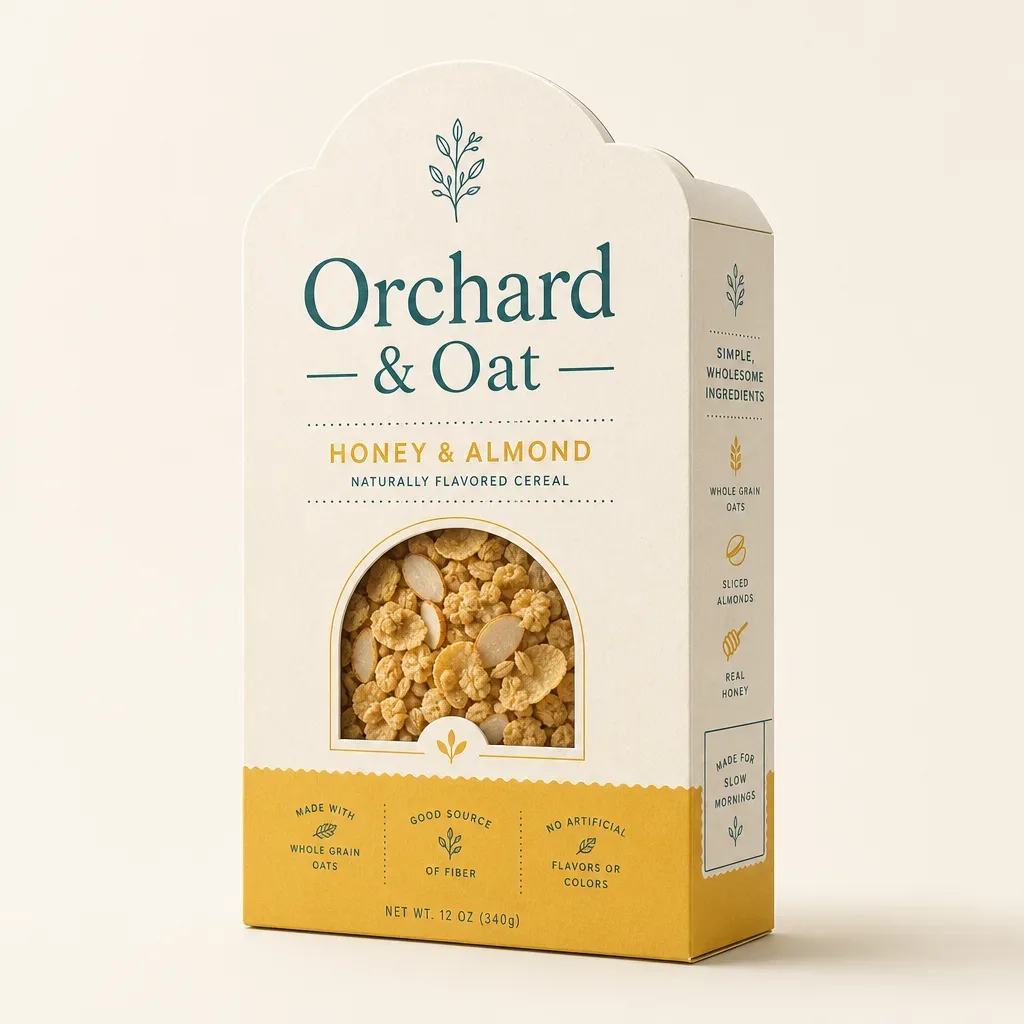
Custom shape cereal boxes that still stack, case and face.
A shaped pack is the fastest way to look different in an aisle of identical rectangles. An arch, a roofline or a character silhouette above the front panel changes the outline a shopper sees from several metres away, before any print is legible. That is why shaped cartons turn up on seasonal runs, kids cereal boxes and limited edition cereal boxes.
The outline is the easy part. The work is in keeping the carton practical: a base that sits square, a top that survives a shipping case, panels that stay stiff after board has been cut out of them. We settle those points on the drawing, because moving a cut line after the die is made means making another die.
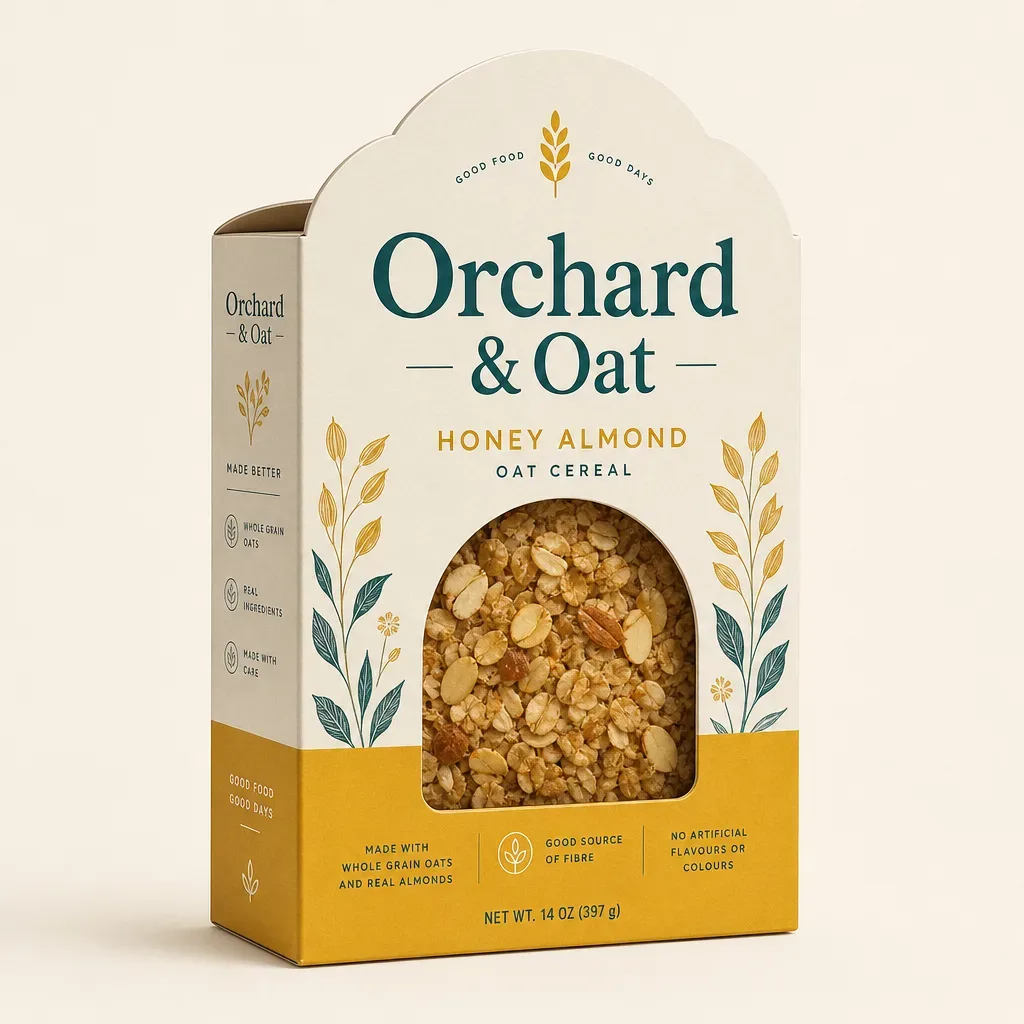 curved cut edge — macro detail
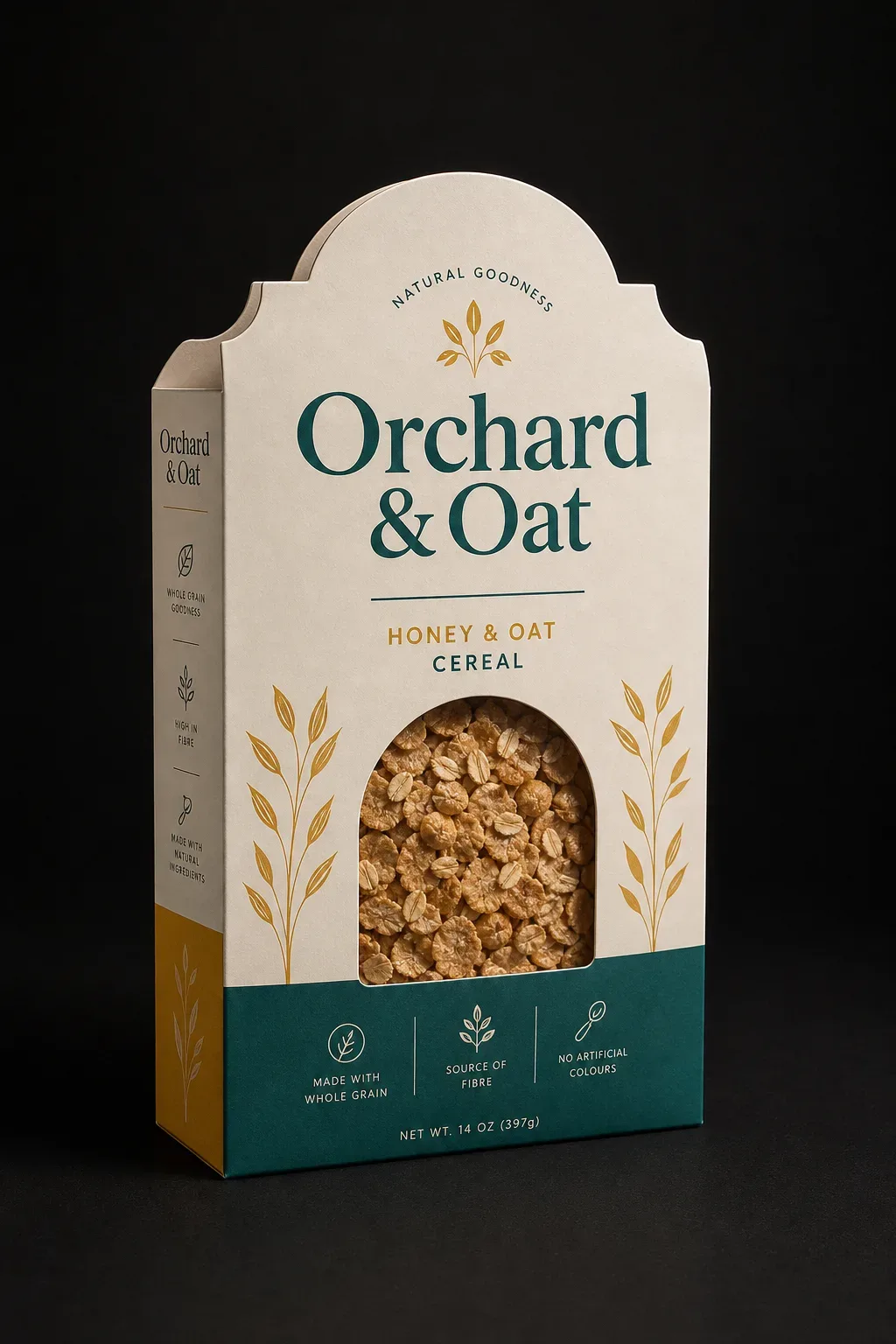
Six things a shaped cereal carton has to get right.
Select a point on the carton, or go through the list.
The profile that rises above the carton body. Usually an extension of the back or front panel, sometimes doubled for stiffness. It carries no load, so it must be protected in the case.
One die, cut once, for every sheet.
Outline, apertures, scores and perforations are all made in a single pass by a steel-rule die. The shape is fixed from that point on, which is why the drawing matters more here than on any standard carton. The basics are set out in how cereal box dielines work.
Board, print and finish for shaped cereal cartons
Choose an option to update the specification. Edge colour matters on a cut shape; each board's edge is described on the cereal box materials page.
Die-cut carton specification
Where a custom outline earns its tooling
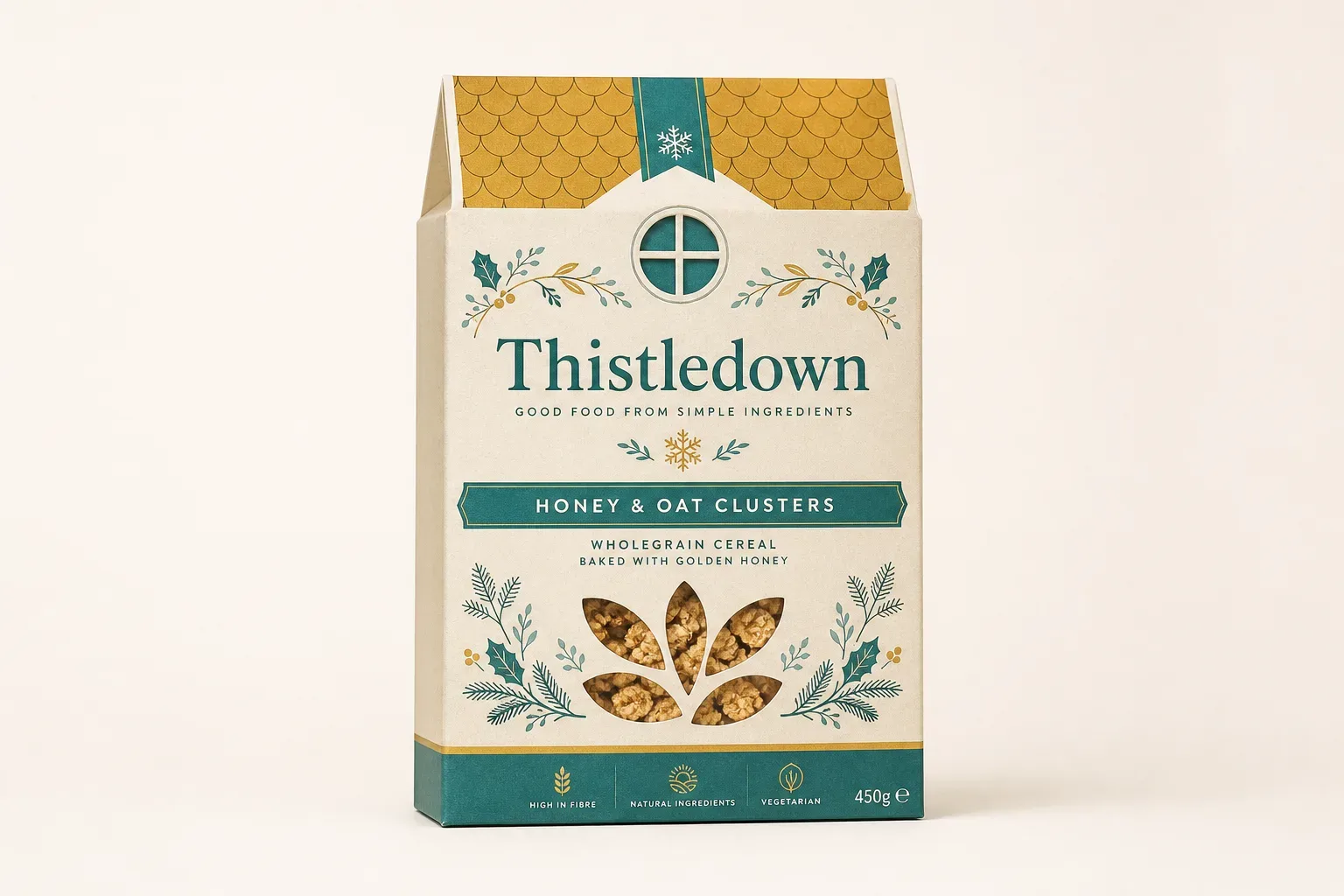
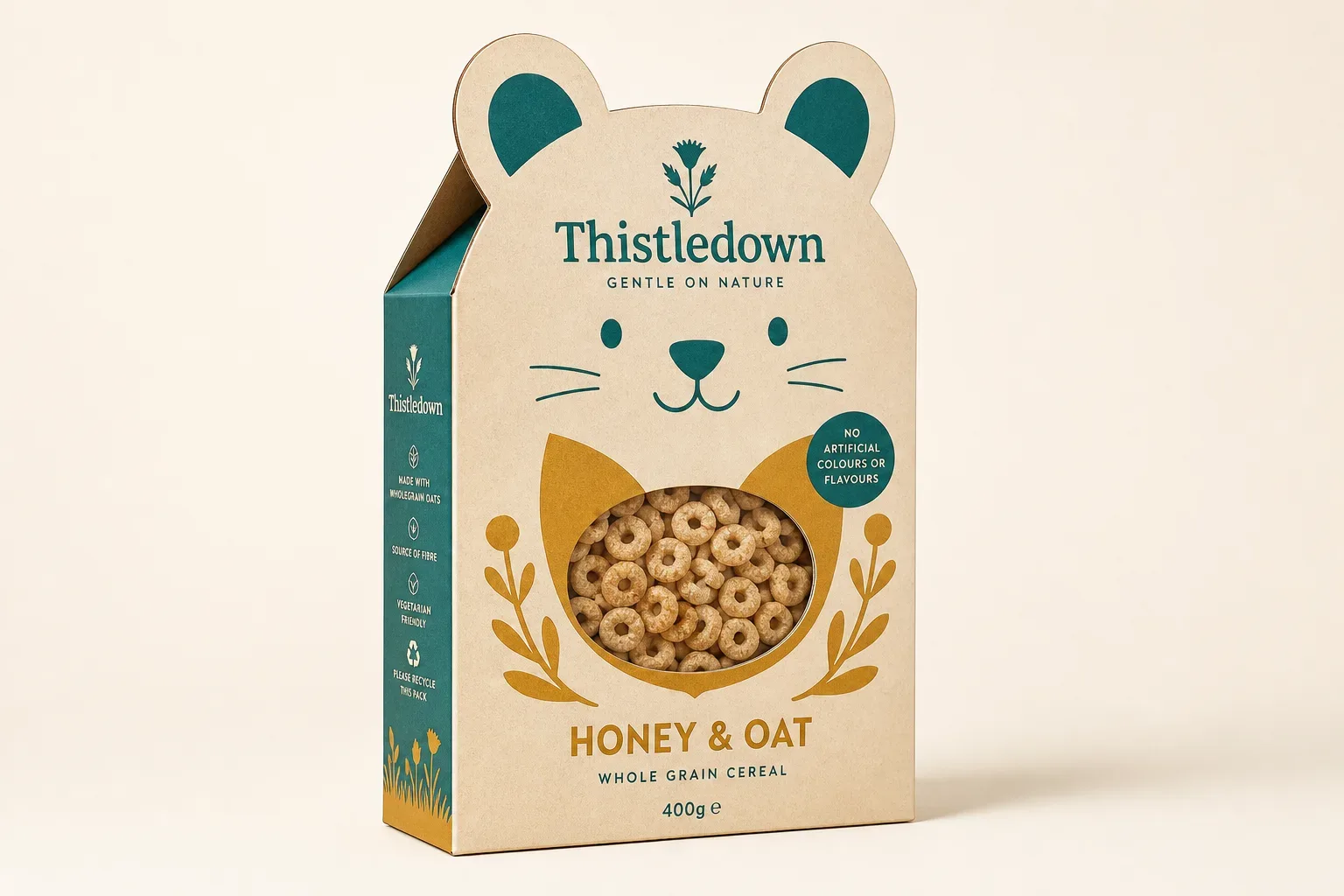


From sketch to cut cartons
About die cut cereal boxes
What a die-cut cereal box is
Strictly speaking every folding carton is die-cut: a die is what cuts the blank from the printed sheet. In everyday use, a die-cut cereal box means one where the die does more than cut a rectangle with flaps. The outline may rise into a shaped header, panels may carry cut-outs or shaped windows, and opening features such as perforated panels or thumb notches may be built in.
The die itself is a flat board set with steel rules: sharp rules to cut, rounded rules to crease, toothed rules to perforate. One is made for each design. Shaped cartons sit alongside the standard structures in our custom cereal packaging and share the same boards and print.
Best uses
Shaped cartons suit products that need to be noticed and are bought partly on impulse or as a treat: seasonal flavours, children's lines, collaborations, and cereal gift boxes. They also suit brands that want an ownable silhouette across a small range.
They are a poorer fit for high-volume everyday lines. A shaped top usually cannot run on a standard cartoner, takes more space in a shipping case and uses more board per pack. If the aim is simply to show the product, a rectangular or rounded-corner window on a standard carton does it for less.
Structure and closures
Nearly every shaped carton is a standard structure with something added. The body is a normal tube, the base is a tuck, lock or sealed end, and the closure works as usual; the shape is an extension of one panel or an aperture within one. Building it this way keeps the pack functional. A straight tuck end carton is the usual base because both tucks sit behind the front face.
Two rules govern the cut. Leave enough board, a bridge, between any cut-out and the nearest edge or score. And round every inside corner, because a sharp internal angle is where a tear starts. Where a header stands above the body, it is often folded double so it stays upright.
Material options
The cut edge is on show, so the core colour matters. SBS is white all the way through and gives the cleanest edge. Kraft shows a brown fibre edge that looks deliberate on natural lines. Recycled board has a grey core, which is fine on a straight flap but more noticeable around a curved window.
Stiffness is the other concern. Removing board weakens a panel, so we often step up a caliper when apertures are large. The reasoning is covered in choosing cereal box thickness. Very fine detail, such as thin spikes or narrow slots, is limited by the board, not the die: below a certain width, paperboard simply tears.
Printing and finishing
Print has to register to the cut. A shaped header with a printed character, or a border that follows a window, needs artwork aligned to the cut path with a margin for the small movement between printing and cutting. We build that tolerance into the dieline so a hairline shift does not show.
Finishes behave normally, with two cautions. Film lamination adds strength at a cut edge and helps thin shapes survive. Foil and embossing close to a cut need clearance, or the board can crack at the edge. Combinations are shown under finishes for printed cereal cartons.
Size considerations
Size the body first, exactly as for a standard carton: fill weight, bulk density, bag size and headspace. Then add the shape. A header increases overall height, which affects shelf fit; many retailers have a fixed gap between shelves, and a pack that will not stand upright gets laid on its side or delisted.
It also affects shipping. The case has to clear the tallest point, so a tall header means more air in every case and fewer packs per pallet. Typical body formats are listed in the cereal box dimensions guide; we add the header height to those when we check shelf and case fit.
Retail considerations
On shelf, a shaped top is only an advantage if it arrives intact. Headers are the first thing to bend when packs are pulled from a tight case or pushed back on a shelf, so we design them to sit within the case height and, where possible, doubled.
Keep the base and sides rectangular so the pack faces against its neighbours. Apertures should sit in the same position on every flavour so the range reads as one set. For display-led channels, a shaped carton pairs well with a cereal display box, which keeps the outline visible and protected.
Artwork tips
Design to the cut path we supply, not to an approximation of it. Keep 3mm bleed beyond every cut, including around curves and inside apertures, and keep type and logos at least 4mm inside any cut or score. Do not put small text on a header that may be trimmed by a fraction of a millimetre either way.
If a printed element follows the cut, such as a keyline around a window, make it thick enough to hide normal movement. Mark clearly which apertures are open and which take film. The artwork preparation guide covers file set-up; when you have a sketch, ask for a die-cut carton quote and attach it.
Send us your shape. We will tell you if it cuts.
Before you commit a design, we will review a sketch or draft artwork for the things that stop a shaped carton working: bridges that are too thin, corners that will tear, headers that will not fit the case or the shelf.
Die-cut cereal boxes: what buyers ask
Cartons where the cutting die creates a custom outline, shaped window or cut-out, not just a plain rectangle. Typical examples are arched or silhouette tops and shaped apertures.
Have a shape in mind? Let's see if the board agrees.
A sketch, the carton size and a quantity are enough. We will check the cut, price the tooling and send a white sample.