Auto lock bottom cereal boxes
Auto lock bottom cereal boxes have a base that is folded and glued at our plant, so it snaps flat and locks the moment the carton is squared up. There is nothing to fold underneath and nothing to tape. For dense fills such as granola, and for anyone packing by hand at volume, it is the base we recommend first.
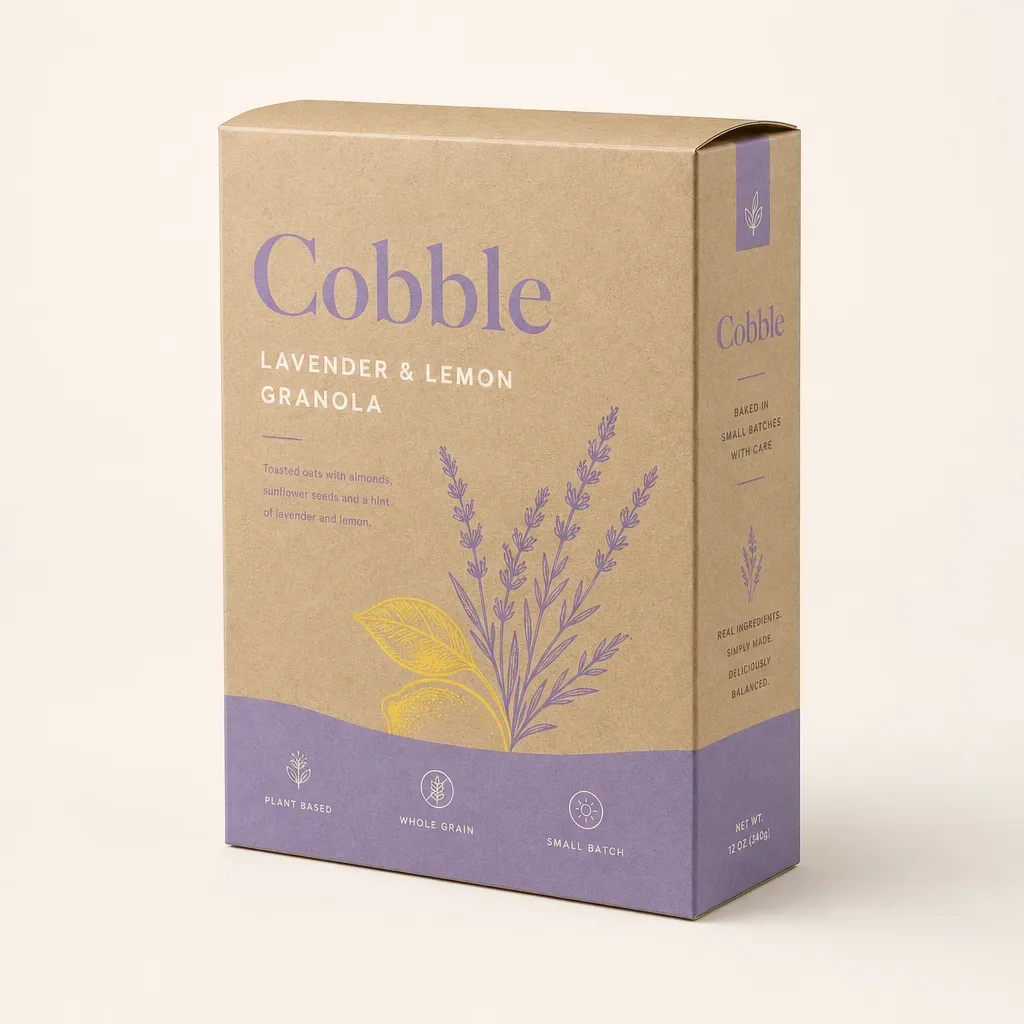
Crash lock cereal boxes: built to set up faster.
An auto-lock base arrives already assembled. Pull the flat carton open and the four bottom panels swing down, meet and lock; the bag can go in a second later. Compared with folding a snap-lock bottom by hand, that removes three movements from every single pack, which is the difference between a packing shift that keeps up and one that does not.
The same construction makes it the stronger base. The panels are glued to each other and bear on all four walls, so weight spreads instead of resting on one tuck. It costs more to make than a tuck or snap-lock carton, because the bottom is an extra gluing operation, so it earns its place where labour or fill weight justify it.
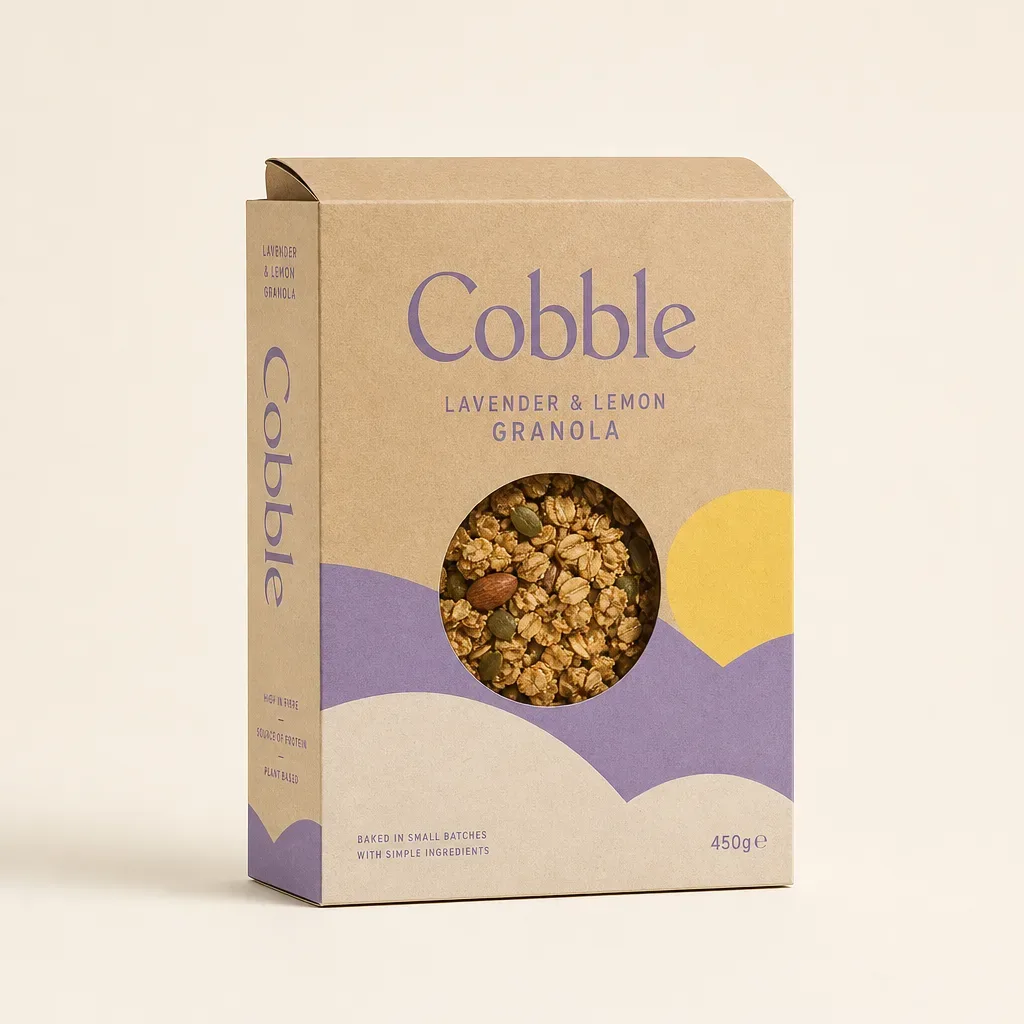 locked base — underside macro
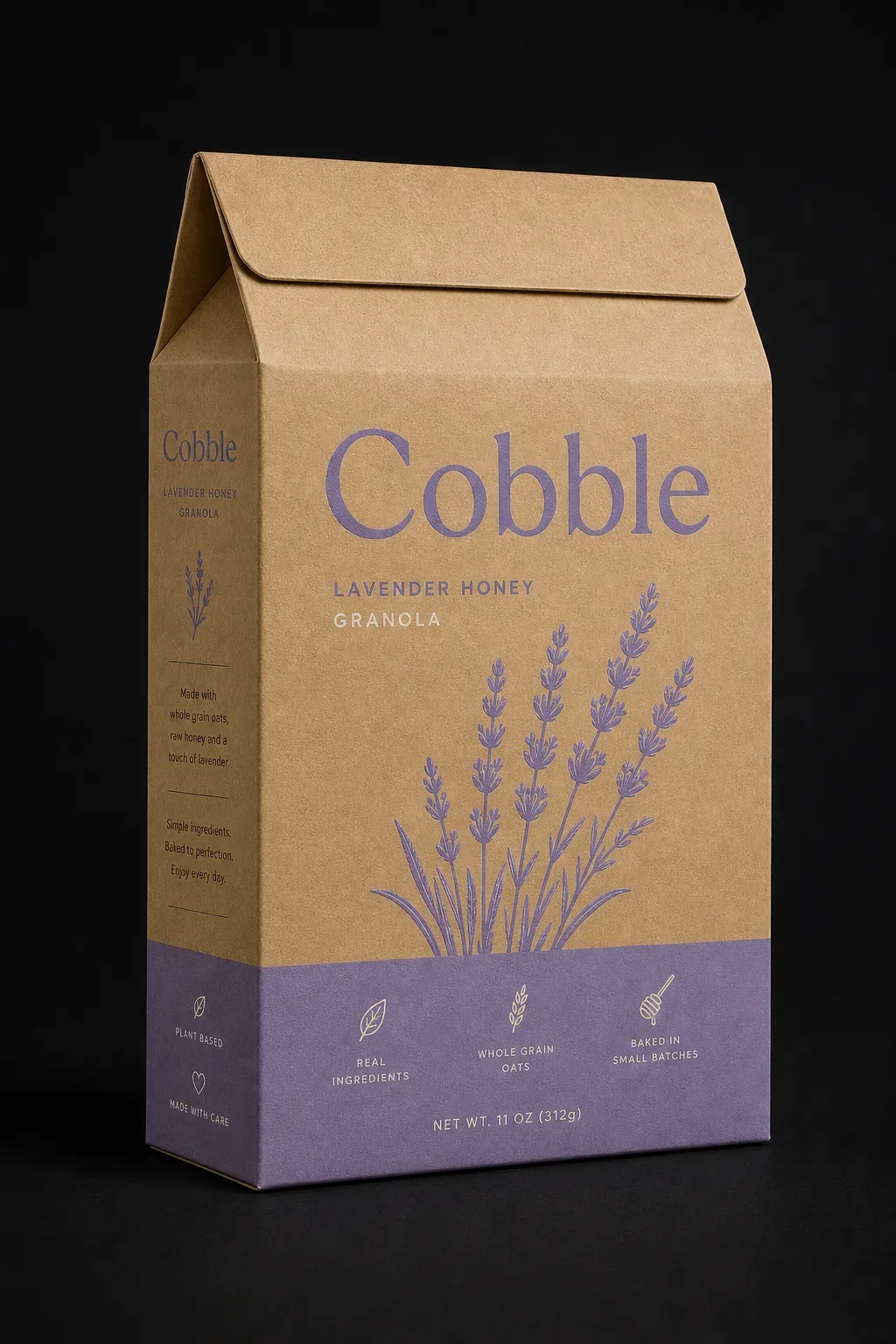
Six parts of an auto bottom carton.
Choose a marker on the carton or follow the list.
A standard tuck closure, opened and reclosed by the customer. Slit locks are optional; a seal label adds tamper evidence where the channel asks for it.
Glued flat, opened square.
The base is formed while the carton is still flat: bottom panels folded in, adhesive on the corner panels, then the side seam. You receive a flat carton that is a little thicker at one end. How that base compares with the alternatives is covered in cereal box closures explained.
Board, print and finish for a pre-glued auto bottom carton
Select an option to update the specification. Heavier fills usually mean heavier board; the cereal packaging materials page shows each grade.
Auto-lock carton specification
Where an auto-lock base pays for itself
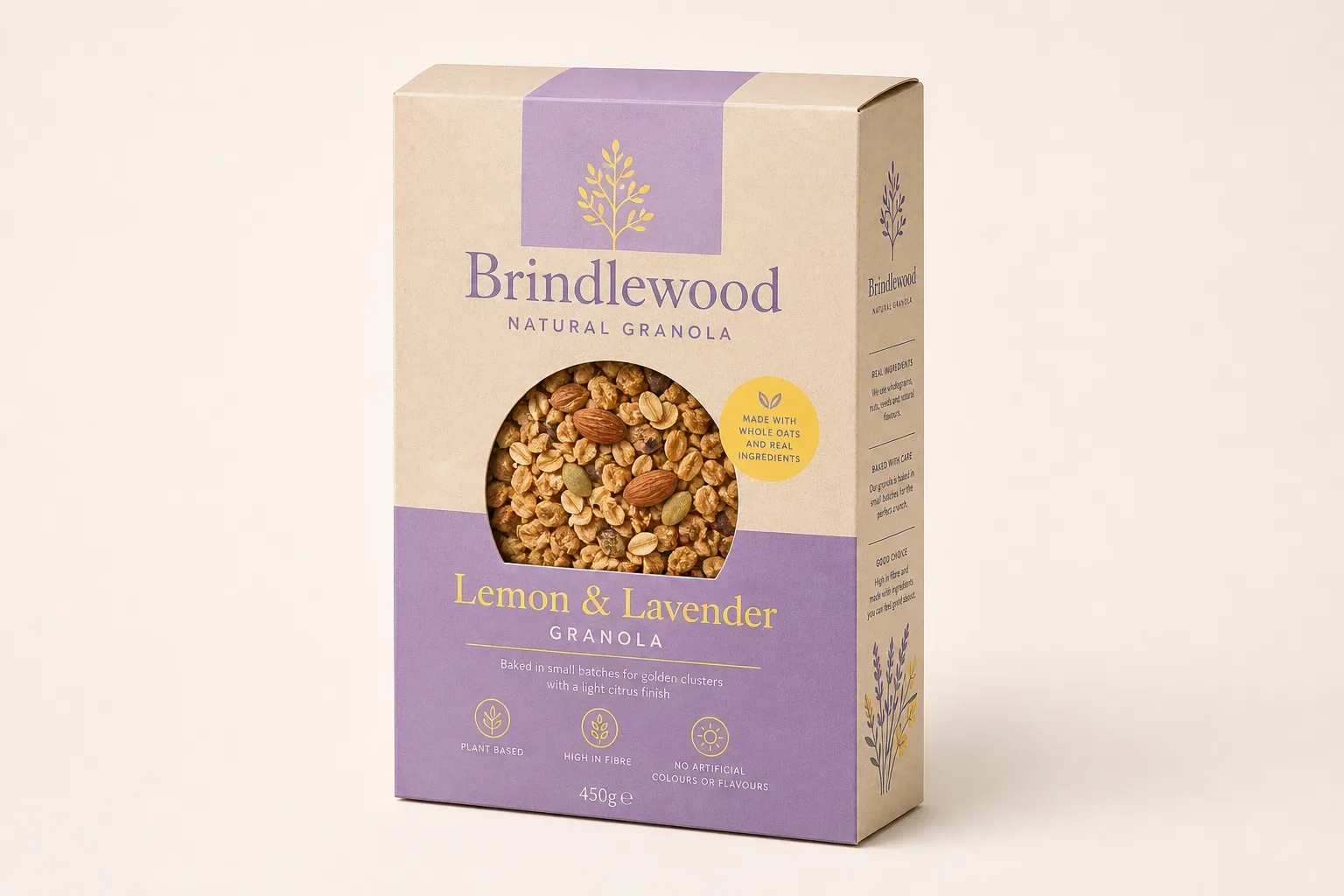

From fill weight to finished base
About auto lock bottom cereal boxes
What an auto-lock bottom cereal box is
An auto-lock bottom cereal box is a folding carton whose base is glued during manufacture so that it forms itself when the carton is opened. The bottom is made of four panels: two main panels with diagonal scores and two corner panels bonded to them. Folded flat, they lie inside the tube. When the tube is squared, the bonds pull the panels down and across until they meet and lock.
The same structure is called a crash lock bottom, an auto bottom or a pre-glued bottom; they are one and the same. The top is normally a tuck. It is one of the locking options in our custom printed cereal cartons.
Best uses
Two situations call for it. The first is weight: granola, muesli, clusters with nuts and any fill dense enough to distort a tucked bottom. The second is labour: if cartons are erected by hand in their thousands, removing the bottom fold from every pack saves more than the base costs.
It is a sound choice for protein cereal boxes, which tend to be heavy for their size, and for foodservice cereal packaging, where staff set up cartons between other tasks. On a fully automated line with gluing, a sealed end is usually more economical; on small, light packs a tuck is enough.
Structure and closures
The base works because of its diagonals. Each main panel is scored at 45 degrees so that half of it can fold back on itself while the carton lies flat. Those scores are pre-broken at the plant so the base opens without force. Once open, the panels overlap in the centre and bear on the walls, and the load of the product keeps them seated.
The base is not sift-proof and has small gaps at the corners, so loose cereal always goes in an inner bag. Up top, a tuck is standard, with a resealable closure or a window panel added where the product calls for it. If set-up speed matters less than unit cost, snap-lock bottom cereal boxes give a similar base without the extra gluing. The same pre-glued base sits under most cereal boxes with a carry handle.
Material options
Board has to do two things here: carry the fill and survive being folded flat with a glued base inside. 18pt SBS covers mid-weight products. For dense fills we move to 20pt kraft or 24pt SBS, both of which resist the bulge that heavy bags cause in the lower third of a panel. Kraft is particularly good at the diagonal scores because its long fibres fold without cracking.
Above carton-board weights, E-flute corrugated takes over for club-size and ship-ready packs. Recycled board is workable but needs testing at the diagonals. See how to choose cereal box thickness for how we relate caliper to fill weight.
Printing and finishing
Everything available on a tuck carton is available here: offset CMYK and Pantone for volume, digital for short runs, one- and two-colour work on kraft. The printed side faces out on the base as well, though it is rarely seen, so we usually leave the bottom panels unprinted or in a flat tint.
Finishes need one precaution. The corner panels bond face to back, so varnish, lamination and foil are kept out of those glue areas, in the same way as the side seam. Matte lamination, soft touch and spot UV are all compatible elsewhere; the range is shown under coatings and finishes for cereal boxes.
Size considerations
Start from fill weight, bulk density and bag size, as with any cereal carton. The auto-lock base then adds its own geometry: the bottom panels must be deep enough to overlap, which ties base depth to carton width. Very narrow, deep cartons and very wide, shallow ones may need a modified base, and we flag that at dieline stage.
This structure scales up well. It is a common base for family size cereal boxes and for bulk size cereal boxes in corrugated. It also scales down: a single-serve cereal carton with an auto-lock base suits high-volume hand packing.
Retail considerations
On shelf, the benefit is a flat, stable base. A carton that sits square faces properly and does not rock, even when the product has settled to the bottom. The locked base also survives being picked up by the top of the pack, which is how shoppers and shelf-stackers actually handle cartons.
For storage and shipping to you, allow for the thicker base end. Flat auto-lock cartons take up more case volume than tuck cartons, and we alternate their direction in the case to keep stacks level. If you store a lot of packaging, that difference is worth planning for.
Artwork tips
Use the dieline we supply; an auto-lock base has more scores and glue areas than it appears to. Keep 3mm bleed and 4mm safety, and leave the base panels free of anything that must be read. Do not place a barcode on the bottom: the overlapping panels and diagonal scores will stop it scanning.
Mark the glue areas as no-coat zones and let colour run off the front panel onto the bottom score so no unprinted board shows at the base edge. A plain glued sample is the best way to check fit and strength before printing; cereal box samples and prototyping explains what we can supply. Then request auto-lock carton pricing.
Load-test a plain auto-lock sample with your own product.
We will cut and glue a plain sample in your size and proposed board, so you can erect it, load it with a filled bag and see how the base behaves before any artwork is committed.
Auto-lock cereal cartons: questions buyers ask
Cartons whose base is glued in manufacture so it folds flat for shipping and locks into place automatically when the carton is opened. The top is usually a tuck.
Heavy fill or a busy packing bench? Start with the base.
Give us the fill weight, carton size and quantity. We will price it, recommend the board and send a glued sample to test.
