Custom size cereal boxes
Custom size cereal boxes are drawn to your product and your shelf instead of picked from a list of stock sizes. The same fill can go in a tall, slim carton, a standard one, or a short, wide one, and each choice changes how the pack looks, stands, stacks and costs. We work the dimensions out from fill weight and density, then help you choose the proportions that suit where the box will be sold.

Cereal boxes made to size, starting from the fill.
A carton that is a little too big looks under-filled once the product settles. One that is a little too small will not close cleanly on the line. Neither is a design problem; both are sizing problems, and they come from choosing a box before measuring the product. Working the other way, from the cereal outward, removes them.
Once the volume is fixed, proportions are a choice. That choice is commercial as much as technical: it decides how many facings you get, where on the fixture the pack sits and how it ships. Typical formats are tabulated in the cereal box dimensions guide; this page is about choosing your own.
 measuring a carton — macro
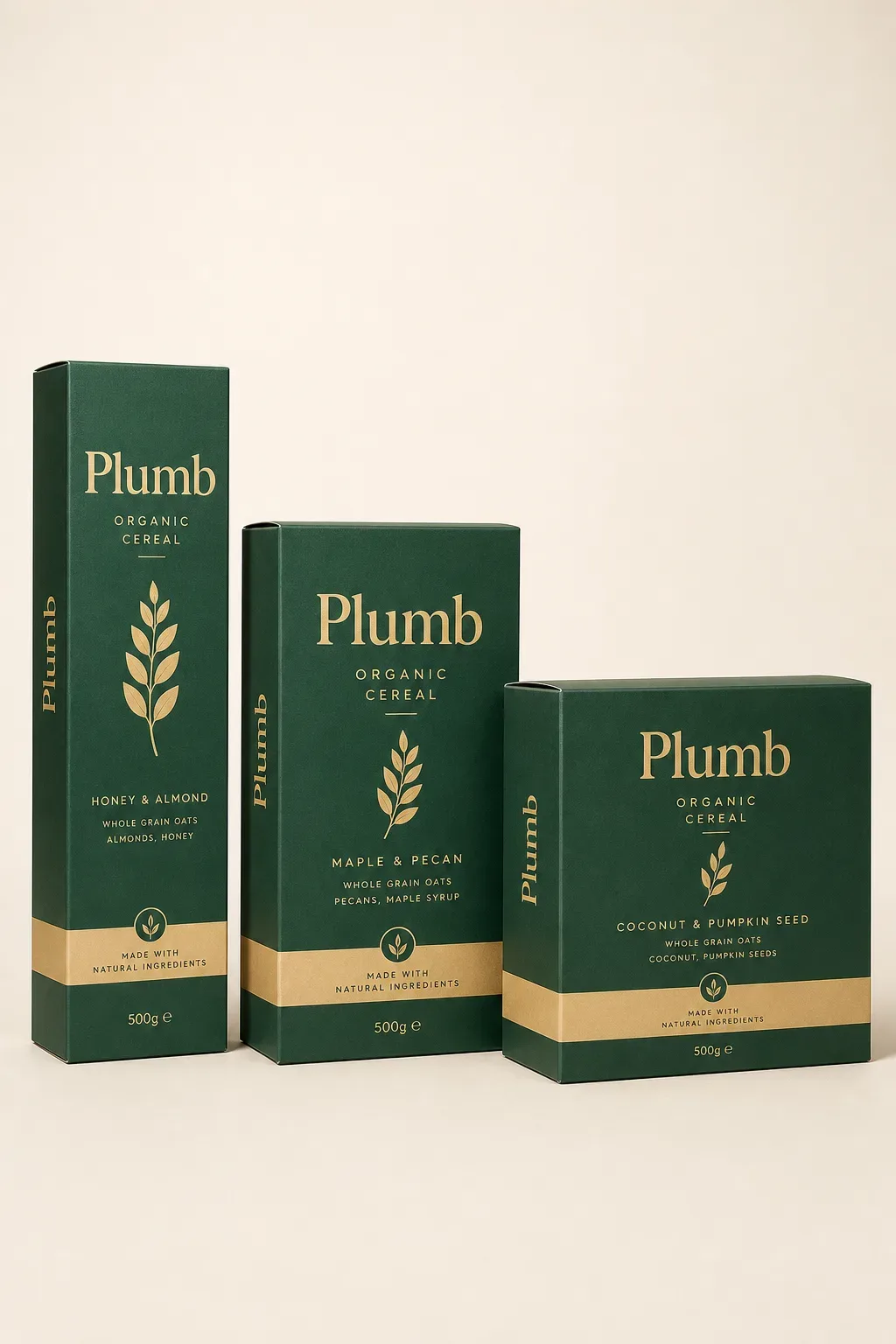
Six dimension decisions, from tall cereal boxes to wide ones.
Select a point, or read through the list.
Gives presence and a tall front panel. Limited by shelf spacing, by cupboard height at home and by stability.
Any structure, drawn to your numbers.
Custom size is not a structure; it applies to all of them. Every carton we make is cut with a die made for that job, so a size of your own costs no more in tooling than any other. Choose the closure from the cereal box closures guide, and we draw it to your dimensions.
Board, print and finish for slim cereal boxes, wide ones and everything between
Choose an option to update the specification. Board follows panel size: larger panels need more caliper. See choosing cereal box thickness.
Custom-size carton specification
Where your own dimensions make the difference
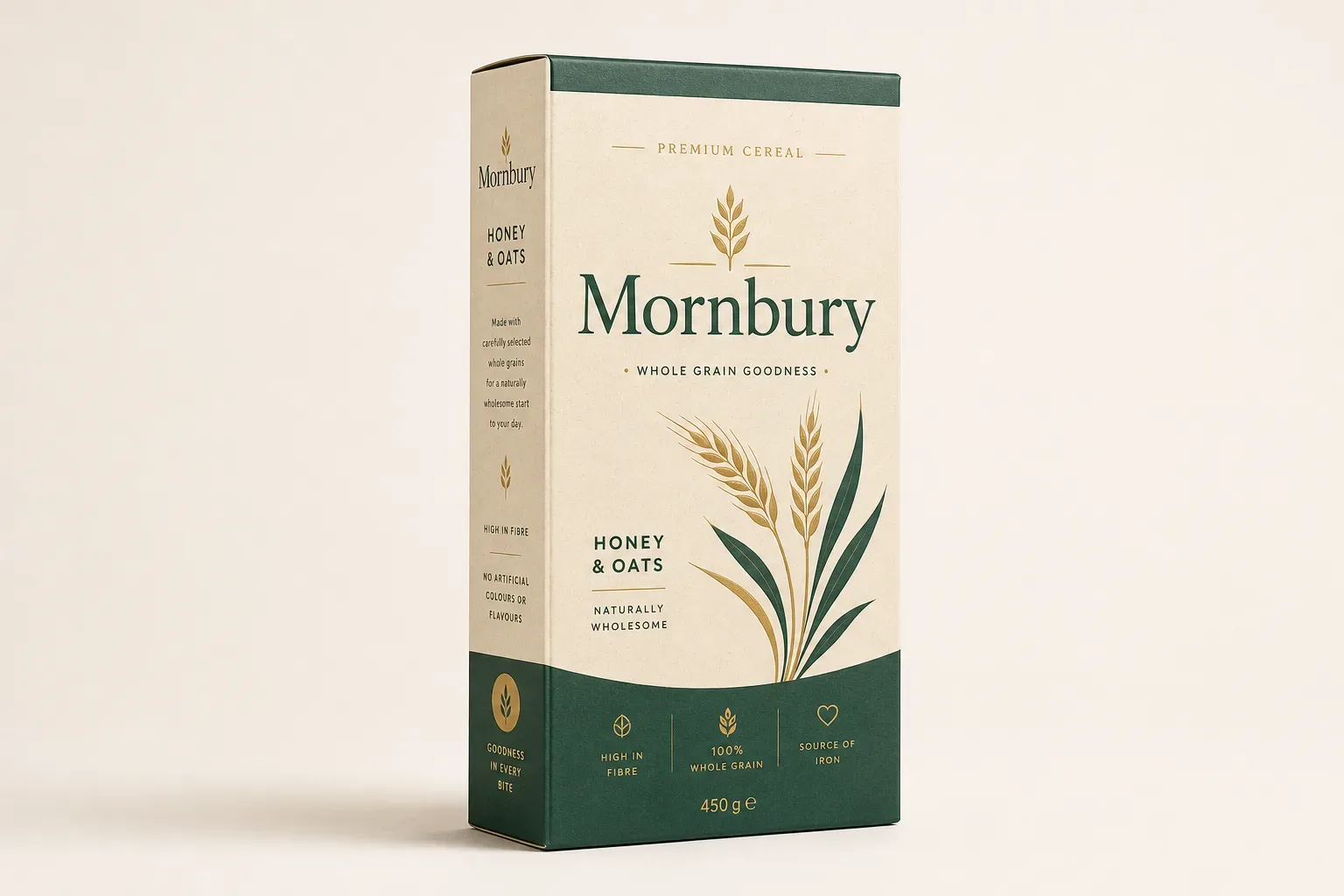

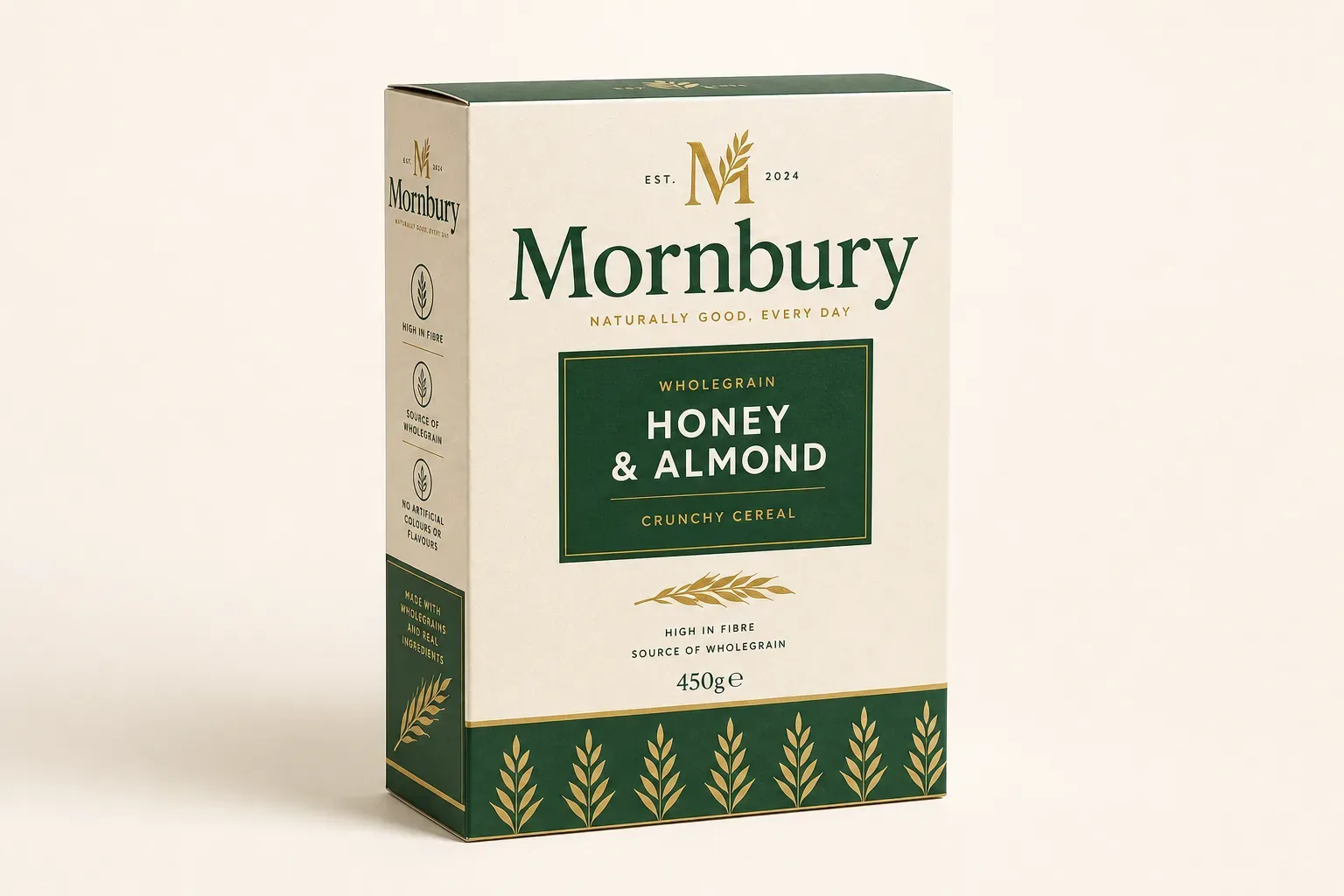
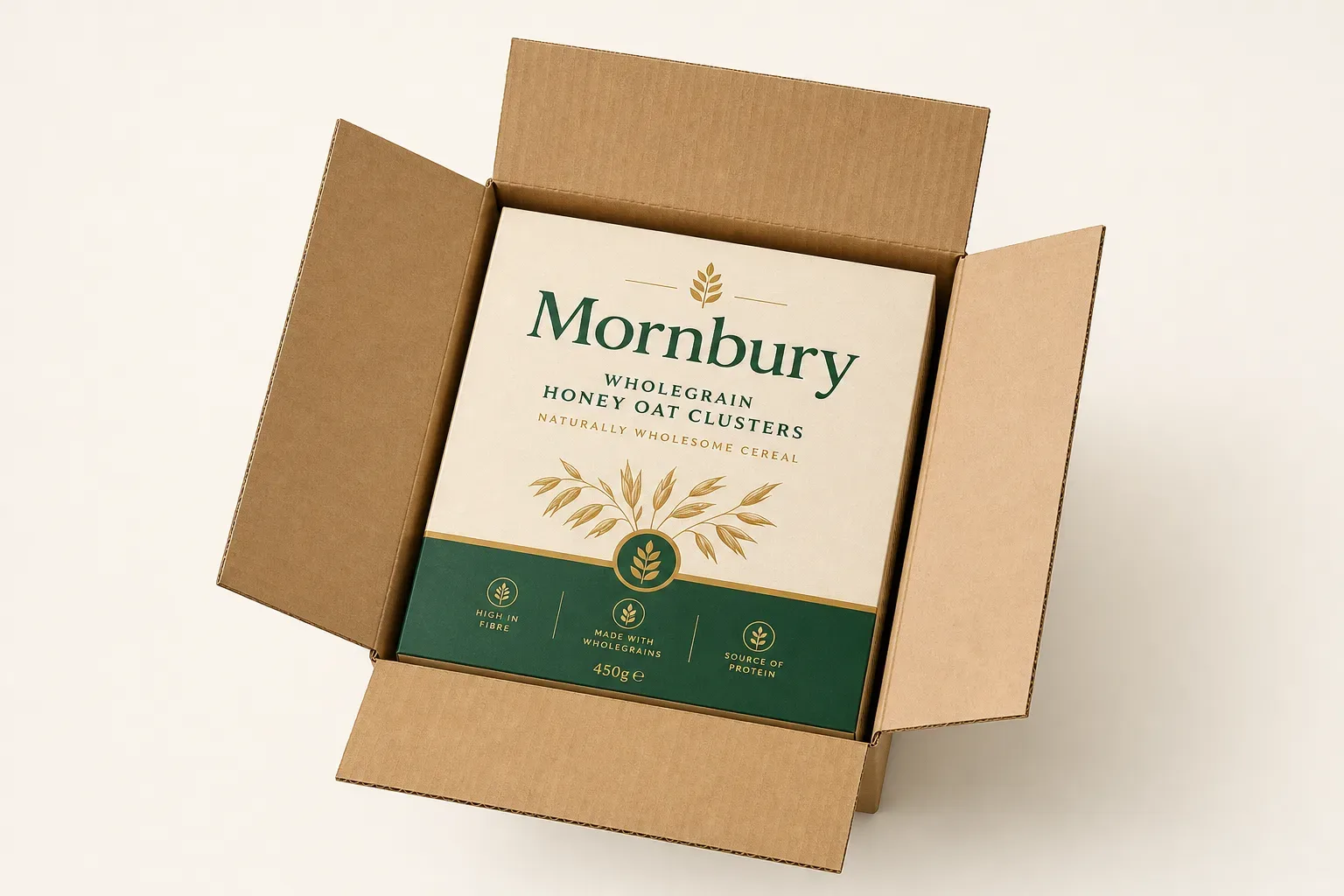
How a size is arrived at
About custom size cereal boxes
What a custom-size cereal box is
A custom-size cereal box is one whose length, width and height are set for a particular product and purpose. In folding cartons this is the normal case, not a premium option: each job has its own cutting die, so there is no catalogue of fixed sizes to be bound by. What varies is how carefully the size is arrived at.
'Standard' cereal box sizes are conventions that have grown up around common fill weights and shelf heights, not rules. A new product is free to follow them or not. Sizing applies across the whole of our cereal carton range.
Best uses
Every new cereal needs sizing, but some cases depend on it more. Dense products such as granola and protein cereals look lost in a carton proportioned for flakes. Products sold in fixed spaces, such as mailers, vending or shelf-ready trays, must fit those spaces exactly.
Brands entering a shelf dominated by one format may also choose to differ on purpose: slightly taller to stand above neighbours, or slimmer to win an extra facing. And ranges with several fill weights benefit from a planned family of sizes instead of unrelated ones.
Structure and closures
Proportions and structure interact. A tall, slim carton has a small footprint and short top flaps, which favours sealed ends or slit-locked tucks. A wide, deep carton carries more weight on its base and benefits from a locking bottom. Very shallow depths limit what closures and reclose features will work.
Stability is a structural matter too. As a rough guide, the taller a carton is in relation to its depth, the more easily it tips when part-empty. We check this on the sample. Structure choices are compared on the compare cereal box structures page, and each has its own page, such as straight tuck end cereal boxes.
Material options
Board is chosen after size, because stiffness depends on panel dimensions. A slim carton with narrow panels can use lighter board than a wide one holding the same weight. Tall panels are prone to bowing and may need a step up in caliper or a film laminate for stiffness.
Size also affects how much board is used. Different proportions enclosing the same volume use different amounts of material, and they nest differently on a press sheet. A carton close to a cube uses least; very flat or very tall shapes use more. We show the difference when we present options.
Printing and finishing
Proportions set the canvas. A tall front suits a stacked layout with the brand high. A wide front suits a horizontal layout and large product photography. A slim front has room for little more than brand and flavour, so secondary claims move to the side. It is worth deciding the size with the designer in the room.
Any print method and finish can be applied at any size. The practical point is sheet yield: a small change in dimensions can fit another blank on the sheet and lower the unit price. Finish options are shown under materials and printing.
Size considerations
The method is simple. Fill weight divided by bulk density gives the volume of product. Add headspace for the bag seal and for settling. That total is the minimum inside volume. Then choose three numbers that multiply to it, within the limits you face: shelf height, shelf depth, case and pallet, and any machine range.
Tall versus wide is the main decision. Tall, slim cartons give presence and facings but tip more easily and settle visibly. Wide, deep cartons are stable and strong but take more shelf. Standard proportions are standard because they balance the two. For sizes outside the usual range, see mini cereal boxes and family size cereal boxes.
Retail considerations
Retail fixtures decide more than most brands expect. Shelf spacing limits height. Shelf depth sets how many packs sit behind the front one. The retailer's shelf-ready tray, if they use one, fixes the footprint. Ask for these before settling a size; see retail packaging requirements.
For direct sales, carrier size and weight bands replace shelf limits. A carton a few millimetres over a band can cost noticeably more to post. See eCommerce cereal packaging for cartons sized to ship.
Artwork tips
Do not start artwork until the size is confirmed with a filled sample. Resizing a finished design to new proportions is a redraw, not a scale. A plain cut sample is the quickest check of a new size; see blank cereal boxes. Once the dieline is issued, work to it with 3mm bleed and 4mm safety.
If you plan a range in several sizes, design a system: fixed positions for brand and variant that survive a change of proportion. The guide to designing a cereal box covers this. To get started, request a custom-size carton quote with your fill weight, or use the cereal box finder if the structure is still undecided.
One fill, three sizes: see your options side by side.
Tell us the cereal and the fill weight, with any shelf or case limits. We will return three sets of dimensions, tall, standard and wide, each with its trade-offs in facings, stability and board use.
Custom-size cereal boxes: what people ask
Cartons whose dimensions are set for your product and selling conditions, not chosen from fixed stock sizes.
Don't pick a size. Work it out.
Send the cereal, the fill weight and any limits. We will propose dimensions, show the options and cut samples to fill.