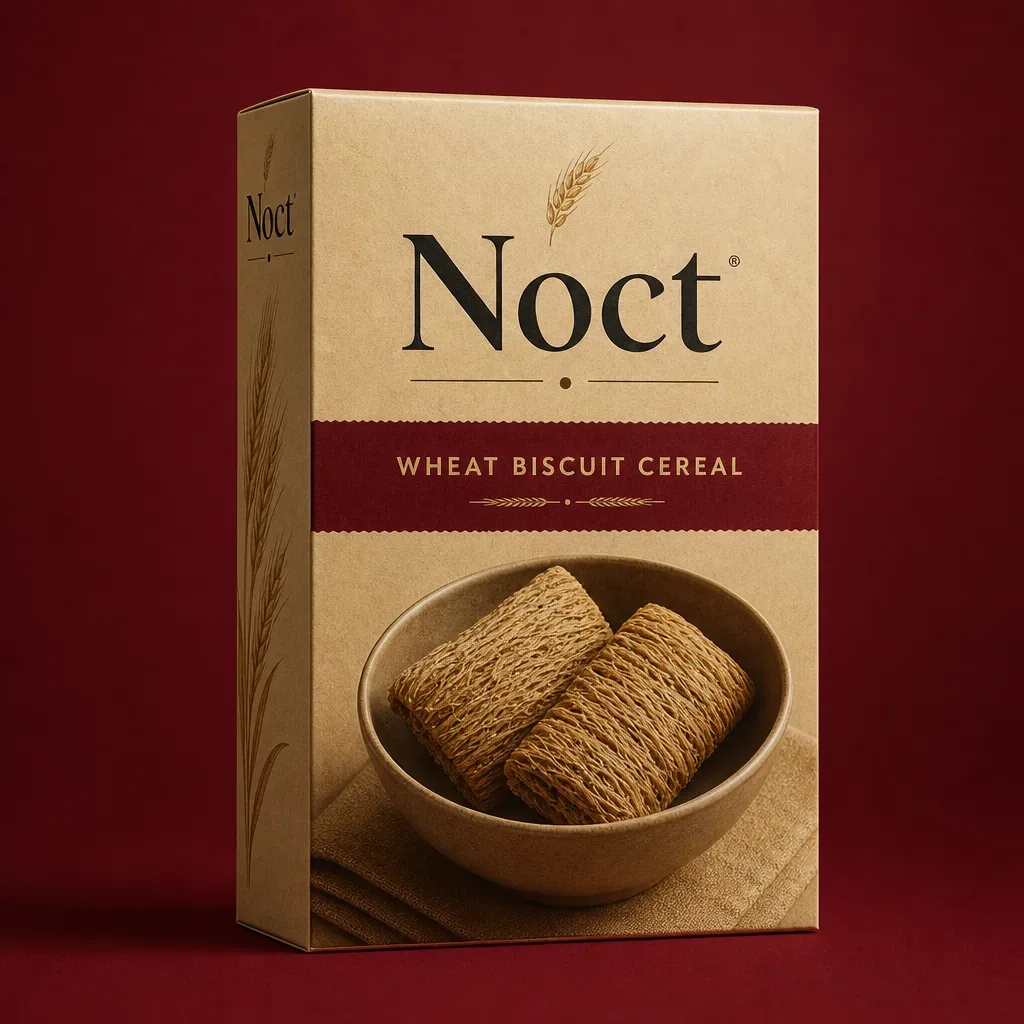
Wheat cereal boxes.
Wheat cereal boxes hold two very different products: wheat flakes, which pack like any flaked cereal, and shredded wheat biscuits, which are stacked in rows and need a carton that holds them square. Both carry the same labelling duties, because wheat contains gluten and is a declared allergen in most markets. This page covers the structures, the fit and the allergen panel.
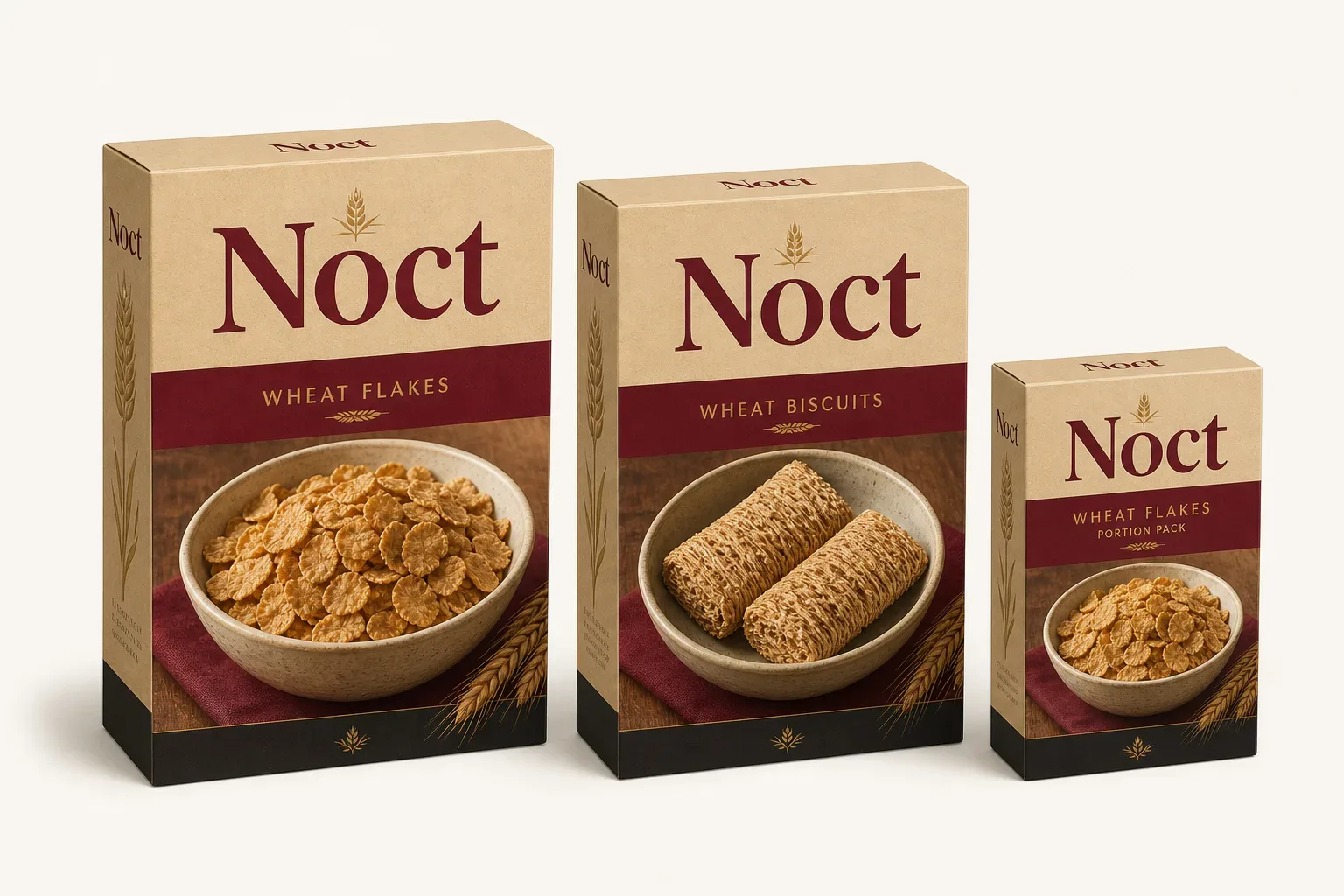
Biscuits in rows, flakes in a bag.
Boxes we'd normally specify for wheat cereals.
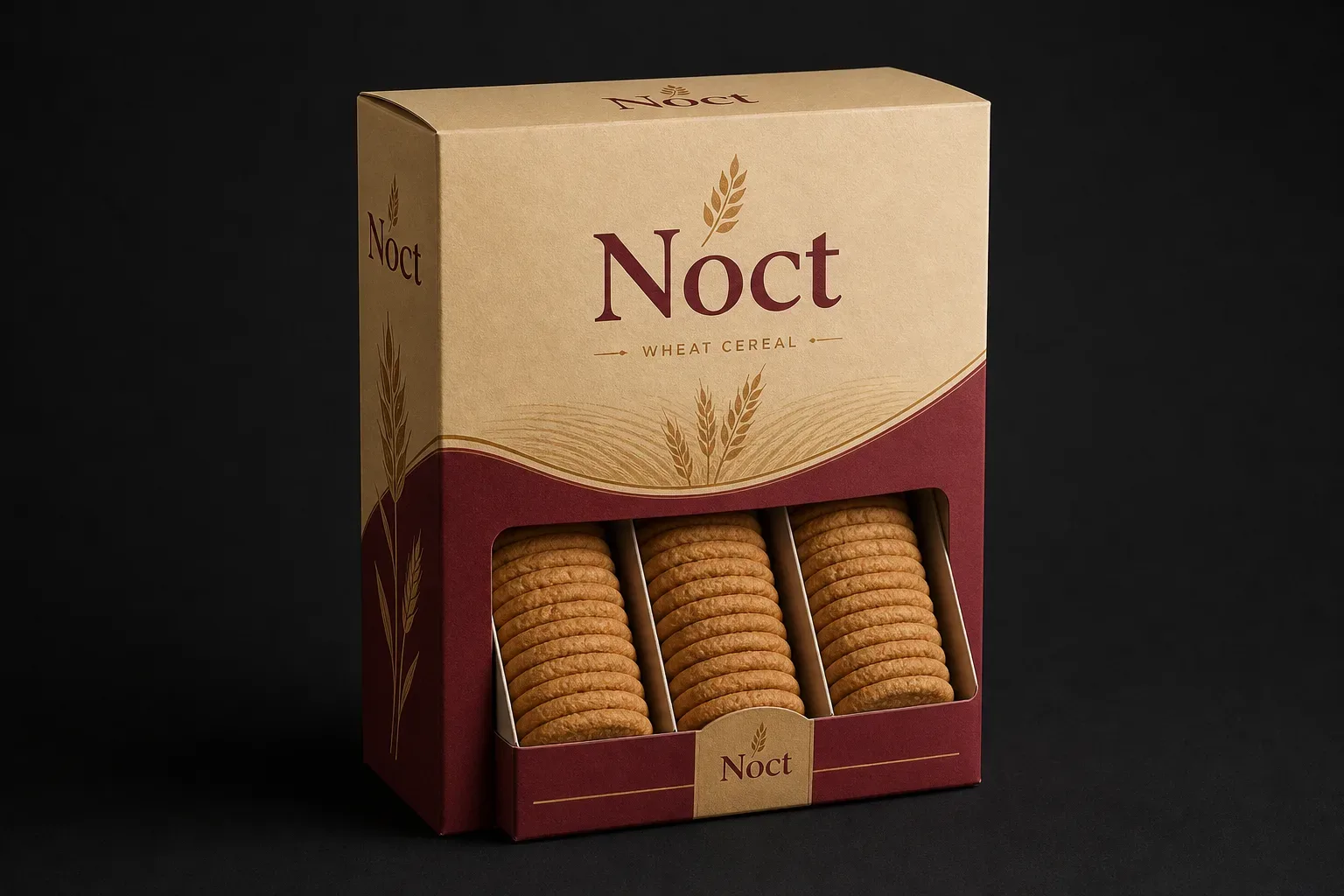


Plain wholegrain or flavoured? Let the board say it.
Plain wheat biscuits and flakes are sold on simplicity and wholegrain goodness, and suit natural colours, kraft or warm board and a clear ingredient statement. Flavoured, frosted or filled wheat cereals are sold on taste and look more like any bright family cereal. Decide which story the pack tells before choosing the board. Board options are compared under cardboard cereal boxes.
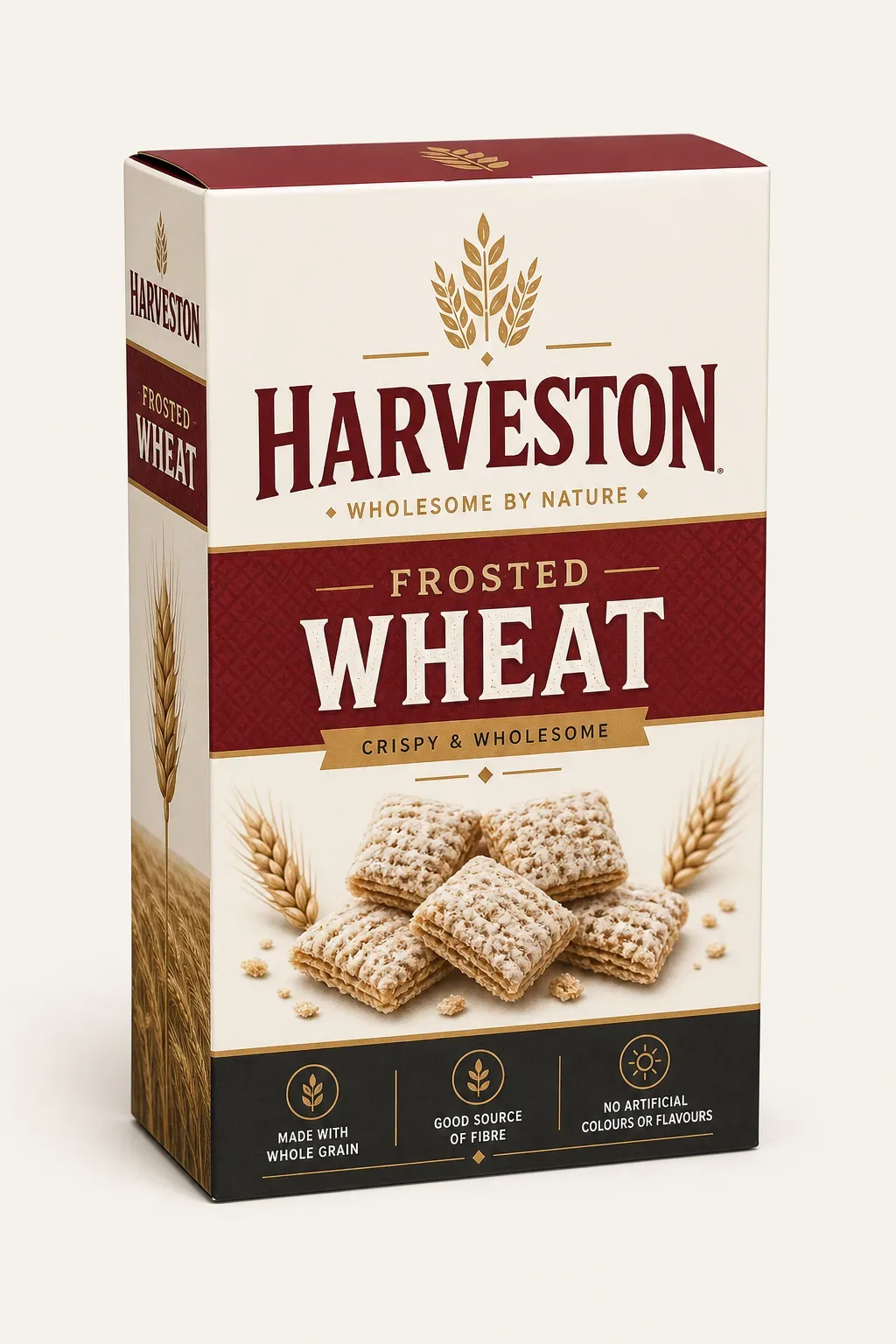 flavoured wheat carton
Flakes, biscuits and bites
Wheat cereals come in three main forms: flakes made from rolled, toasted wheat; shredded wheat, made from cooked wheat pressed into strands and formed into biscuits or bite-sized pieces; and puffed wheat, which packs like other puffed grains. Bran-rich wheat cereals are covered separately under bran cereal packaging.
The form decides the pack. Flakes go in a bag in a carton, like corn flakes. Biscuits are usually stacked in rows, sometimes in paper wraps or on a tray, and the carton is sized around the stack. Bites go in a bag like flakes.
Packing biscuits so they arrive whole
Shredded wheat biscuits break if they can move. The carton's inside dimensions are drawn from the stack with a small allowance, and some packs use a card divider or tray to hold the rows apart; see trays and dividers for cereal cartons.
Biscuits are often wrapped in groups in paper or film so the opened pack keeps the rest fresh. The carton protects the stack in transit and on the shelf, so board stiffness matters more than for a bagged flake.
Gluten and allergen labelling
Wheat contains gluten and is a declared allergen in most markets. The ingredients list must emphasise it in the way the market requires, and many brands add a clear allergen statement. A gluten-free product cannot be made from ordinary wheat; see gluten free cereal boxes for that category.
Allergen information is the brand's responsibility. We print exactly what is supplied and can lay out the panel so allergen and ingredient information is easy to find.
Wholegrain and fibre messages
Wheat cereals often carry wholegrain and fibre messages. These are regulated in most markets, with conditions on the product and set wording. Front-of-pack schemes and nutrition panels also vary by country.
Give claims space and contrast; they work best near the brand name or in a band. Front-panel hierarchy is discussed in the front-panel design guide, and the difference between whole grain and multigrain under whole grain cereal packaging.
Board and print
Everyday wheat cereals are commonly printed on coated recycled board. Premium and organic wheat brands often choose kraft or a matte finish to signal simplicity. Large food photography of the biscuit or flake is typical and benefits from a coated surface.
Tuck-end cartons suit biscuit packs that are opened and closed many times; seal ends with a tear strip suit flakes filled on a line. Both can be printed inside for recipes or messages; see inside printed cereal boxes.
Shelf presence and case planning
Wheat biscuit cartons are often squatter and deeper than flake cartons, because they are drawn around the stack. That gives a broad front panel for the brand and the biscuit photograph, but takes more shelf depth. Check the carton against your retailers' shelf depths before fixing the size.
Biscuit packs are heavier per carton than flakes, so case weights and stacking strength are checked early. Count-based packs make case counts simple to plan. Retail-ready trays for wheat cereals are covered under shelf-ready cereal packaging.
Sizes and formats
Biscuit packs are described by count as well as weight, so the carton is sized to a fixed number of biscuits. Flake packs follow standard and family sizes. Portion packs suit foodservice.
For the full set of structures see our cereal carton range, and request a wheat cereal packaging quote with your biscuit count or fill weight.
Send a stack of biscuits, get a carton drawn to it.
Send your biscuit dimensions and count, or a sample stack. We'll draw the carton and any insert around it and send a plain sample to check the fit.
Wheat cereal boxes, answered
Stacked in rows, often wrapped in groups, inside a carton drawn to the stack. Some packs use a tray or divider.
Packaging a wheat cereal? Tell us flakes or biscuits.
Send the biscuit size and count, or the flake fill weight, and how you fill. We'll recommend the carton, insert and closure.
Start your quote → Talk to a packaging specialist →