Corn flakes boxes.
Corn flakes boxes carry the most fragile, lightest product in the cereal aisle: thin toasted flakes that break if crushed and go soft if they take on moisture. The carton is large for the weight it holds, filled at speed on a bag-in-box line, and expected to stand straight on a shelf for months. That shapes the board, the closure and the bag.

Big box, light load, fragile flakes.
Boxes we'd normally specify for corn flakes.
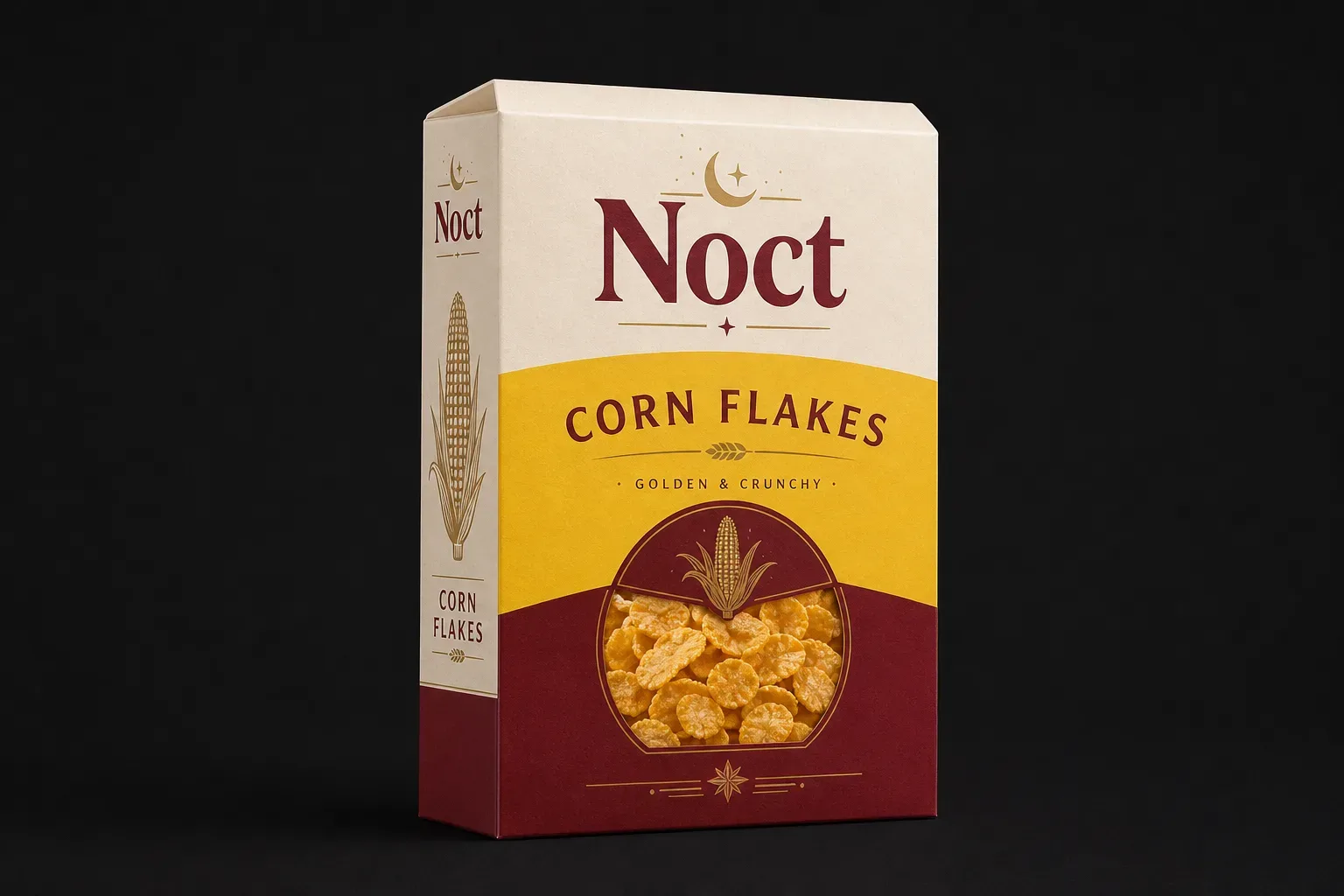

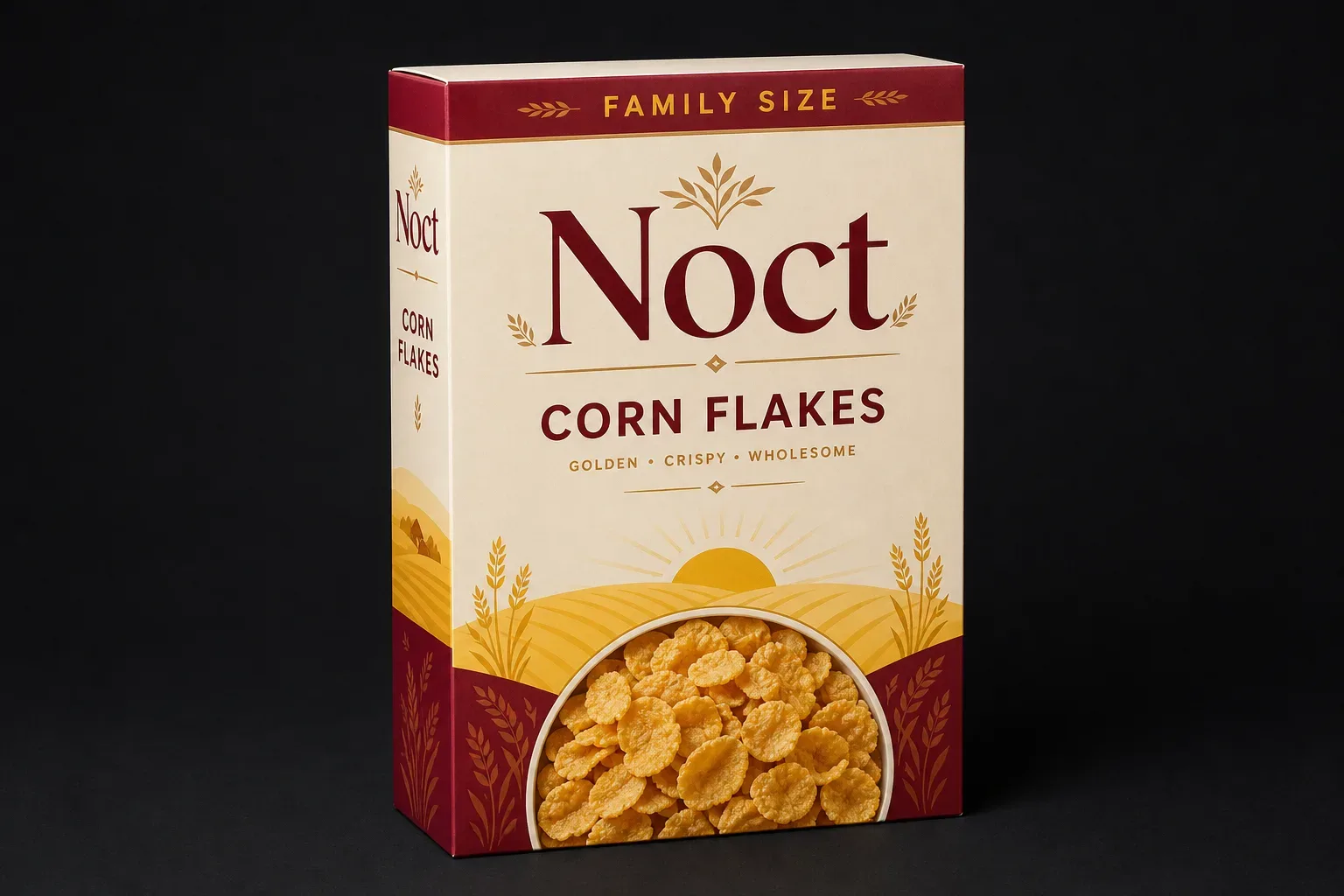

Classic or modern? The pack sets the expectation.
Corn flakes are one of the most familiar products in the aisle, and the category has strong conventions: a bright, glossy carton with a large bowl photograph. Following them signals a reliable everyday product; breaking them, with matte board, kraft or minimal graphics, signals a premium or organic alternative. Both work if they are deliberate. Gloss options are explained under gloss cereal boxes.
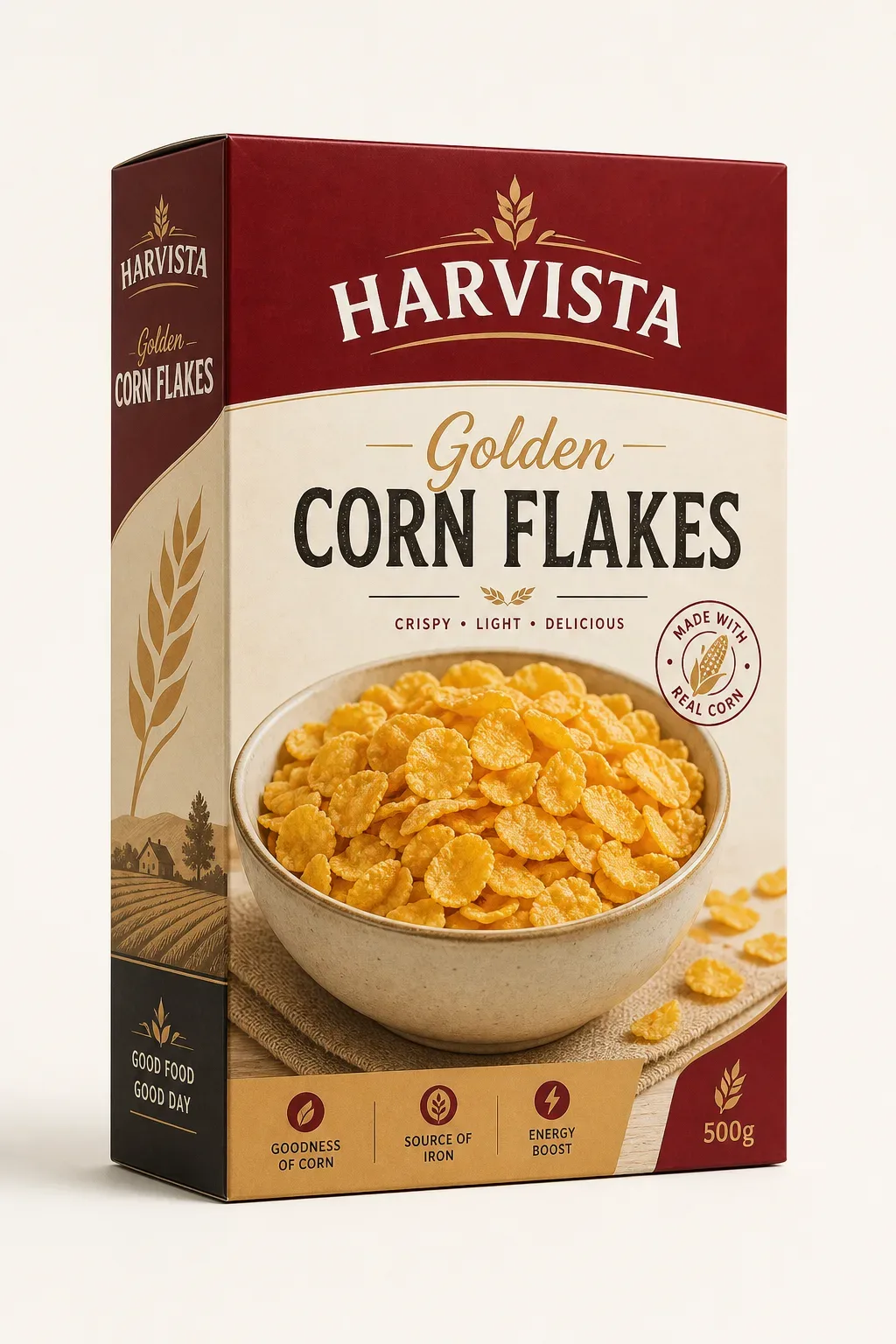 classic gloss carton
 modern matte carton
Why flakes are hard to pack
Corn flakes are made by cooking, rolling and toasting maize grits into thin, curled flakes. They are light, so a given weight takes up a lot of space, and brittle, so they break into crumbs when crushed. They also absorb moisture readily and lose their crunch within days if the bag is left open.
That combination makes the pack large, light and protective rather than strong. The same thinking applies to other flaked cereals such as wheat flakes and bran flakes, with small differences in weight and fragility.
Sizing around a fragile fill
The bag is filled by weight on a vertical form-fill-seal machine and dropped into the carton. If the carton is too tight, the bag is squeezed and flakes break; too loose, and the pack looks underfilled when opened. Headspace is set from trials on the real product, because flakes settle in transit.
Because flakes are light, the pack is big for its weight. Large panels need a stiffer board to stay flat. Dimensions are drawn to the product's density; see custom size cereal boxes.
Keeping flakes crisp
Moisture is the main enemy. The inner bag provides the moisture barrier, typically a polyethylene-based film with a seal that holds through distribution. Some brands use resealable bags or reclose cartons to keep flakes crisp after opening.
The carton protects the bag and blocks light. If you are moving to a paper or recyclable mono-material bag, test shelf life on the actual flakes, because barrier levels differ; options are compared in the inner bag guide.
Line-ready structures
Most corn flakes are packed on automated bag-in-box lines that erect, fill and glue cartons at speed. Seal-end cartons closed with hot melt suit this best; see seal end cereal boxes. Scores, glue areas and board must be consistent for the line to run without stoppages.
For smaller producers filling by hand, a tuck-end carton works and avoids glue at the bench. A tear strip on the top panel gives a clean first opening and a visible sign the pack has not been opened.
Board, print and finish
Coated recycled board is the mainstream choice for corn flakes cartons, printed offset in full colour. Food photography is central to the category, so a gloss coating or laminate is common to keep colours rich and the surface wipeable. Premium and organic brands increasingly choose matte or uncoated kraft.
Side and back panels carry nutrition information, ingredients and often activities or recipes. Large flat panels give room, but small type needs good contrast to remain legible on a coated surface.
Cases, pallets and shelf life
Because flakes are light, a case of corn flakes is bulky rather than heavy, and pallets fill by volume long before they reach weight limits. Carton dimensions decide how many fit a case and a pallet layer, so a few millimetres saved on depth can add a row. Plan the carton, case and pallet together.
Shelf life depends mainly on the bag and the seal, not the carton. Test sealed packs under warm, humid storage before launch, and check that the carton keeps its shape when stacked for weeks in a warehouse. Shelf-ready trays for flake cereals are covered under shelf-ready cereal packaging.
Sizes and formats
Ranges usually include a standard retail carton, a family size, and portion boxes for hotels, schools and variety packs; see single serve cereal boxes. Club and value packs may be twin-bag cartons or large shippers.
Each size needs its own dieline and line settings, so a range is planned together. For all structures see our cereal carton range, and request a corn flakes packaging quote with your fill weight and line details.
Corn flakes boxes, answered
Usually coated recycled paperboard, printed in full colour. SBS and kraft are used for premium and organic brands.
Packaging corn flakes? Bring the line spec.
Fill weight, bag size, line type and target sizes. We'll recommend the board, closure and dieline and help plan a line trial.
Start your quote → Talk to a packaging specialist →