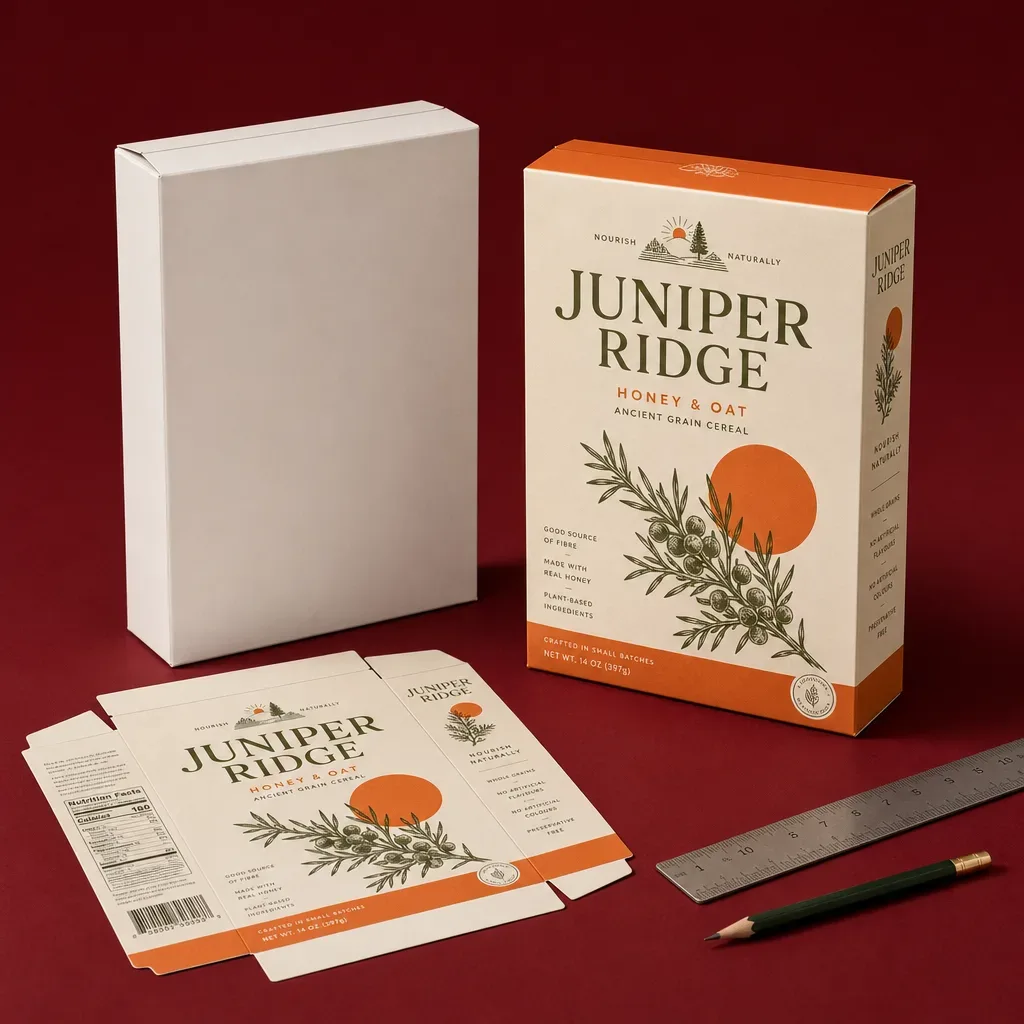
Cereal box prototype and mockups
A cereal box prototype is a physical sample of your carton made before the production run: first as a plain structural sample to check size and fit, then as a printed prototype that shows the real design on the real board. Digital mockups come earlier still, for presenting a design. Each answers a different question and costs a different amount. This page sets out which to ask for, when, and what to check, so that the first production carton has no surprises.
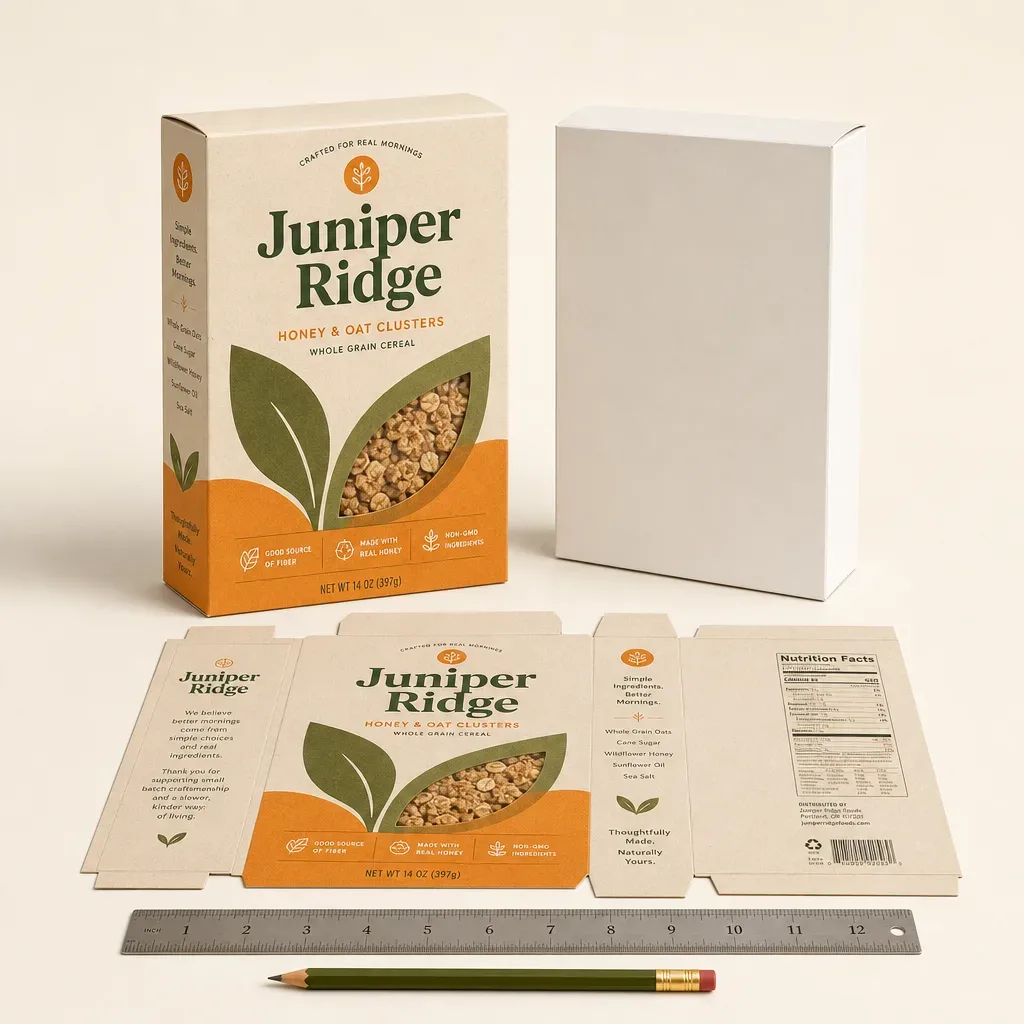
A cereal box mockup costs less than a wrong production run.
Most packaging problems are found in the first filled carton: the bag does not fit, the fill settles lower than expected, the brand mark sits on a fold, a colour looks different on board than on screen. Found at prototype stage, each is a small change. Found in production, it is a reprint.
Prototypes also sell. A real printed carton in a buyer's hand, or in a photo shoot before stock exists, does more than any render. Plain structural samples are also available on their own; see plain unprinted cereal cartons.
 prototype edge — macro
Six things a cereal packaging sample should prove.
Select a point on the prototype, or read the list.
The carton holds the bag and the fill weight, with the headspace you planned.
Cut on a sample table, without a production die.
Prototypes are usually cut on a digital cutting table that reads the dieline directly, so no die is needed. Any structure can be sampled; complex ones such as auto lock bottom cereal boxes are worth sampling before tooling is made.
Board, print and finish options for prototypes
Select an option to update the specification. Boards and finishes are described on the materials and printing page.
Prototype specification
When a prototype pays for itself


How a prototype round runs
About cereal box prototypes
What a cereal box prototype is
A prototype is a sample carton made individually, before the production tooling and plates. There are three common stages. A white sample is unprinted and checks the structure and size. A printed prototype shows your design on board, usually printed digitally. A press proof is printed on the production press and is the closest match to the final run.
A mockup can mean any of these, or a digital image. Digital 3D mockups are renders of the design on a virtual carton, useful for presentations and early listings but unable to test fit, feel or colour. Prototypes are available for any carton in our custom cereal box range.
Best uses
Prototype whenever something is new: a new brand, a new size, a new structure, a new board or a new finish. A white sample is the cheapest insurance against a carton that does not hold its fill. A printed prototype is the right tool for a buyer meeting, a photo shoot or a final artwork check; see cereal packaging for startups.
For a straight reprint of an existing carton, a prototype is rarely needed; a digital proof is enough. For a minor artwork change, a printed proof of the changed panel may do.
What a structural sample tests
A white sample is filled with the real product, in the real bag, at the real fill weight. Check that the bag fits without forcing, that the settled fill leaves the headspace you expect, that the flaps close and hold, and that the carton stands square. Shake it, tip it and open it as a customer would.
If the cartons will be machine-filled, ask for enough samples for a line trial, since a carton that folds by hand may still jam a machine. Closures are compared in cereal box closures explained.
Material options
A prototype should be made on the same board as production, or it can mislead. A lighter board feels flimsier, a heavier one stiffer, and colours change between white, recycled and kraft boards. If the exact production board is not available for sampling, the nearest equivalent is used and the difference noted.
For corrugated shippers and displays, prototypes are cut from the same flute and liner. Strength-related tests such as stacking or drops are only meaningful on the real material; see eCommerce cereal packaging for shipped packs.
Digital prototypes and press proofs
Printed prototypes are normally made on a digital press. They show layout, legibility and overall colour well. They are not an exact colour match to offset production, especially for spot colours, so brand-critical colours are approved separately with a drawdown or a press proof; see Pantone printed cereal boxes.
Finishes can be simulated on prototypes: lamination by hand, foil and spot UV by digital embellishment. They show position and effect but are not identical to production foil and UV. A press proof, printed and finished on production equipment, is the final reference when it matters.
Size considerations
A prototype is the right moment to change size. Adjusting a dieline costs little; changing a production die costs more. If the fill settles low, or the bag is cramped, change the dimensions now. Size options are discussed under custom size cereal boxes.
Check the carton in its case and on a shelf of the right depth too. A few millimetres can change how many cartons fit a case, and therefore a pallet.
Retail considerations
Buyers often ask to see a physical pack before listing a product. A printed prototype is suitable for that and for photography. Make clear it is a prototype if anyone might take it for production stock.
Use the prototype to check the regulatory panel: that all mandatory information fits at a legible size, that the barcode scans and that claims are where you want them. Retail rules are summarised in retail packaging requirements for cereal.
Artwork tips
Send artwork on our dieline, as you would for production, so the prototype tests the real file. Mark anything you are unsure of and ask us to check it on the sample. Keep notes on the sample itself; it becomes the reference for production.
After review, update the master artwork, not just the prototype file. The artwork preparation guide covers file set-up, and the cereal launch packaging checklist puts samples in order with every other step. Then request a prototype quote.
Cereal box prototypes: what buyers ask
A mockup is often a digital image of the design. A prototype is a physical carton made before production to test size, fit, artwork and colour.
Find the problems on a sample, not on a pallet.
Send your size, structure and artwork if you have it. We will draw the dieline, make a white sample and a printed prototype, and mark up the changes.