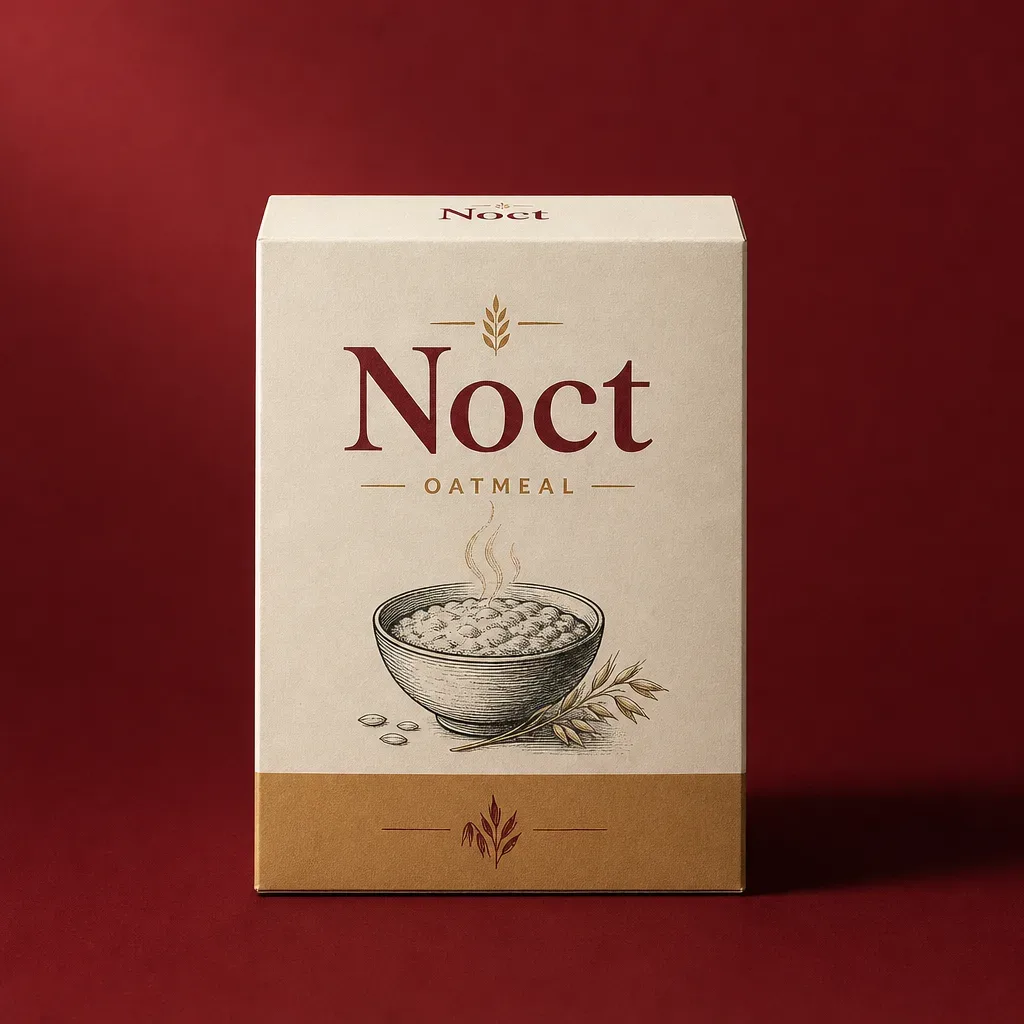
Oatmeal boxes and porridge cartons.
Oatmeal boxes cover a wider range of products than any other cereal type: large cartons of rolled or steel-cut oats, family packs of quick oats, and multipacks of instant porridge sachets. Each needs a different structure. Oats are dense, dusty and heavy for their size, so the carton is chosen for strength and a clean pour as much as for shelf impact.

Heavy for its size, and dusty.
Boxes we'd normally specify for oats.

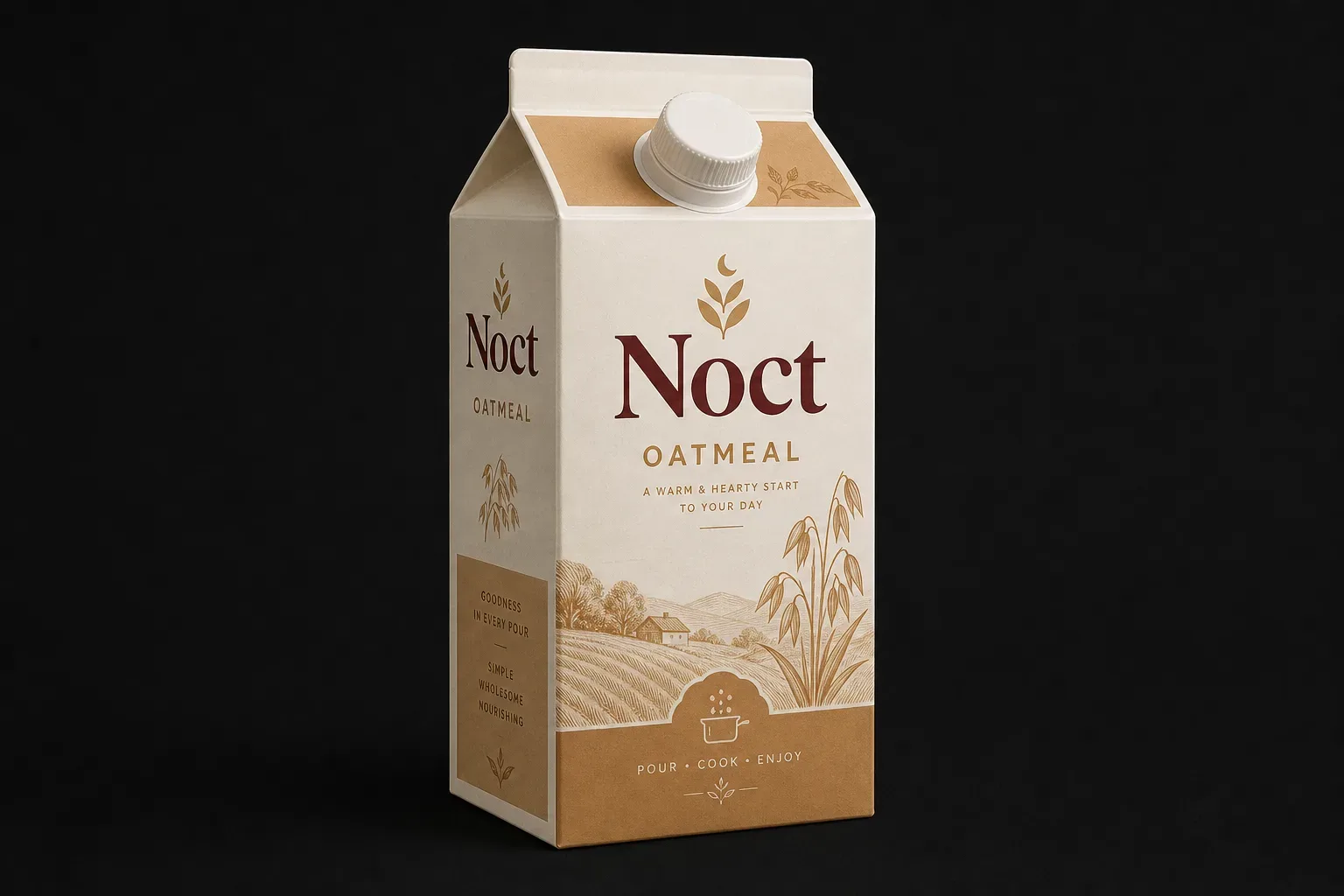
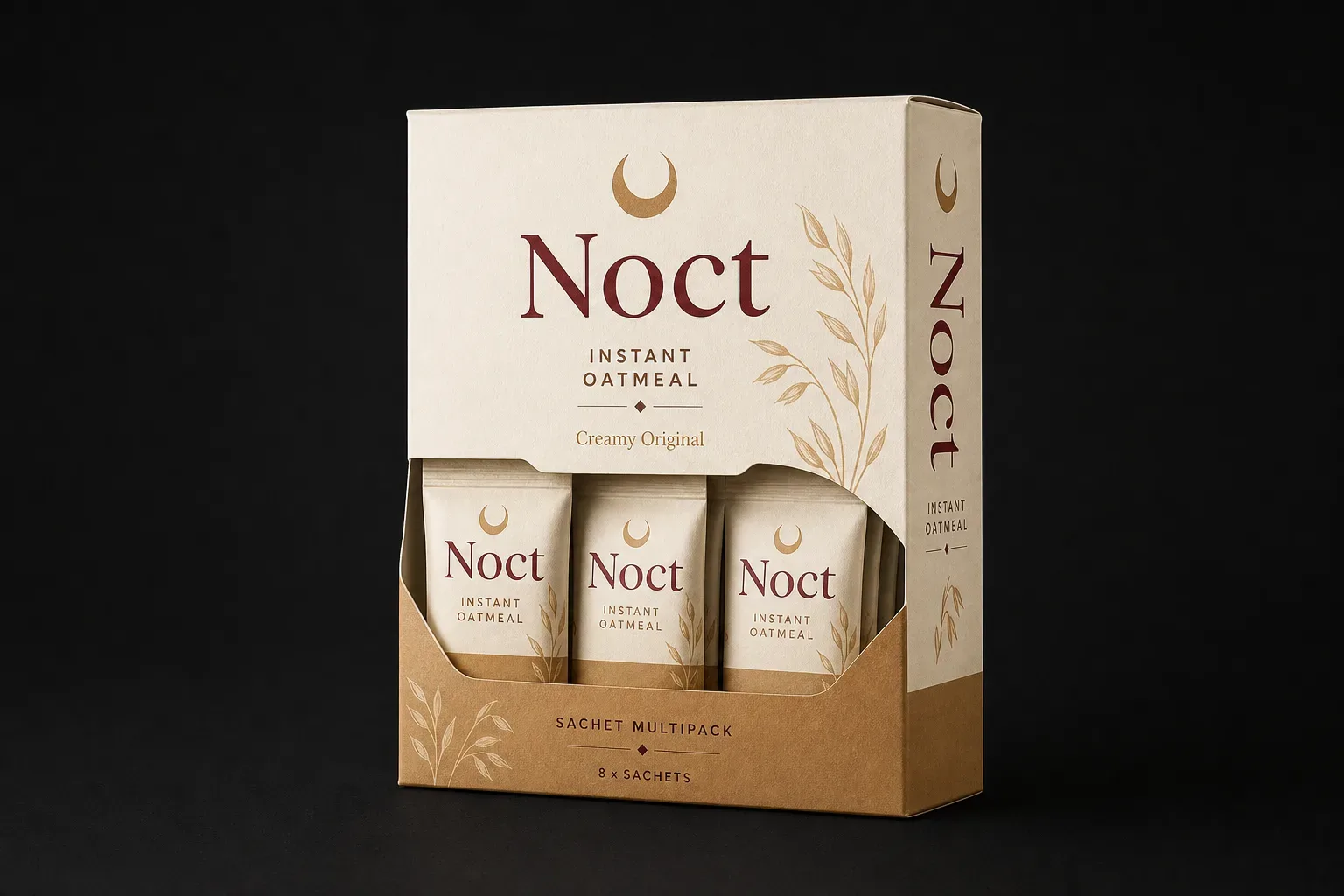
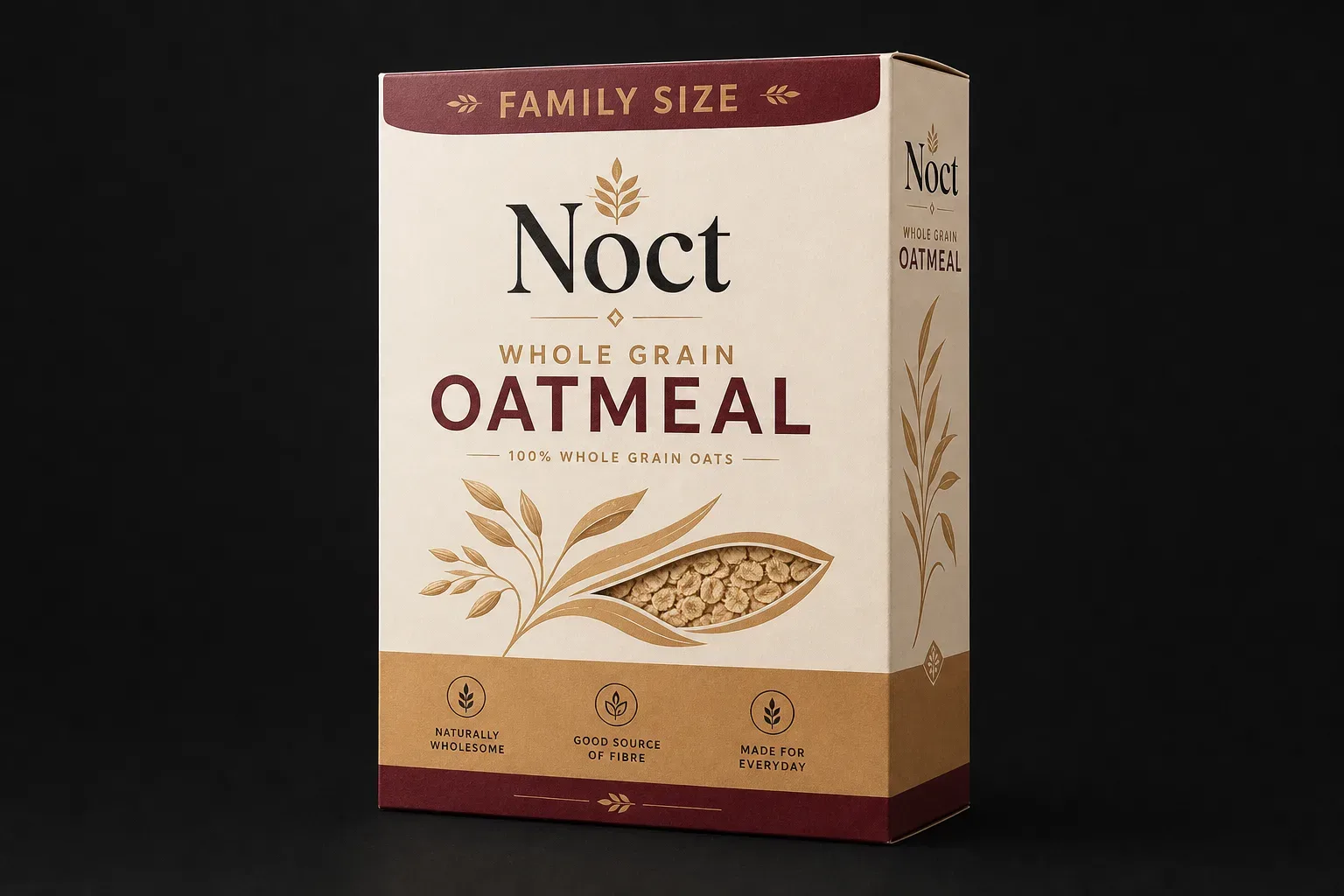
Traditional oats or instant porridge? Two different packs.
Rolled and steel-cut oats are bought in bulk, used daily and kept for weeks, so the carton is about strength, a clean pour and a pantry-friendly shape. Instant porridge is bought for convenience: individual sachets or pots inside a printed carton that works as both outer and display. The two often share a brand but not a structure. Single portions for offices and hotels are covered under single serve cereal boxes.
 rolled oats carton
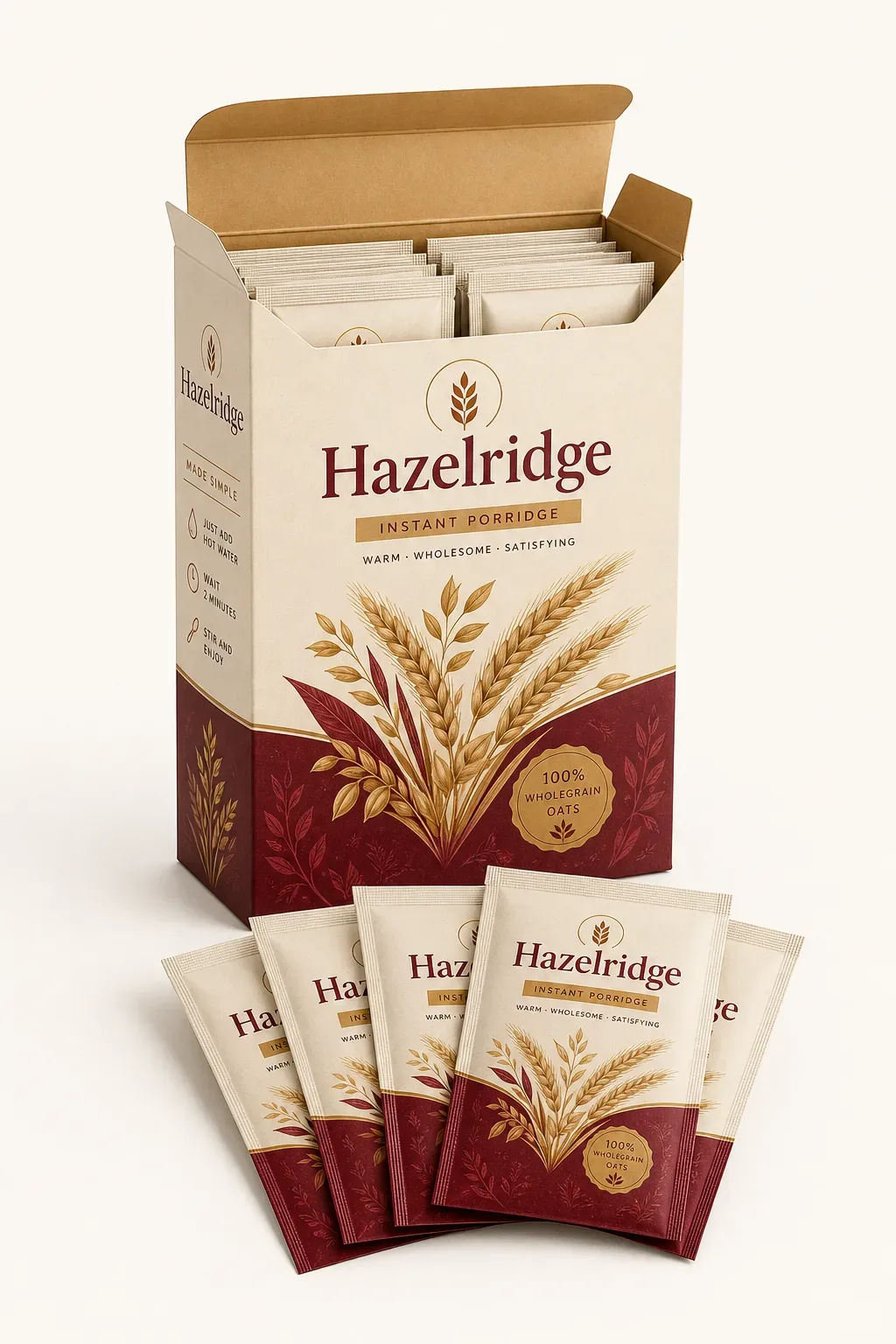 sachet multipack
Which oats, which pack
Oatmeal and porridge cover several products: whole rolled oats, quick or fine-cut oats, steel-cut or pinhead oats, oat bran, and instant porridge, which is pre-cooked and often flavoured. They differ in particle size, density and how they are used, and that drives the packaging more than the name on the front.
Large-format rolled oats are commonly sold in cartons and in round composite canisters; this page covers cartons, which ship flat, print well and recycle with paper. Mixed oat products with fruit and nuts behave more like muesli packaging, and baked clusters like the granola range.
Weight, board and the bottom closure
Oats are dense. A carton of rolled oats weighs noticeably more than a flake cereal carton of the same size, and the load sits on the bottom panel and the side seam. A crash-lock bottom, or a glued seal end on line-filled packs, carries it without bowing.
Board is chosen for stiffness at that weight; on large packs a heavier calliper keeps the panels flat on shelf. Structure options are compared under auto lock bottom cereal boxes and board weights in the box thickness guide.
Dust, moisture and bags
Rolled oats shed fine flour in transit. In a bagged carton it stays in the bag. Some oat cartons are filled without a bag, in which case the closures must be tight and the inside surface suitable for direct food contact; that is specified per product and market, see food-grade cereal boxes.
Oats are less fragile than flakes but still absorb moisture and odours, and their natural fats slowly oxidise. A bag with a moderate barrier is typical. Instant porridge sachets carry their own barrier, so the outer carton is mainly for protection, display and information.
Pouring and reclosing
Oats are used a scoop at a time, so the opening matters. A pour spout gives a controlled stream for measuring; a wide reclose top suits scooping. Both should close firmly enough to keep the pack tidy in a cupboard; see pour spout cereal boxes.
Sachet multipacks need a different opening: a tear-strip or perforated front that turns the carton into a dispenser, so sachets can be taken one at a time. That suits offices, hotels and family kitchens alike.
Board, print and claims
Oat brands lean on warmth and simplicity: kraft or warm cream board, a bowl, a clear statement of the oat type. Matte finishes suit the category. Cooking instructions need space and legibility, often on the side or back panel with simple icons.
Health and nutrition claims about oats, such as fibre or heart-health statements, are regulated in most markets and must use approved wording. We print what you supply; the claim and its wording are the brand's responsibility. Whole grain messages are covered under whole grain cereal boxes. Gluten-free oats need separate handling and labelling; see gluten free cereal boxes.
Sizes and formats
A typical oat range runs from portion sachets to large value packs. Mid-size and large cartons cover rolled and quick oats; family size cereal cartons suit value lines; multipacks hold six to twelve sachets of instant porridge.
Because the formats differ, a shared design system matters: the same colour band, type and photography across carton, multipack and sachet. For the full range of structures see our cereal carton range, and request an oatmeal packaging quote with your fill weights.
Oatmeal boxes, answered
A carton with a strong bottom closure, such as a crash-lock or glued seal end, because oats are dense and heavy for their size.
Packaging oats? Tell us the format first.
Rolled, quick, steel-cut or instant, with the fill weight and how it's used. We'll recommend the carton, closure, bag and dieline.
Start your quote → Talk to a packaging specialist →