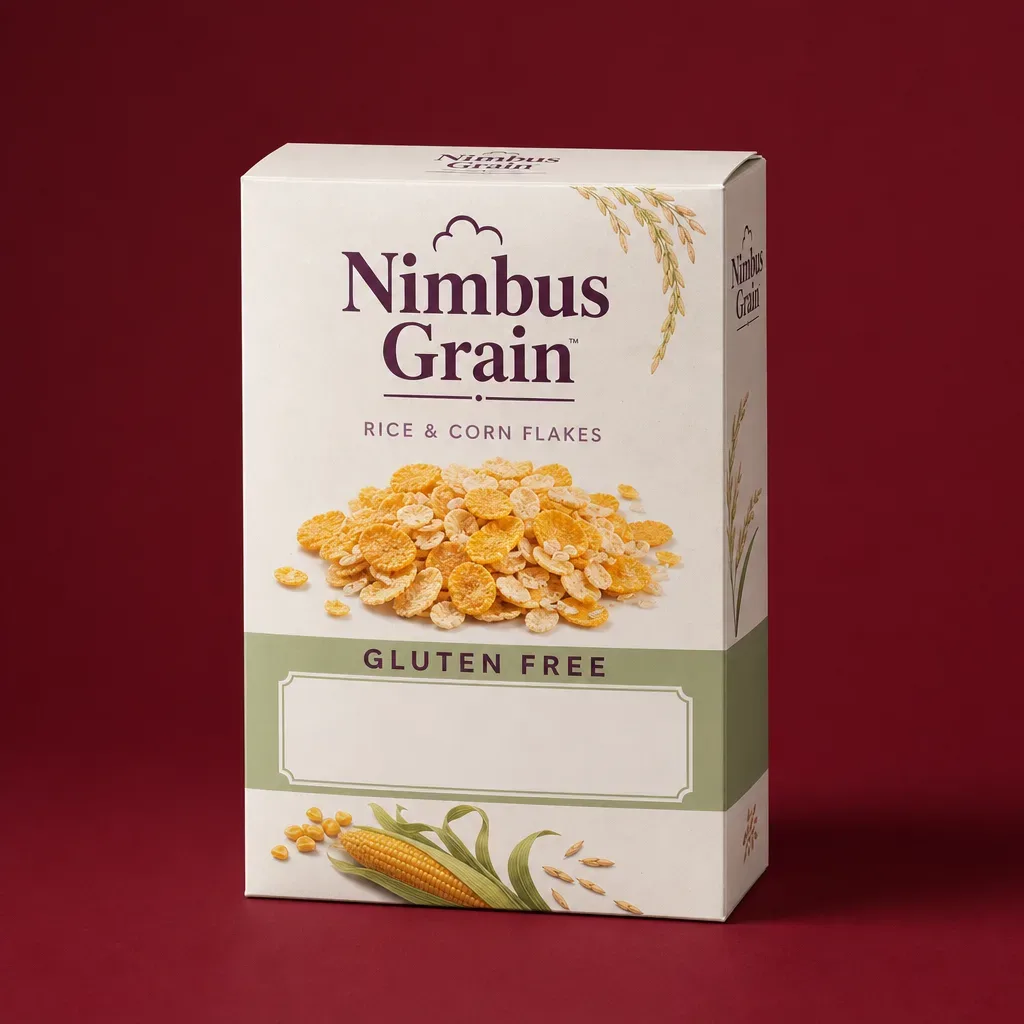
Gluten free cereal boxes.
Gluten free cereal boxes are bought by people who check every pack, often because they or someone they cook for has coeliac disease. The carton has one job above the others: make the gluten-free status impossible to miss and impossible to confuse with a regular product. It also has to keep the cereal sealed from the moment of packing to the last bowl, and carry any certification mark exactly as the scheme requires.
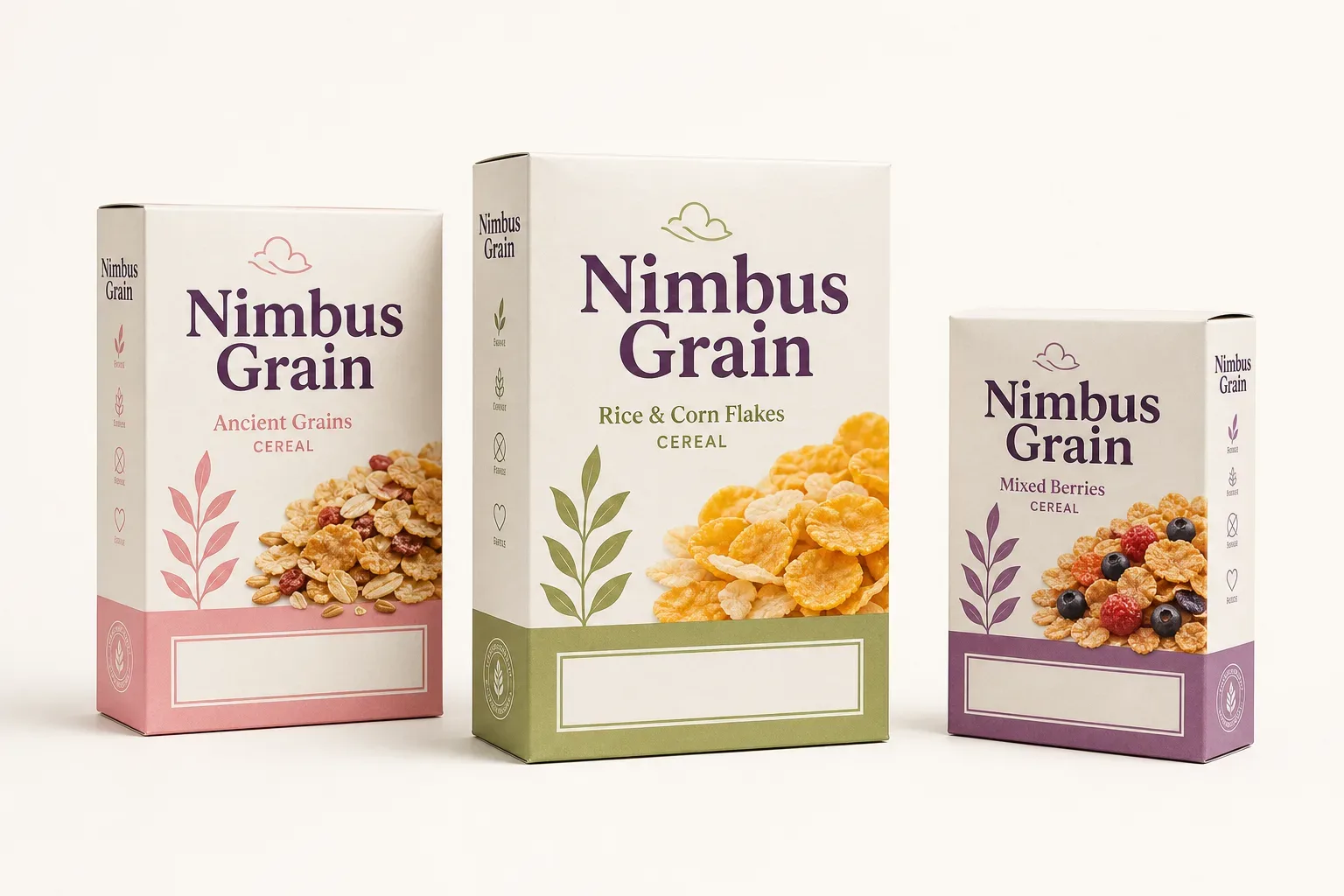
No room for confusion.
Boxes we'd normally specify for gluten-free cereal.
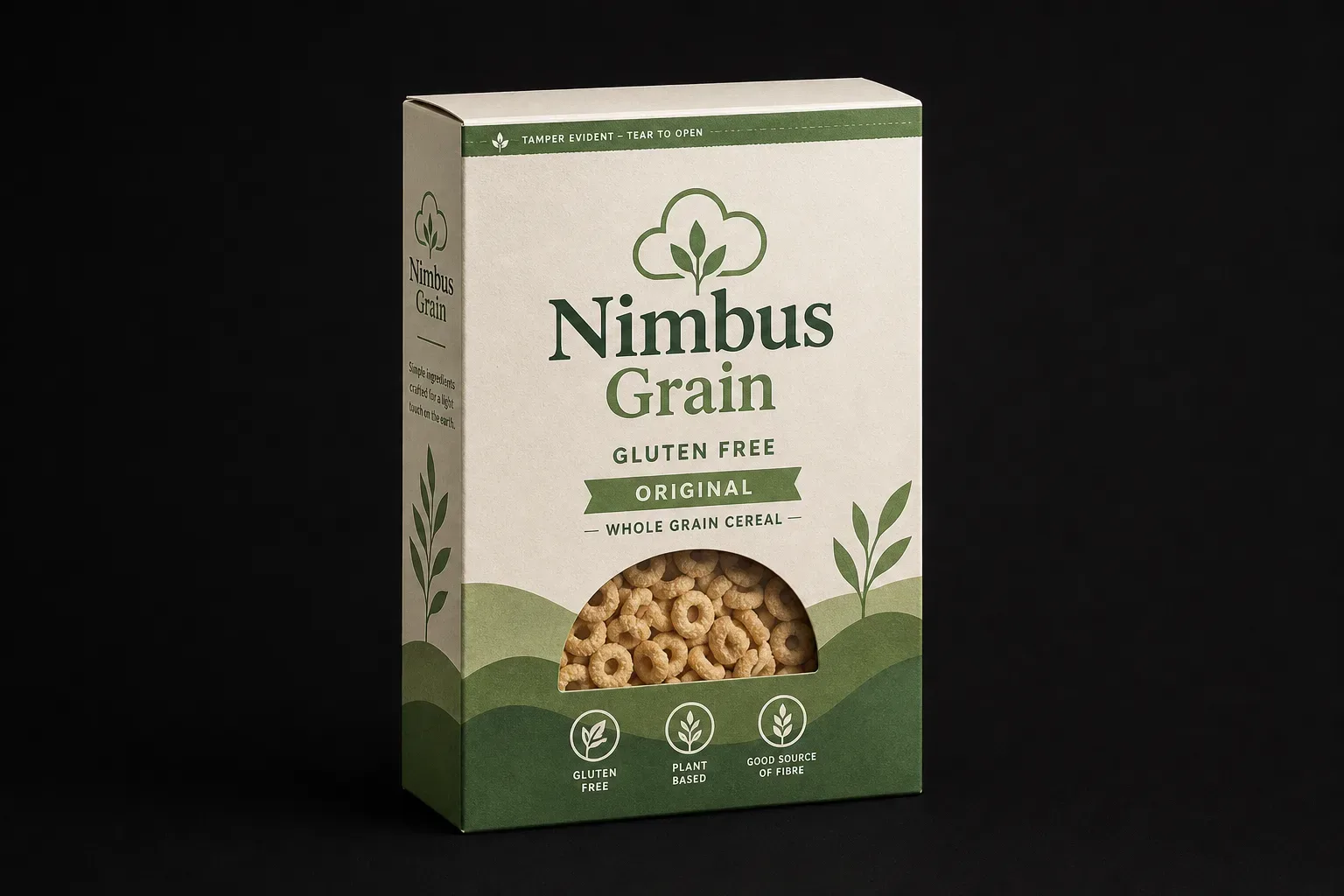
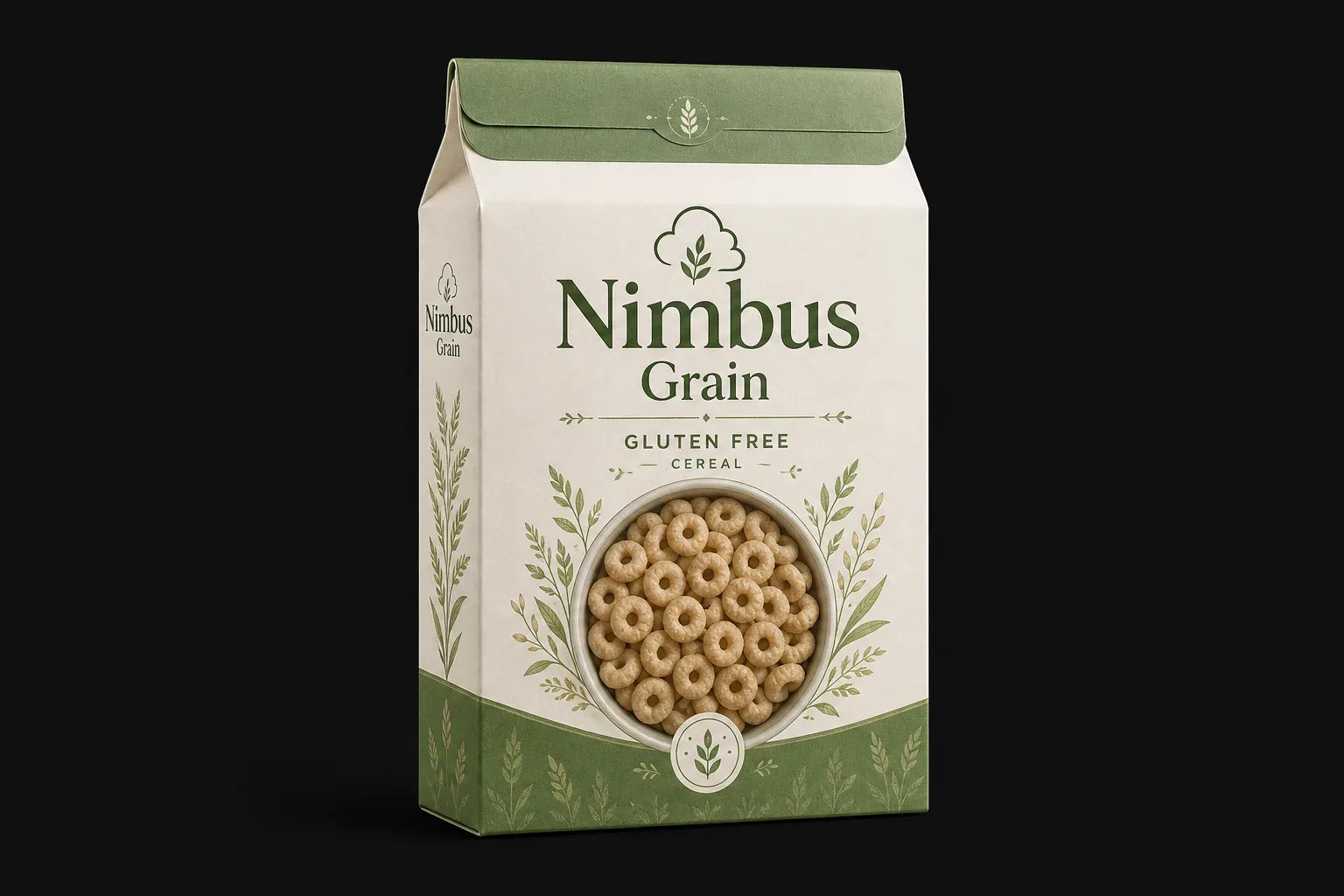
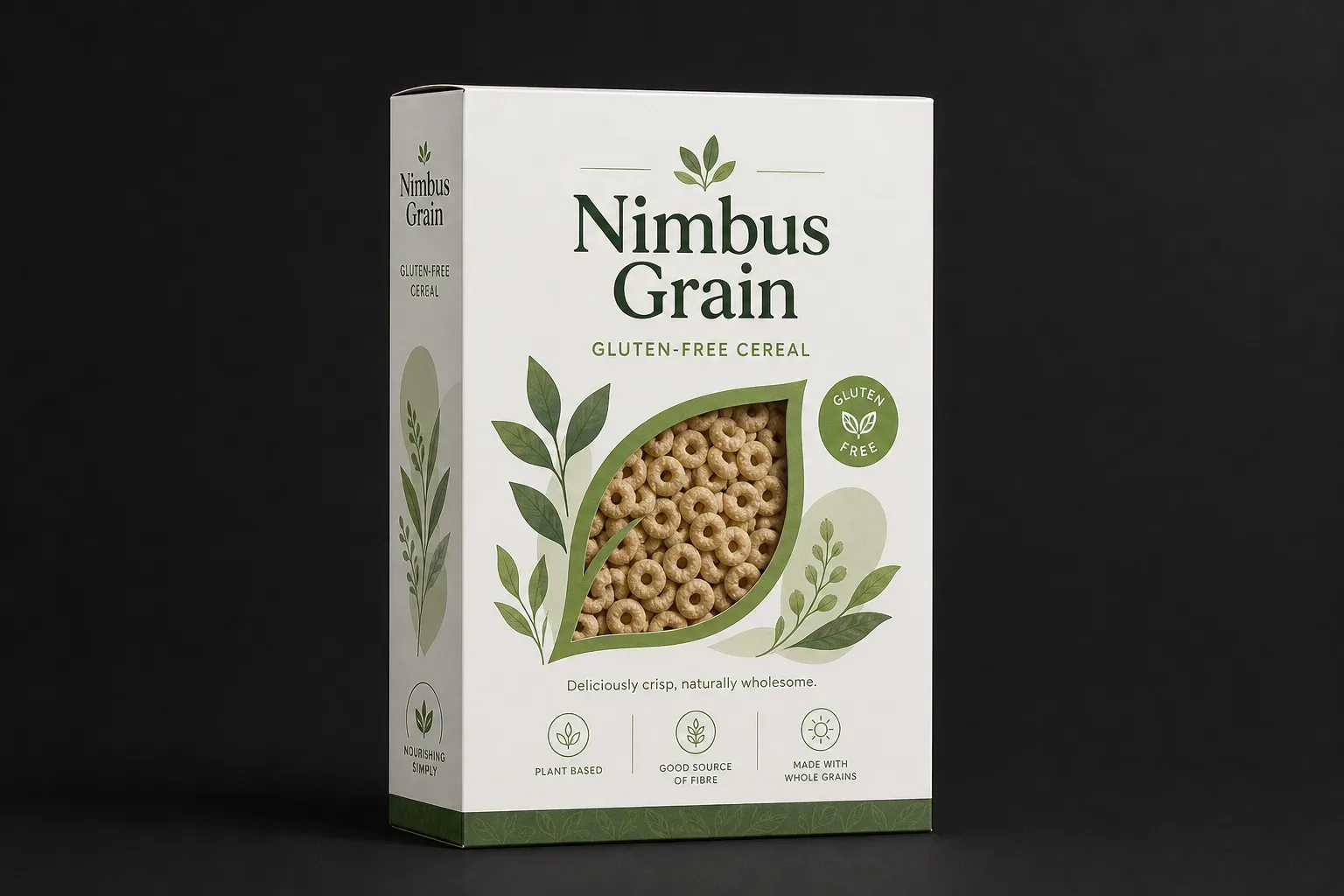

Specialist free-from or mainstream brand?
Some gluten-free cereals are sold as specialist free-from products, in a dedicated aisle, to shoppers who need them. Others are mainstream cereals that happen to be gluten-free and sit in the main aisle. The first can lead with the free-from message; the second has to keep it visible without letting it dominate the brand. Either way, the statement must be clear. Panel hierarchy is discussed in the front-panel design guide.
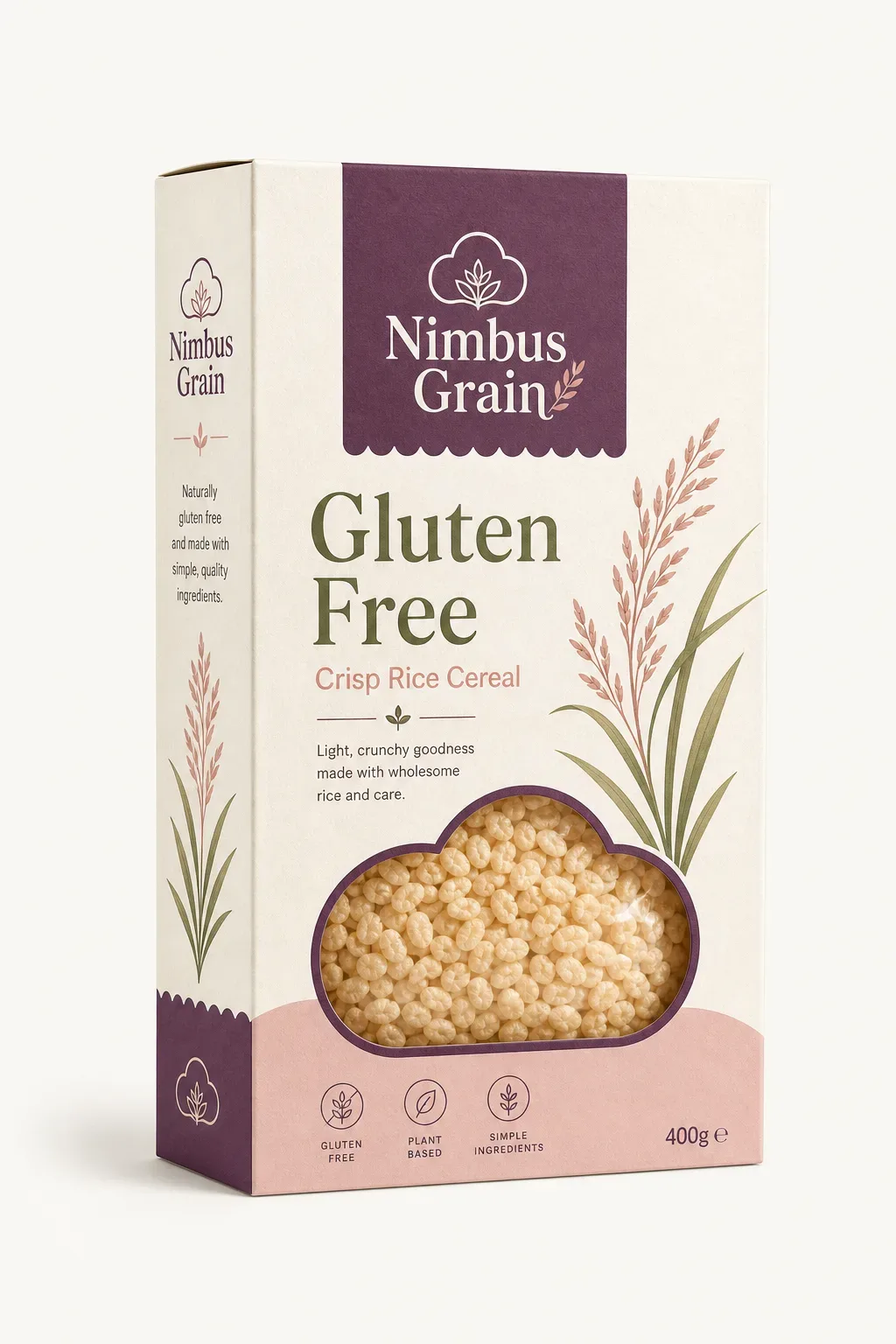 specialist free-from
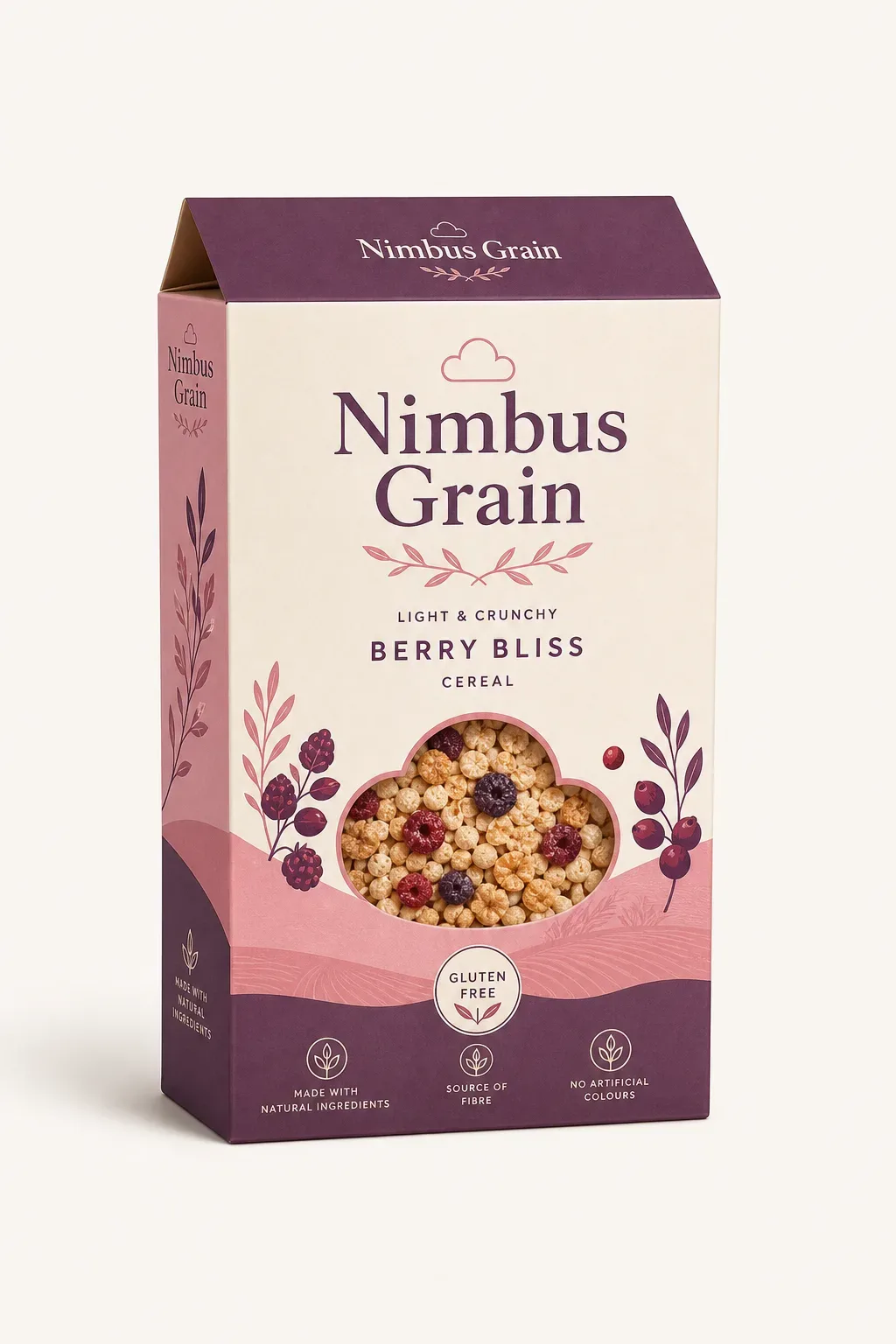 mainstream gluten-free
Gluten-free cereal packaging in detail
Which cereals are gluten-free
Cereals made from rice, corn, sorghum, millet, buckwheat, quinoa and certified gluten-free oats can be gluten-free if they are made and packed without contamination. Wheat, barley and rye contain gluten, and ordinary oats are often contaminated with it in the field or the mill. Many puffed and flaked products are naturally gluten-free in recipe; compare puffed rice and corn cereals.
Whether a product can be labelled gluten-free is decided by its ingredients, its production controls and testing, not by the packaging. Rules and thresholds differ by market; the brand is responsible for meeting them.
Gluten-free statements and allergens
Gluten-free claims are regulated in most markets, with conditions on the product and set wording. Allergen labelling still applies to any other allergens present, such as nuts or milk. Place the gluten-free statement on the front panel where shoppers look first, and repeat it near the ingredients.
We print exactly the wording you supply and can lay out the panel so the statement is clear at shelf distance. General labelling layout is covered under retail packaging requirements for cereal.
Certification marks
Several schemes license gluten-free symbols, such as the crossed-grain symbol used in Europe and the UK and certification marks in North America. They may only be used by certified products, in the form, size and colour the scheme specifies, usually with a licence number.
Supply the mark artwork exactly as your scheme provides it and tell us any placement rules. As with organic marks, the certification applies to the food, not the carton; see organic cereal packaging for the same principle.
Keeping variants apart
Brands that make both regular and gluten-free versions risk mix-ups at packing and on the shelf. A different board colour, a large colour band or a different layout for the gluten-free variant reduces the chance of the wrong carton going round the wrong product. Some brands add a printed code on the glue flap that the line checks.
Cartons for each variant are kept separate in our production and shipping and clearly labelled by variant on the case.
Sealing and reclosing
The inner bag is the barrier between the cereal and everything else. A strong seal and a tamper-evident outer opening give buyers confidence the pack is as it left the factory; see tear strip cereal boxes.
At home, gluten-free cereals often share a cupboard with regular ones. A carton that recloses well, or a resealable bag, helps keep it that way; see resealable cereal boxes.
Board and print
White SBS gives the cleanest, calmest background for clear labelling and accurate photography. Green and soft colours are common in the category, but the brand can use any palette as long as the statement stands out.
Gluten-free products often use oats, nuts or seeds, so allergen information can be complex. Keep the ingredients panel uncluttered, with good contrast and a legible type size.
Sizes and formats
Gluten-free cereals are sold in standard cartons, smaller premium packs and sealed portions for hotels, hospitals and schools, where a separate gluten-free option is often required. Infant cereals have their own rules; see infant cereal packaging. Portion boxes keep the gluten-free cereal sealed until served.
When a brand adds a gluten-free version of an existing cereal, it is tempting to reuse the same carton with a small badge. That saves artwork but raises the risk of confusion. A distinct colour, a large statement and a separate barcode protect both the buyer and the brand, and the cost difference is small once the dieline is shared.
For all structures see our cereal carton range, and request a gluten-free cereal packaging quote with your fill weight, certification scheme and variant plan.
Gluten-free cereal boxes, answered
Carton board is not a source of gluten in normal use. What matters is how the cereal is made, packed and sealed, and that the label is correct.
Packaging a gluten-free cereal? Start with the label.
Send the fill weight, your certification scheme and how many variants you run. We'll recommend the carton, opening and variant system.
Start your quote → Talk to a packaging specialist →